

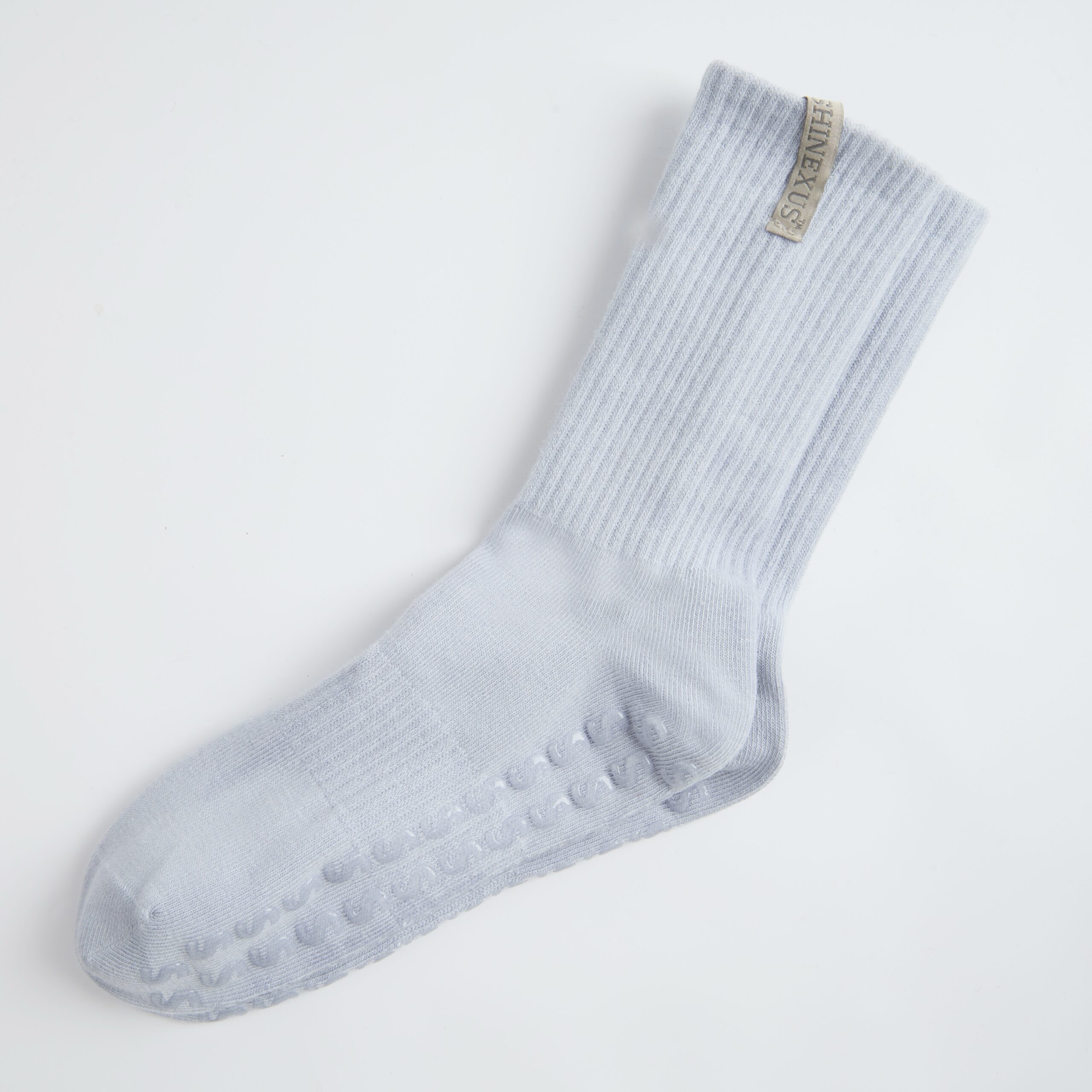
Ankle and crew grip socks can use similar sole construction while feeling very different above the heel. Ankle styles create a minimal line and expose more of the lower leg. Crew styles extend upward for additional coverage, warmth and visual presence. Neither height is inherently better for reformer Pilates. The correct choice depends on measured foot fit, cuff comfort, studio temperature, wardrobe preference and whether the sock remains aligned during movement. This guide compares the silhouettes without confusing style with performance.
What sock height changes
Sock height changes coverage and cuff position, not the fundamental need for a centred heel and aligned sole. An ankle cuff sits near or below the ankle bones depending on the design. A crew cuff reaches farther up the lower leg. This can affect warmth, pressure distribution and how secure the wearer feels, but grip performance still depends on the foot portion of the sock.
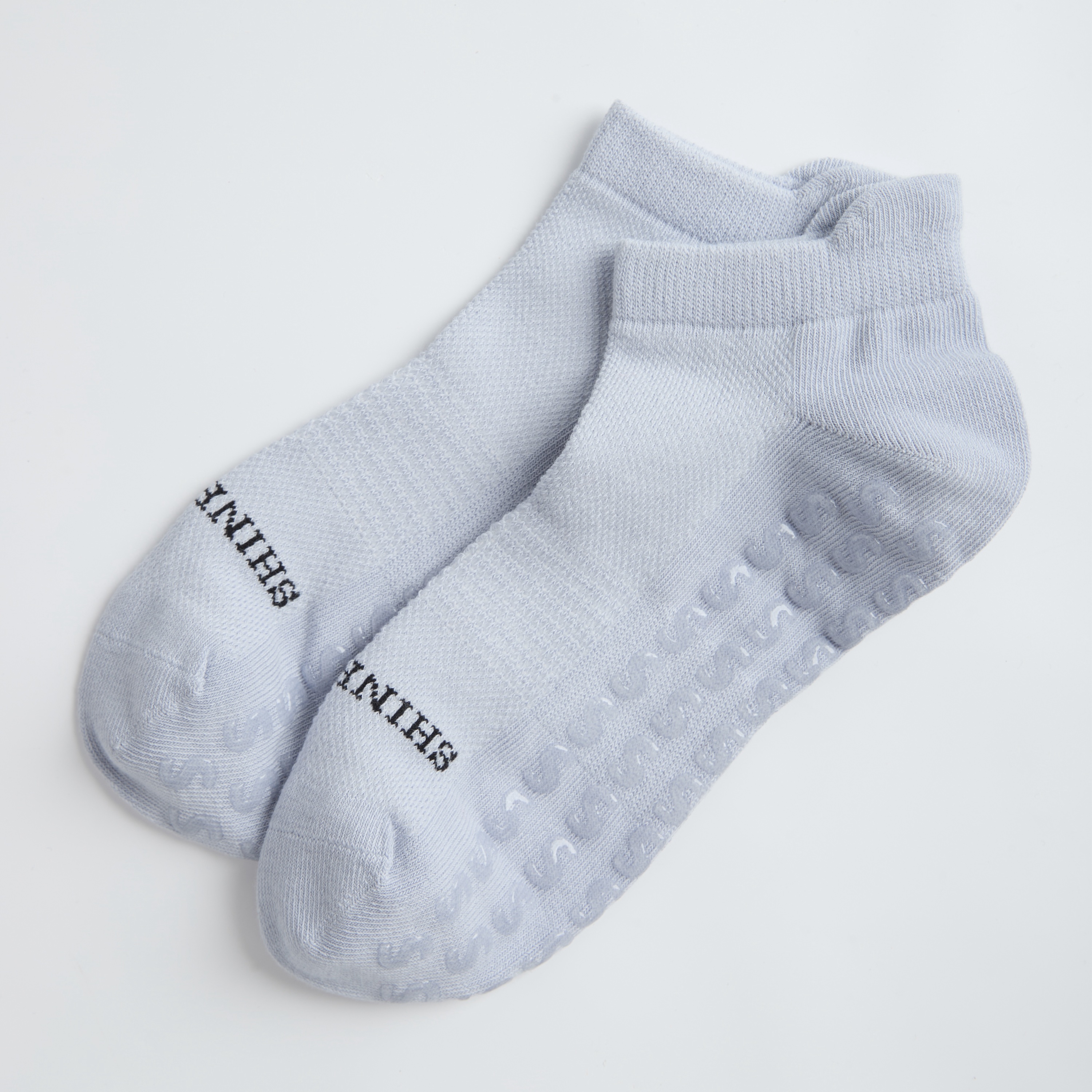
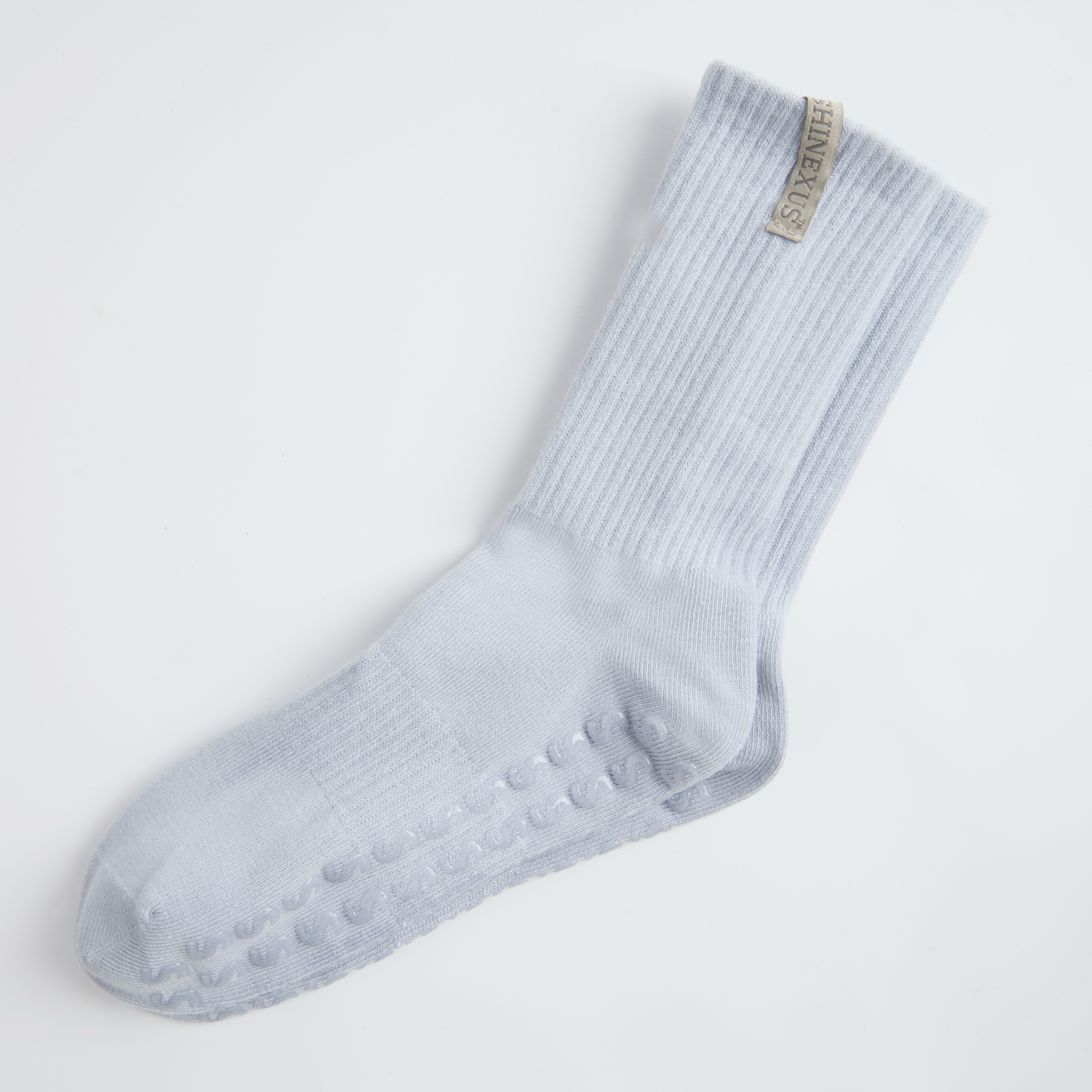
Compare silhouettes in the SHINEXUS collections. The Ankle Grip Sock in Blue Ash and Crew Grip Sock in Blue Ash allow a like-for-like colour comparison.
Warmth and studio climate
Crew socks cover more skin and may feel comfortable in an air-conditioned or winter studio. Ankle socks can feel lighter in warm rooms or intense classes. Fibre blend, knit density and individual circulation influence warmth as much as height. Do not choose a painfully tight crew cuff to gain warmth; use a removable clothing layer before class instead.
Frequent UK clients often keep both heights and choose according to the day. View the full grip sock range rather than expecting one silhouette to solve every seasonal need.
Cuff comfort and lower-leg sensitivity
A crew cuff distributes contact over a higher area but may be noticeable to people who dislike pressure on the calf. An ankle cuff is lower, yet it can rub if the edge sits directly on a sensitive spot or the heel is not seated. Try gentle ankle flexion and calf raises. The cuff should stay in place without rolling, digging or leaving a persistent mark.
Use the size guide for the foot portion and read product details for cuff design. People with swelling, circulation concerns or reduced sensation should seek individual clinical guidance rather than using a general apparel comparison.
Style, visibility and instructor observation
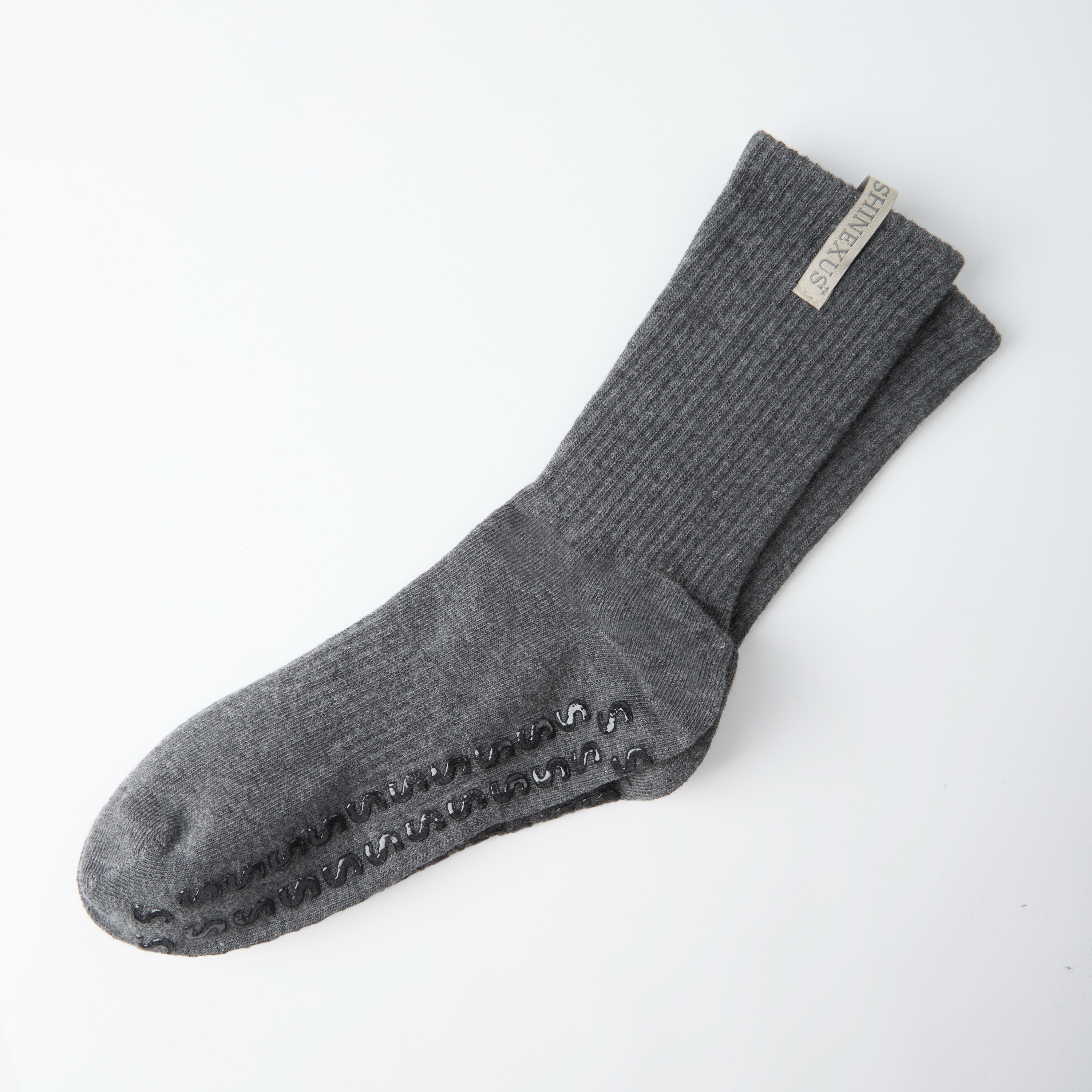
Ankle socks produce a clean, minimal look with leggings or shorts. Crew socks can become a deliberate colour element and are easier to spot in a busy kit bag. Neither height prevents an instructor from teaching foot alignment, although bulky or heavily decorated designs can make small landmarks less obvious. Choose a style that supports confidence without distracting from cues.
Neutral options such as the Graphite Grey crew and Oat Milk ankle demonstrate how colour and height can be considered separately.
Fit and grip are decided below the cuff
Do not assume a crew sock is more secure simply because it covers more leg. Check heel position, toe room, arch smoothness and sole alignment. If the foot section is too large, a high cuff cannot stop rotation. If too small, the toes may curl or the heel may be pulled out of position. Measure and test controlled movement.
Read the construction explanation on the SHINEXUS difference page. Good design coordinates knit, shape and grip; height is one part of a system.
Care and building a rotation
Both heights should be washed after class and air-dried according to the label. Crew socks contain more fabric and may take slightly longer to dry in a cool home. Reshape the cuff while damp and do not place it directly on a radiator. Rotate pairs so you never need to use high heat before the next booking.
Follow the care guide and check delivery information when adding a second height. Start with one tested pair before purchasing a full colour rotation.
Quick comparison
| Factor | Ankle grip socks | Crew grip socks |
|---|---|---|
| Coverage | Low and minimal | Higher lower-leg coverage |
| Warmth | Usually lighter | Often warmer |
| Cuff position | Near ankle | On lower calf |
| Style | Understated line | Visible colour statement |
| Grip requirement | Aligned heel and sole | Aligned heel and sole |
Choosing by class type and season
Reformer studios tend to run cool, especially in summer when air conditioning is on, which nudges many regulars toward crew socks. In heated mat classes or hot yoga, ankle socks keep the feet cooler and dry faster. Barre studios often mix floor work with high-heel pulses, and a crew sock keeps the foot visually defined under tights. Consider building two pairs: a breathable ankle pair for warm months and a warmer crew pair for winter, then rotate as the year changes. Read how long grip socks last so you know when to refresh.
Frequently asked questions
Are crew socks better for reformer Pilates?
Not inherently. If both styles fit correctly and have suitable grip, height is mainly a comfort and preference decision.
Do ankle socks slip down?
A well-shaped, correctly sized ankle sock should remain in place. Slipping can indicate poor fit or stretched elastic.
Which style is cooler?
Ankle styles expose more skin, but fibre and knit also affect temperature. Individual preference and studio climate matter.
A practical way to apply this guidance
Use the advice as a short decision process rather than changing everything at once. First confirm the studio rule and the product care label. Next check the sock or class choice in a calm setting, using slow movements and an ordinary session rather than an artificial slip test. Record what you can actually observe: heel position, toe comfort, cuff pressure, sole alignment, moisture, ease of transition and how the item behaves after correct washing. These details are more useful than a general impression that something feels premium or secure.
Reassess after several classes because a first wear cannot show laundering response or longer-session comfort. Change one variable at a time—for example size, silhouette or wash routine—so the result is understandable. Stop if you experience pain, numbness, dizziness or another concerning symptom, and seek appropriate professional advice where health is involved. Equipment supports practice; it does not diagnose a problem, replace instruction or remove the need for controlled technique. This measured approach helps a beginner make a defensible choice and gives an experienced client a consistent way to review an existing routine.
Final guidance
Choose ankle socks for a lower, lighter silhouette and crew socks for more coverage and warmth. Then judge the pair by the same non-negotiable criteria: measured fit, centred heel, natural toe room, aligned sole and a comfortable cuff.
How this guide was prepared
This article was written for UK studio clients using practical product-care principles, common reformer class procedures and observable fit criteria. It distinguishes apparel guidance from medical advice, avoids promising that equipment can replace technique, and directs readers to product-specific sizing, care and studio policies. Information should be checked against the current class provider’s rules and the care label supplied with the product.
SHINEXUS designs grip socks for Pilates, yoga and barre. Product links are included where they help readers compare a specific silhouette, size resource or care instruction. The article was reviewed for clarity, internal consistency and usefulness to a reader making a real class or purchase decision.
