

Grip socks have become a fixture in fitness retail, and for independent shops the appeal is obvious: small, light, low returns, and a customer base that already understands what they are for. The difficulty is that a good range is narrow and a bad one is expensive. Here is how to buy well.
Assessing demand in your area
Before you buy, look at what is around you. How many Pilates, yoga and barre studios operate within a twenty-minute walk or drive? Do they require socks? Do they already sell socks at reception?
That last question matters most. If three local studios stock their own range, a shop selling the same category competes on price at the desk. If studios ask clients to bring socks but do not sell them, you have a clear gap to fill — and a customer who has just discovered they forgot theirs.
A short conversation with two or three studio owners is worth more than a trend report. Ask what clients request and what they cannot get.
Depth before breadth
The most common buying mistake in a small shop is range width. Five styles in two sizes and four colours is forty lines before a single sale, and most of them will sit unsold while two carry the category.
A workable opening range is two styles, two sizes and three colours: twelve lines, enough to look considered and few enough to manage. Choose an ankle style as the core, since it works across reformer, mat and barre, and a second style that matches your local class mix: yoga height or a toe style if your area is mat-led, crew if the studios nearby are cold and barre-heavy.
A colour discipline
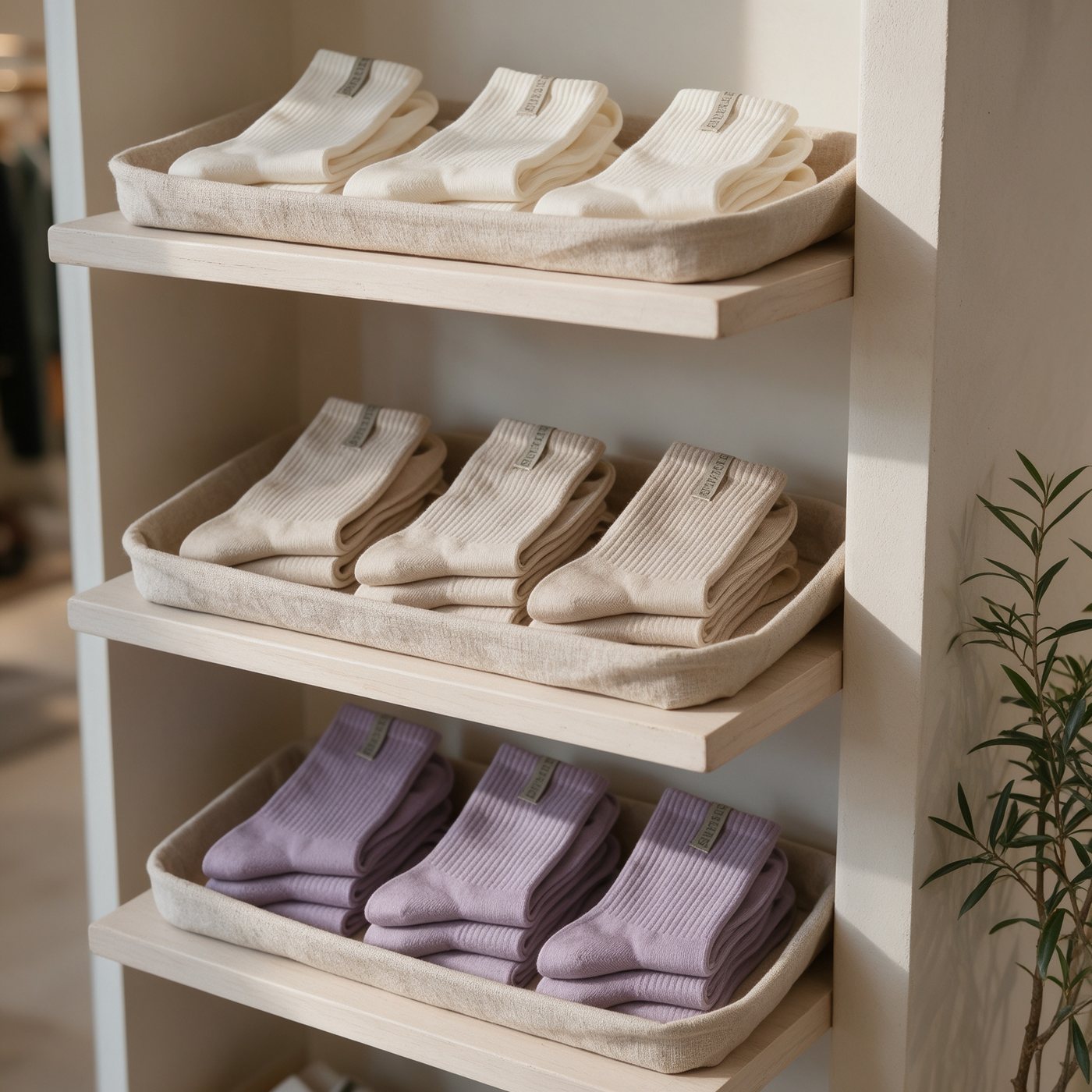
Two neutrals plus one accent keeps a small display looking curated. Cream or oat as the core, a grey as the practical alternative, and one accent — lilac or blue — to give the shelf a focal point.
Stock neutral sizes deeper. They sell through fastest, and a missing size in a neutral colour is the most common lost sale in this category. If the accent sells out first, treat that as information for the next order rather than as a problem to solve with discounts.
Sharing a palette across styles helps, too. If the ankle and the yoga styles come in the same colours, the display reads as a range rather than as two unrelated products.
Pricing and margin
Our recommended retail prices sit at £18.50 for the ankle style and £19.00 for the yoga style, with toe styles in a similar band. That places grip socks in accessible-premium territory: above a basic sports sock, well below a designer accessory, and within the range where a fitness customer buys without deliberating.
Trade terms, including minimum order quantities and wholesale pricing, are set out on enquiry through our studio and trade page. We would rather quote accurately than publish a figure that does not apply to your order.
At the shelf, hold the retail price. Discounting a £19 sock by twenty per cent teaches customers to wait for the next promotion, and the margin rarely justifies it. A two-pair bundle protects the unit price and solves the laundry timing problem most customers have.
Merchandising a small range
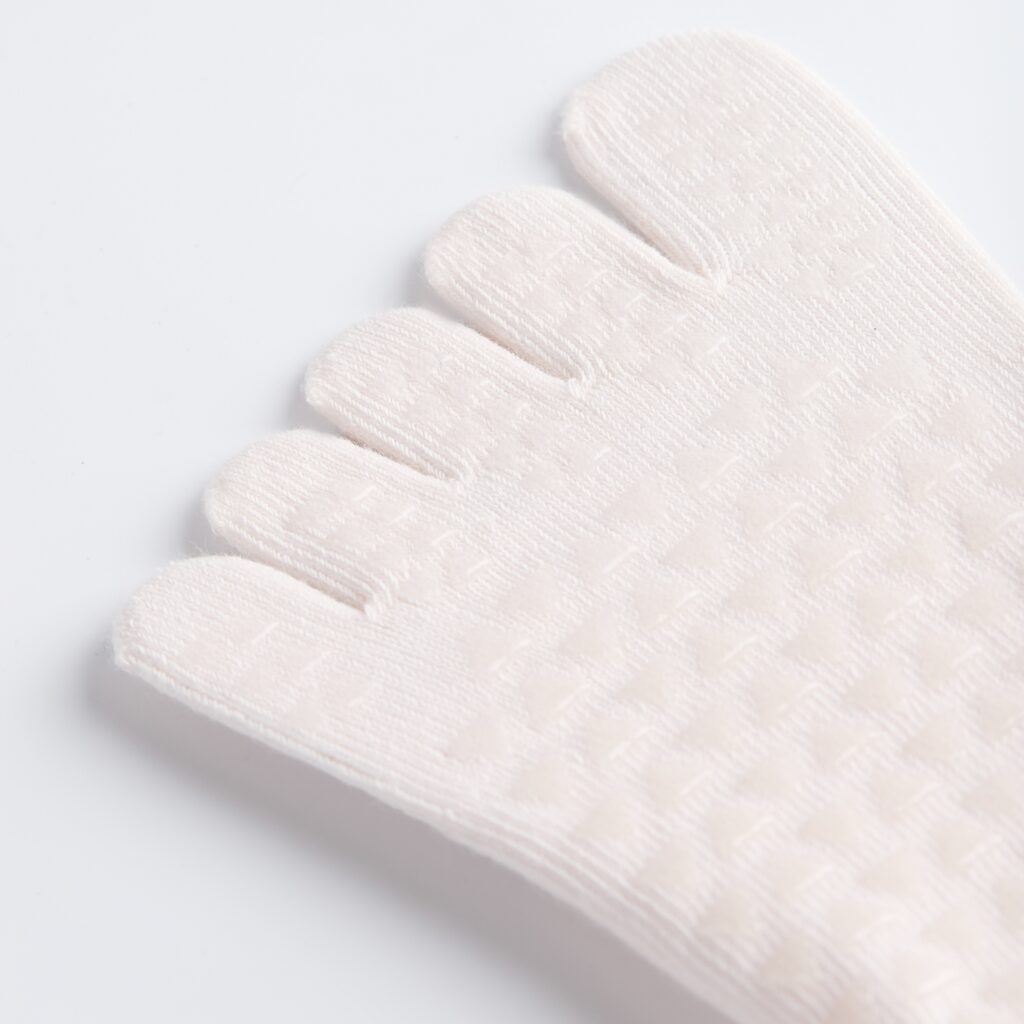
Grip socks sell on the sole. Customers need to see the pattern to understand why the price is what it is, so fold or roll pairs with the sole facing out rather than stacking them flat.
Place them where customers are already thinking about their feet: near the fitting area, beside leggings, or at the till for an add-on. A single tray at eye level or just below does more than a printed price list, and a small card with the two sizes answers the question that stalls most sales.
Keep the copy short. Two sizes, one line on fit, and the fact that the sole is designed for studio floors. Longer product stories belong on the website. Our piece on studio retail covers how to run a display alongside an existing brand.
A sample opening range
| Style | Sizes | Colours | Role |
|---|---|---|---|
| Ankle grip sock | S/M, M/L | Oat Milk, Graphite Grey, Frosted Lilac | Core seller across class types |
| Yoga grip sock | S/M, M/L | Cream, Blue Ash | Mat-led customers, warmer rooms |
| Crew (optional) | S/M, M/L | Oat Milk | Winter trade and barre-heavy areas |
Sell-through and reordering
Reorder when a size or colour falls below two pairs, not when it sells out. A gap on the shelf is a lost sale; a gap in the stockroom is normal.
Watch two patterns. If one size repeatedly sells out first, your local customer base skews towards it and you should carry more depth there. If a style sits untouched for six weeks, the cause is usually placement or a missing size rather than the product.
Review quarterly rather than seasonally. Shops that treat socks as a winter add-on end up with leftover stock; shops that treat them as a standing line reorder steadily through the year. The wholesale overview explains how custom options work if you want your own labels later, and The SHINEXUS Difference sets out what the product is built to do.
Frequently asked questions
How many grip sock styles should a small shop start with?
Two, in most cases: an ankle style as the core and a second style suited to local class types.
What is a sensible opening quantity?
Enough to cover two sizes and three colours without over-committing. Minimum order quantities are confirmed at enquiry.
Should I discount to clear stock?
Rarely. A two-pair bundle protects the unit price better than a straight markdown.
Where should grip socks sit in the shop?
Near leggings or the fitting area, with the sole visible. Placement matters more than signage.
Do customers need the socks explained?
A single line on sizes and one on studio use is enough. Most already know why they need them.
Can I mix styles within a minimum order?
That depends on the terms agreed at enquiry. Ask before ordering rather than assuming.
Narrow, considered, repeatable
The shops that sell grip socks well are not the ones with the widest range. They are the ones with a clear two-style offer, a disciplined palette, a visible sole and a simple reorder habit. Start narrow, learn from the first quarter, and expand only where the evidence supports it.
