

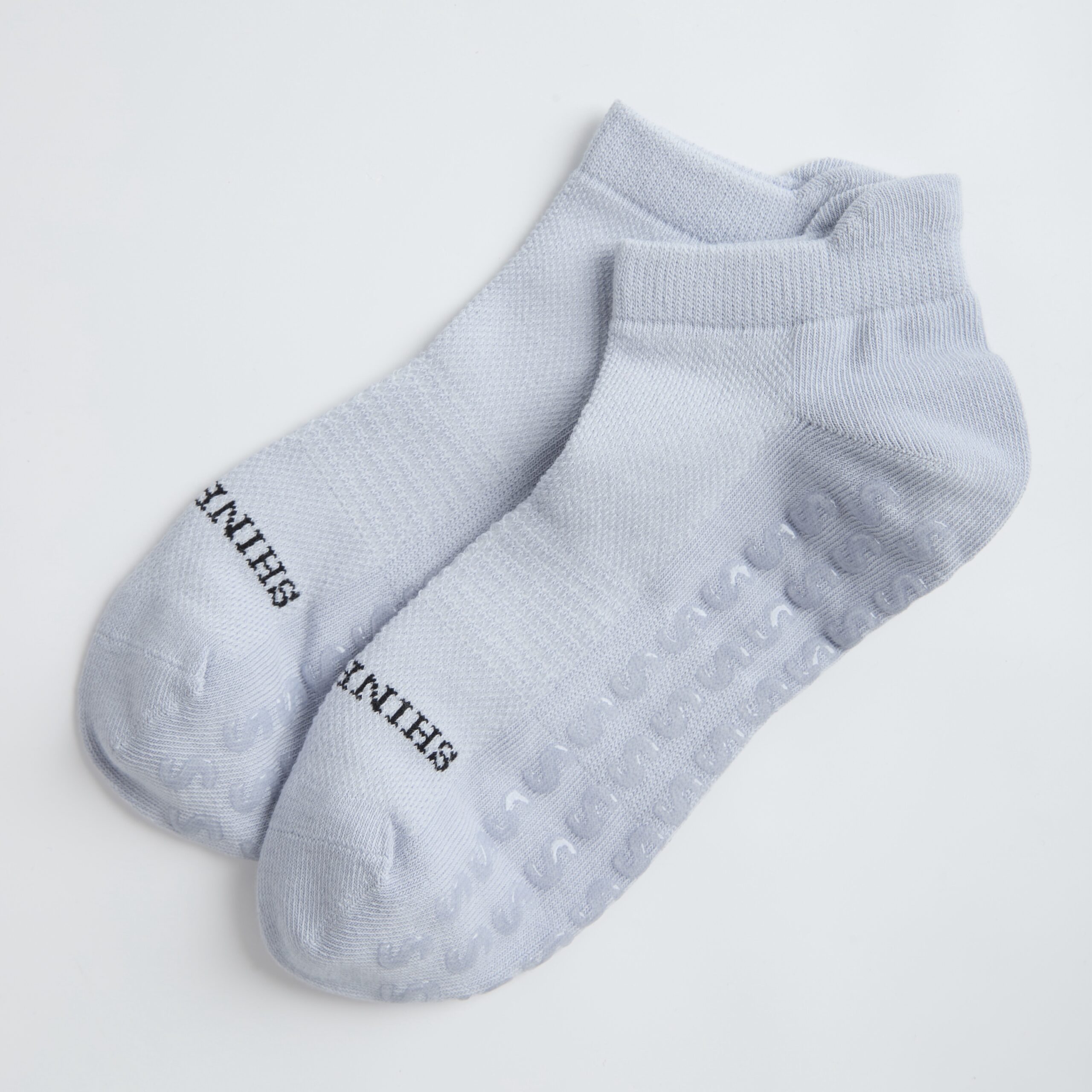
Regular socks and Pilates grip socks may look similar in a kit bag, but they are designed for different jobs. An everyday sock is primarily expected to manage comfort inside a shoe. A studio grip sock must work without a shoe, stay aligned while the foot articulates and provide a more predictable interface with a reformer carriage, mat or studio floor. That does not mean grip socks make movement automatically safe or replace good technique. It means their construction is intended for the environment. This guide explains the practical differences so you can decide what belongs in your class bag.
Traction is the clearest difference
The most visible distinction is the pattern applied to the sole. A quality grip layout covers the heel and forefoot zones that contact the carriage or floor during common Pilates positions. Ordinary cotton socks usually have a smooth knit underfoot, so they can slide more readily on polished surfaces. Grip does not create unlimited friction: dust, lotion, moisture and worn material still affect contact. A controlled foot position remains essential. Think of traction as support for deliberate movement, not permission to push beyond your control.
Pattern coverage matters as much as the presence of dots. Sparse decoration at the centre of the sole may offer little help when weight shifts toward the heel or ball of the foot. Review the construction principles behind the SHINEXUS difference, then compare several options in the grip sock shop rather than judging a sock by a single photograph.
A close fit reduces twisting
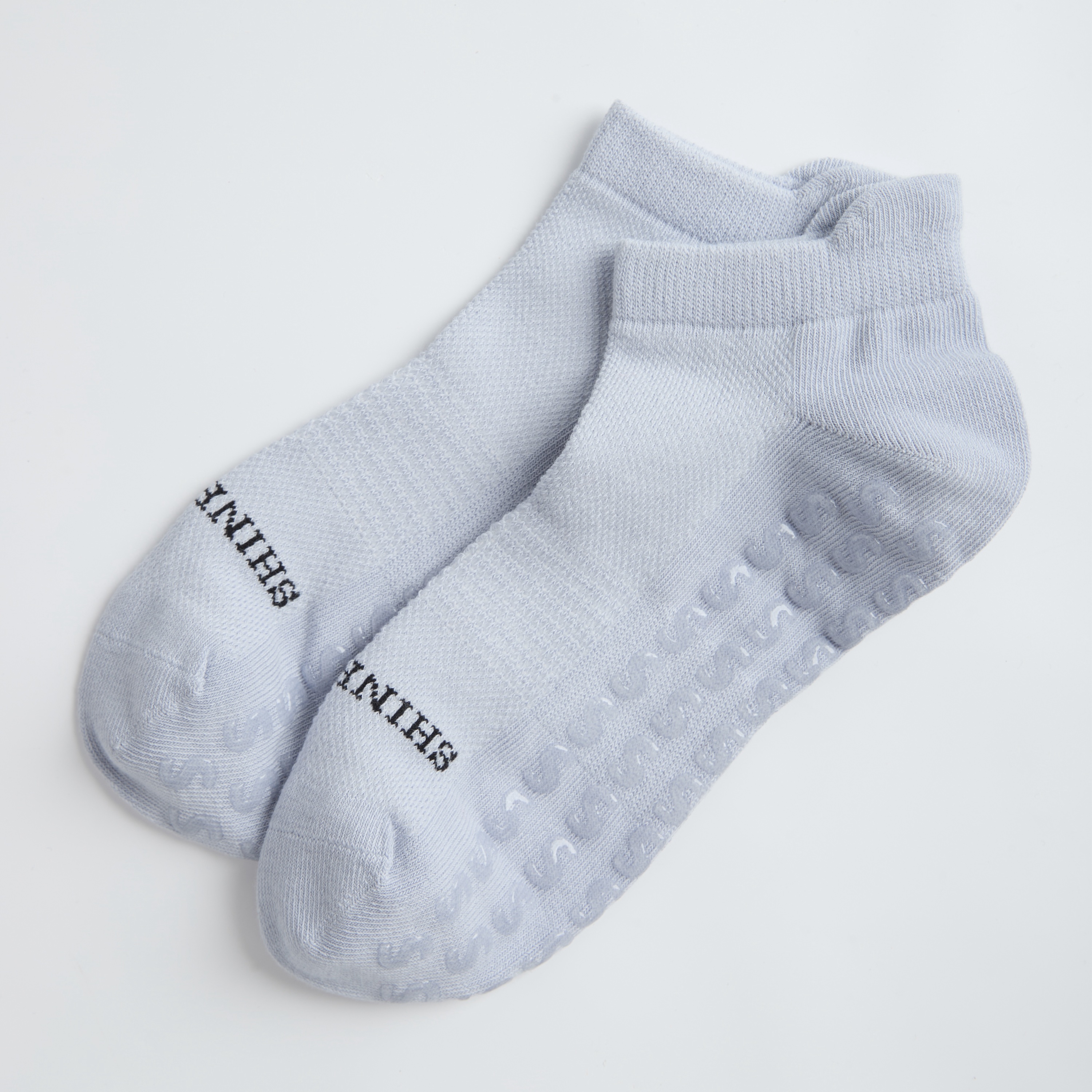
Inside a shoe, the upper and laces help keep a regular sock in place. During barefoot studio work, the sock itself must remain close to the foot. Excess fabric can rotate, bunch under the arch or move independently of the grip. A Pilates sock should feel secure through the heel, midfoot and toe box without restricting circulation or curling the toes. If you are between sizes, use the brand-specific measurements rather than assuming your usual fashion-sock size.
Fit should be assessed while standing and moving. Raise the heels, flex and point the feet, then perform a small squat. The heel pocket should remain centred and the sole should not migrate around the side of the foot. Use the SHINEXUS size guide before ordering, and check the product FAQs if your measurements sit near a boundary.
Studio hygiene and coverage
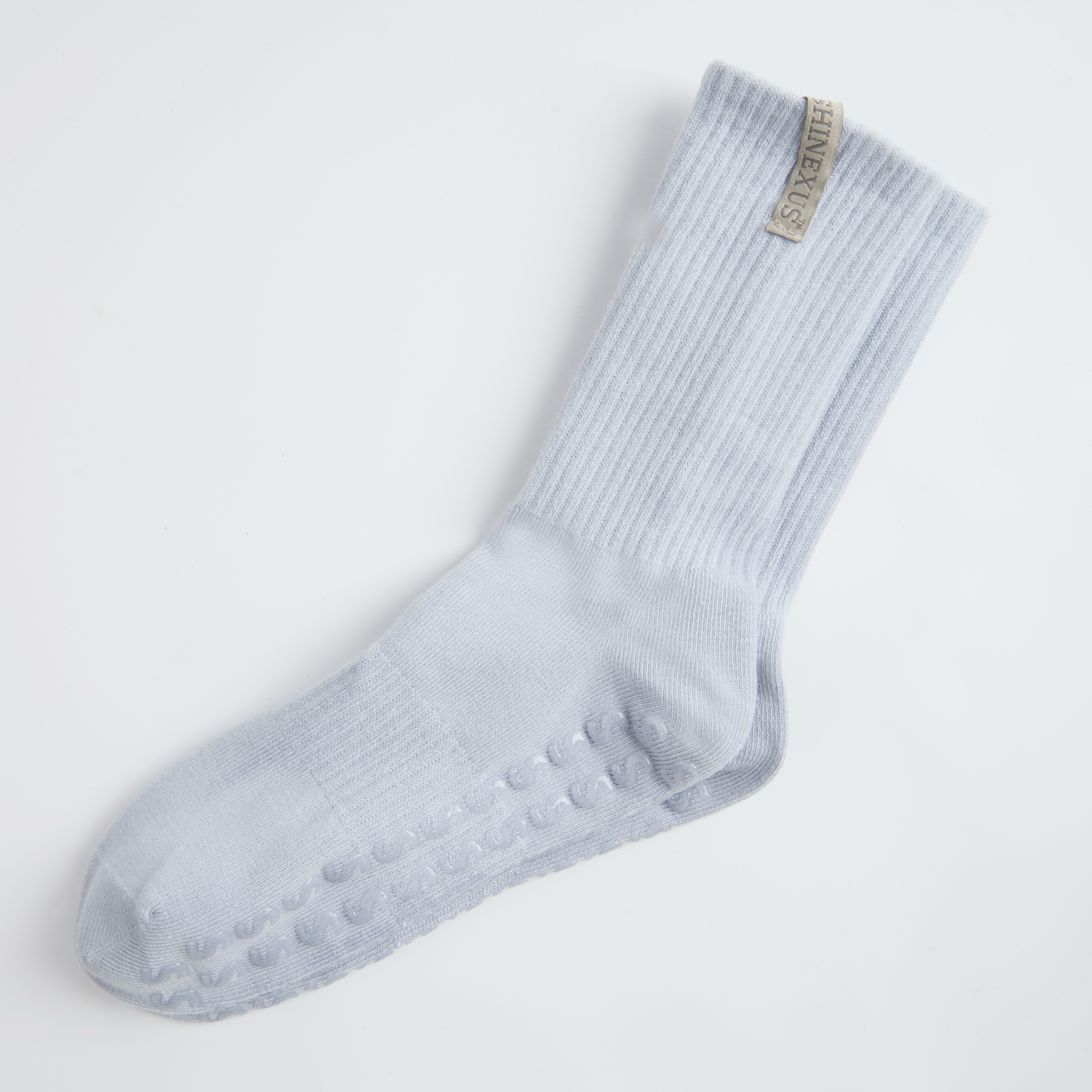
Many studios request socks because they create a washable layer between the foot and shared equipment. This is helpful, but socks do not replace the studio cleaning protocol or personal hygiene. A worn pair should be washed after every class and dried fully before reuse. Regular socks can also provide coverage, yet a loose everyday pair may become damp and shift during repeated footwork. A purpose-built design aims to balance breathable coverage with dependable positioning.
Carry used socks in a breathable pouch rather than sealing them in plastic for the rest of the day. Once home, remove them promptly and follow the care label. The detailed grip sock care guide covers washing, drying and storage practices that protect both the elastic and the sole application.
Comfort is more than softness
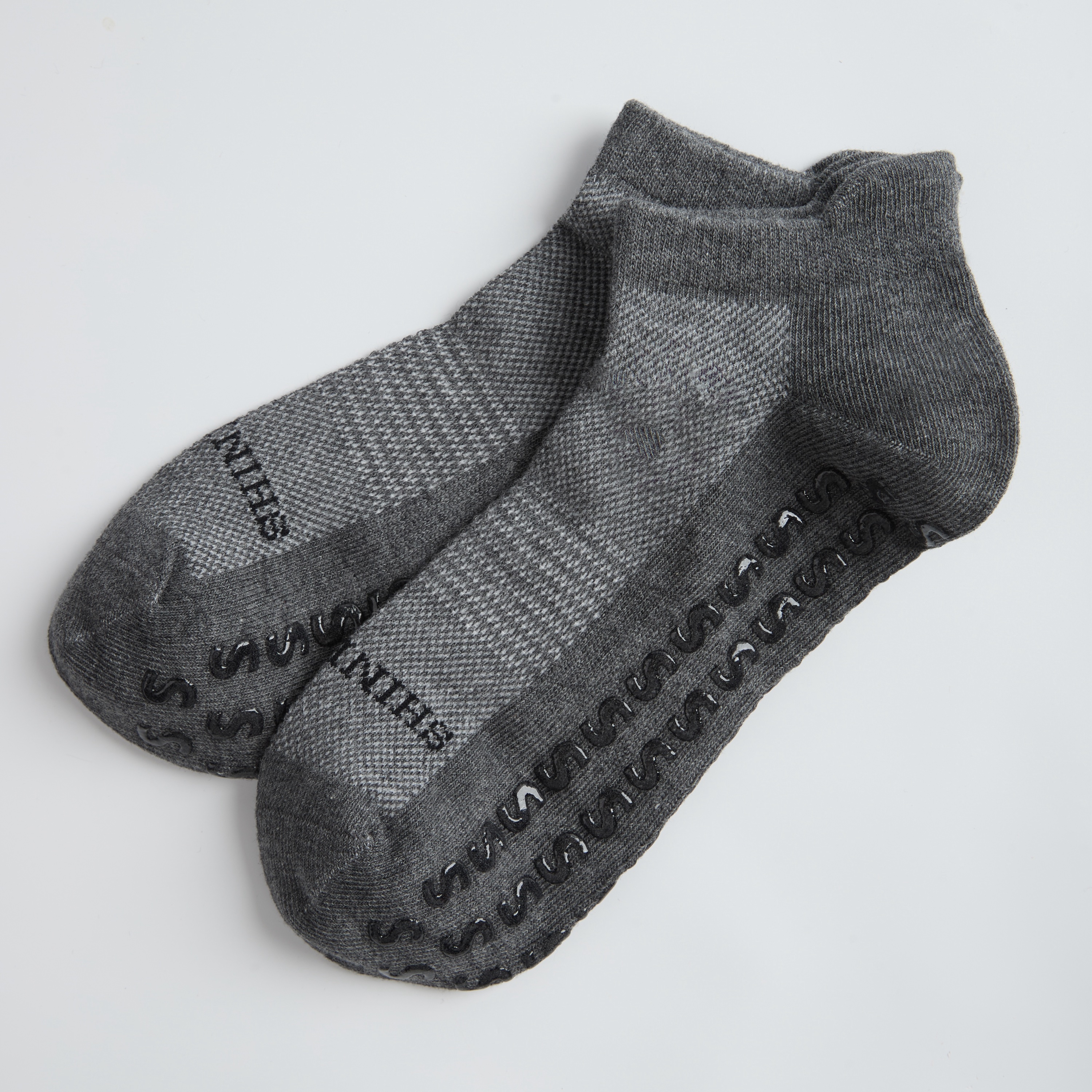
A very thick sock may feel luxurious at first but can reduce sensory feedback and change how the foot sits against straps or a platform. A very thin ordinary sock may stretch, wrinkle or offer little cushioning at pressure points. Studio comfort comes from an appropriate knit, smooth internal finish, a stable cuff and enough stretch to follow the foot. The ideal balance depends on personal preference, class style and how closely fitted the equipment contact points are.
Look for irritation after a full session, not only when first trying the socks on. Check the toe seam, heel, arch and cuff. Red marks that fade quickly may simply reflect light pressure, but numbness, persistent indentation or pinching indicate a poor fit. Different silhouettes in the grip sock collections let you compare ankle, crew and toe options.
When regular socks may still be acceptable
Some mat-based sessions allow bare feet or ordinary socks, particularly when the instructor and venue consider the surface appropriate. Studio rules vary, so ask before arriving. If the class involves reformer footwork, standing balance or smooth shared flooring, a grip style is commonly the more practical choice. Never assume a sock is suitable simply because it has a small decorative anti-slip patch intended for home use.
Your instructor can explain the policy for that specific class and equipment. Studios interested in consistent retail options can review SHINEXUS studio partnerships. Individual clients should also check UK delivery information early enough to avoid relying on an unsuitable last-minute pair.
How to compare two pairs objectively
Place both pairs on a clean surface and inspect the heel pocket, toe shape, cuff recovery and sole coverage. Wear each for the same controlled movements. Note whether the fabric rotates, whether your toes can spread naturally and whether the grip remains consistent as weight transfers. Avoid informal sliding tests that could cause a fall. A better comparison is slow, supported movement under normal class conditions with the instructor aware that you are assessing fit.
Recheck after washing because laundering can reveal weak elastic, residue retention or dimensional change. A useful sock should remain comfortable and aligned across repeated sessions. Price alone cannot prove performance; construction, fit, care and replacement timing all contribute to value.
Quick comparison
| Feature | Regular socks | Pilates grip socks |
|---|---|---|
| Primary use | Comfort inside footwear | Studio movement without footwear |
| Sole | Usually smooth knit | Purpose-placed grip pattern |
| Fit priority | General everyday comfort | Close alignment during articulation |
| Care focus | Fabric freshness | Freshness plus protection of grip and elastic |
Frequently asked questions
Can I wear normal socks to reformer Pilates?
Only if the studio permits them. Many studios require grip socks because ordinary socks may slide on equipment and smooth floors.
Do grip socks prevent every slip?
No. They support traction, but technique, clean equipment, a dry sole and a correctly fitted sock remain important.
Are thicker grip socks always better?
No. Thickness is a preference and fit question. The sock should remain stable, breathable and compatible with the equipment.
A practical way to apply this guidance
Use the advice as a short decision process rather than changing everything at once. First confirm the studio rule and the product care label. Next check the sock or class choice in a calm setting, using slow movements and an ordinary session rather than an artificial slip test. Record what you can actually observe: heel position, toe comfort, cuff pressure, sole alignment, moisture, ease of transition and how the item behaves after correct washing. These details are more useful than a general impression that something feels premium or secure.
Reassess after several classes because a first wear cannot show laundering response or longer-session comfort. Change one variable at a time—for example size, silhouette or wash routine—so the result is understandable. Stop if you experience pain, numbness, dizziness or another concerning symptom, and seek appropriate professional advice where health is involved. Equipment supports practice; it does not diagnose a problem, replace instruction or remove the need for controlled technique. This measured approach helps a beginner make a defensible choice and gives an experienced client a consistent way to review an existing routine.
Final guidance
Regular socks are made mainly to sit inside shoes; Pilates grip socks are made to participate in movement. The meaningful differences are sole coverage, close fit, washability and stability through foot articulation. Choose by measurement and studio policy, care for the pair consistently and replace it when the fabric or grip no longer behaves predictably.
How this guide was prepared
This article was written for UK studio clients using practical product-care principles, common reformer class procedures and observable fit criteria. It distinguishes apparel guidance from medical advice, avoids promising that equipment can replace technique, and directs readers to product-specific sizing, care and studio policies. Information should be checked against the current class provider’s rules and the care label supplied with the product.
SHINEXUS designs grip socks for Pilates, yoga and barre. Product links are included where they help readers compare a specific silhouette, size resource or care instruction. The article was reviewed for clarity, internal consistency and usefulness to a reader making a real class or purchase decision.
