

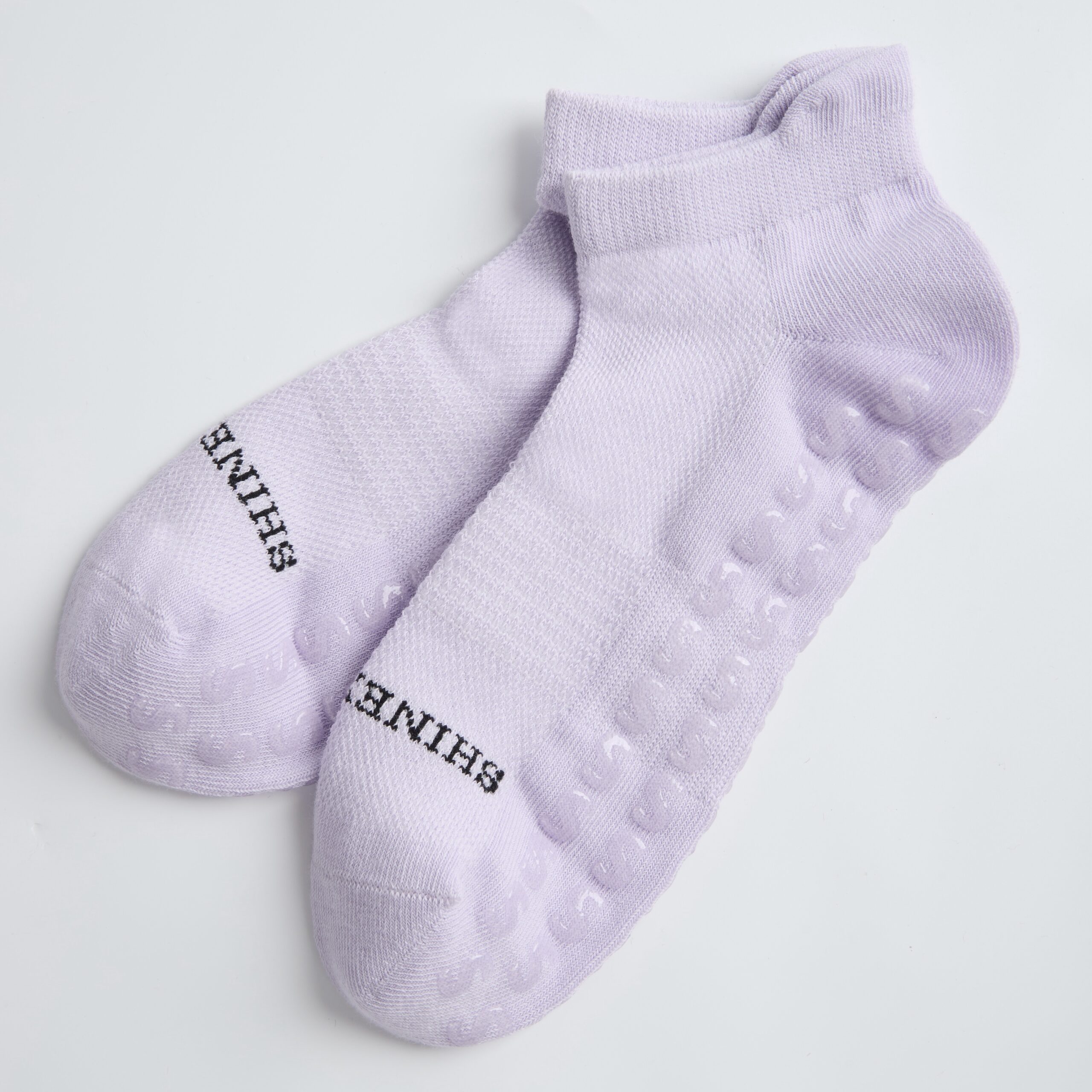
Grip socks work hard in a warm, high-contact environment. Sweat, studio dust, body lotion and laundry products can gradually coat the sole, while high heat can damage elastic fibres and grip applications. The answer is not aggressive scrubbing; it is a consistent, gentle routine. This guide explains how to wash Pilates grip socks, which common laundry habits reduce performance, how to dry and store them, and when cleaning will no longer restore an ageing pair. Always check the care label first, because the manufacturer’s instructions take priority over general advice.
What to do immediately after class
Do not leave damp socks sealed in a plastic bag or at the bottom of a gym tote. Moisture and warmth encourage odour and make stains harder to treat. When you get home, take the socks out, open them fully and allow them to air until you are ready to wash. If they are visibly dusty, gently shake off loose particles rather than rubbing the grips together.
Keep used socks separate from clean studio items. A breathable laundry pouch is useful if you attend class before work. Rotating between two or more pairs also gives each one time to dry completely and reduces the number of emergency high-heat washes.
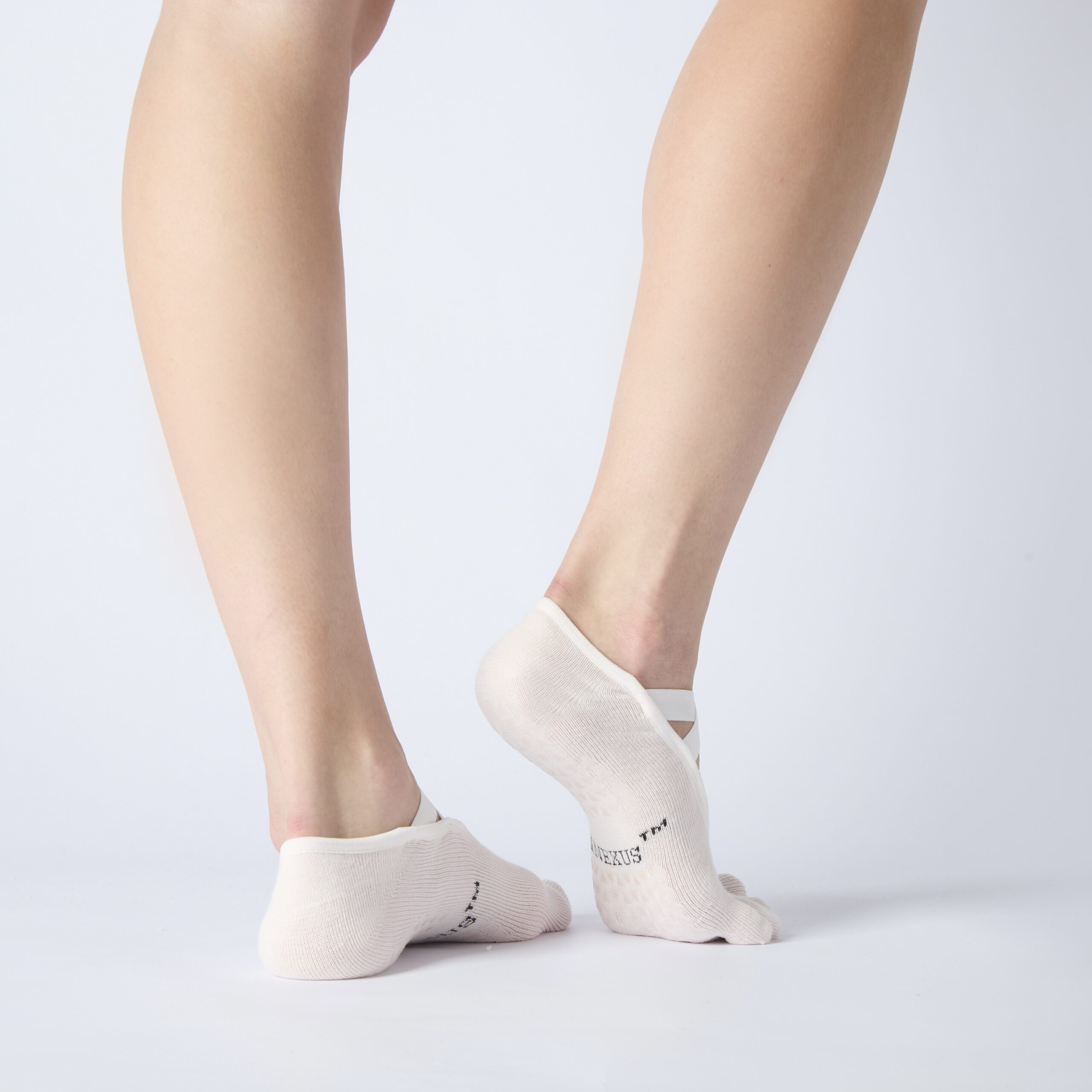
A gentle washing method that protects the sole
Turn the socks inside out if the care label recommends it, place them in a mesh laundry bag and select a cool or low-temperature gentle cycle. Use a small amount of mild detergent. Washing similar colours together protects the appearance, while the bag prevents the socks from stretching around larger garments or catching on zips.
Hand washing is another good option. Dissolve mild detergent in cool water, move the socks gently through the solution and rinse thoroughly. Avoid pulling the cuff or scraping the grip pattern. The detailed care guide should be saved with your laundry routine so that the product-specific instructions are always easy to find.
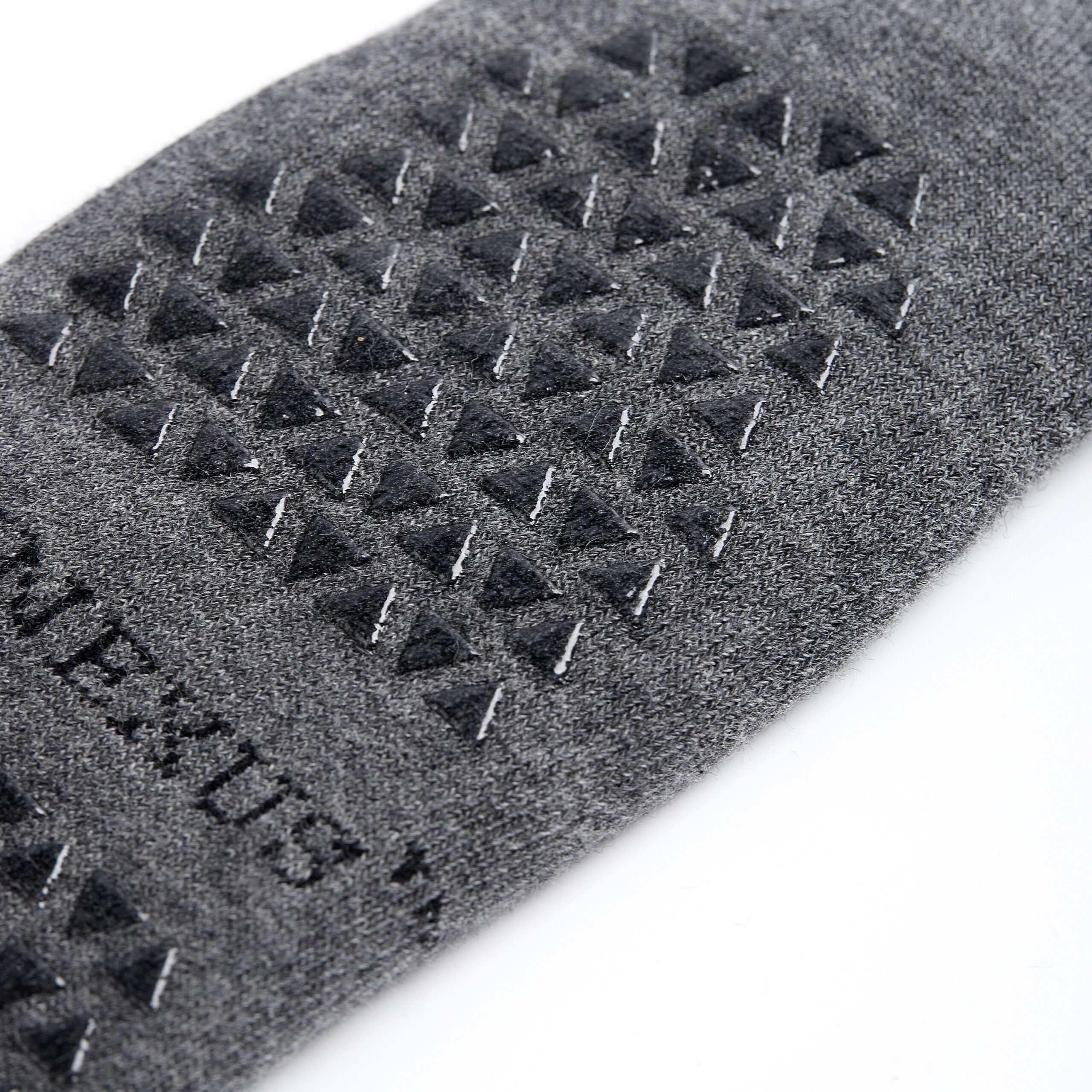
Why fabric softener, bleach and heavy products cause problems
Fabric softener leaves a lubricating coating designed to make fibres feel smooth. On a non-slip sole, that residue can reduce the clean, dry contact the grip needs. Bleach and strong stain removers may weaken colour, elastic and adhesive bonds. Excess detergent can also remain trapped in the fabric if the rinse is insufficient.
Use the smallest effective quantity of a gentle product and run an extra rinse if you can still feel residue. Do not apply oils or silicone sprays in an attempt to make grips sticky again; they can transfer to studio equipment and create an unpredictable surface.
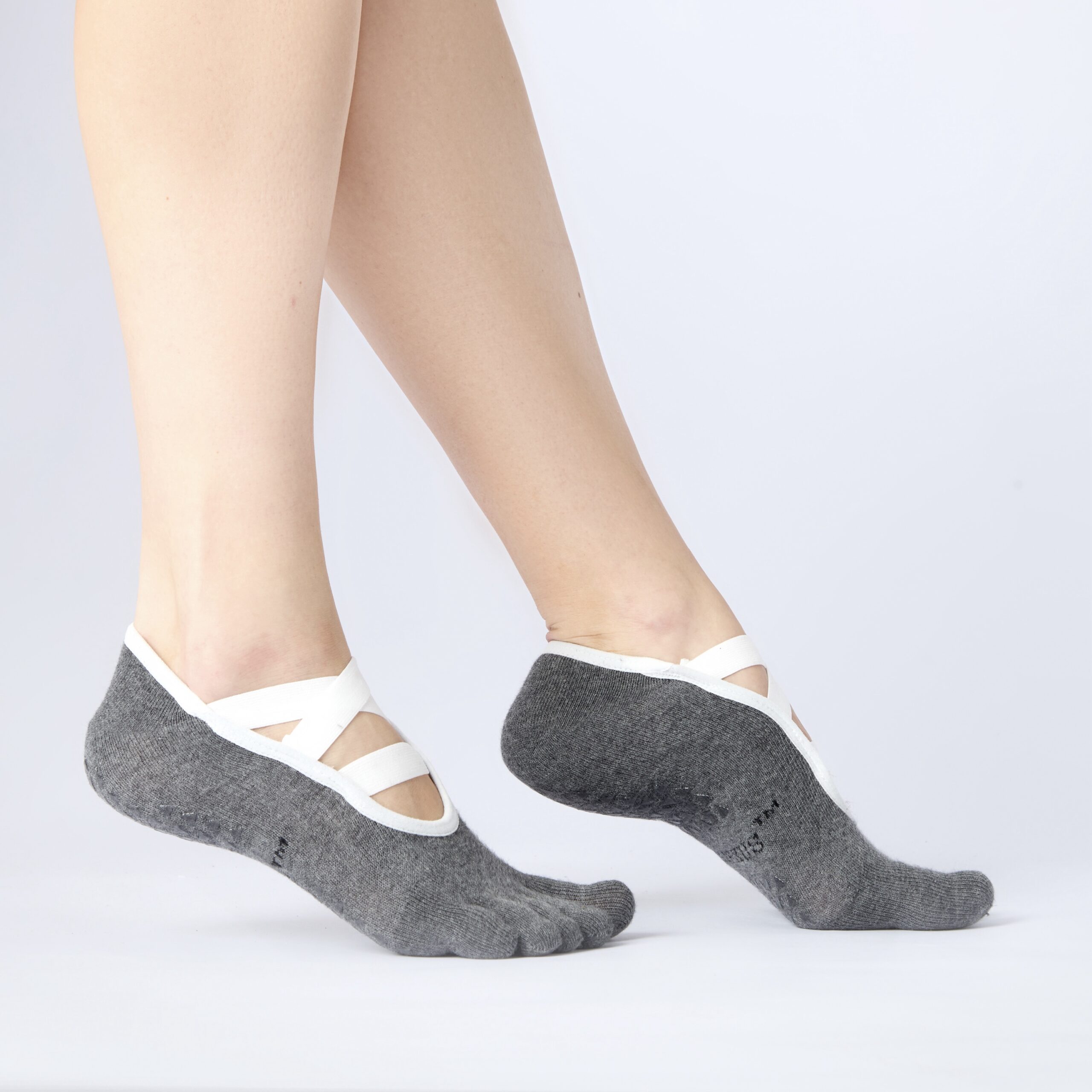
Air drying is usually the safest choice
Lay the socks flat or hang them away from radiators and strong direct heat. A tumble dryer can expose elastane and grip material to temperatures that shorten their life, even when the fabric appears intact. Do not iron the sole, and avoid placing it directly on a heated rail.
Reshape the heel and cuff while the sock is damp, then allow both fabric and grip to dry completely before storing. In a typical UK home, airflow matters more than intense heat: a drying rack in a ventilated room is preferable to a closed bathroom.
Managing odour and marks without harsh treatment
Prompt washing is the most effective odour strategy. If a care label permits, pre-soak briefly in cool water with mild detergent, then rinse well. Treat a small mark from the fabric side and test any product on an inconspicuous area. Avoid stiff brushes on printed or silicone details.
Persistent odour may indicate that socks remained damp for too long or that detergent has built up. Simplify the routine, improve drying time and alternate pairs. The shop all grip socks makes it easy to build a rotation, while the size guide helps ensure each replacement fits as securely as the original.
Storage and the point at which washing cannot help
Store clean, fully dry socks flat or loosely folded. Do not roll them into a tight ball with the grips pressed against dirty fabric, and keep them away from sharp fasteners. A separate drawer section or breathable pouch preserves shape and makes class preparation simple.
Cleaning cannot reverse stretched elastic, missing grip pieces or fabric that rotates beneath the foot. When traction is inconsistent after a correct wash, compare the pair with a newer sock and consider replacement. Review the grip sock collections and UK delivery information before your next class rather than waiting until the sole fails completely.
Frequently asked questions
Can Pilates grip socks go in the washing machine?
Many can, but always follow the care label. A cool gentle cycle, mesh bag and mild detergent are commonly recommended.
Can I tumble-dry grip socks?
Air drying is normally gentler on elastic and applied grip materials. Use a dryer only when the specific care label allows it, and select the lowest suitable heat.
How often should I wash grip socks?
Wash them after each class or wear. This keeps the fabric fresh and removes dust, lotion and body oils that can reduce clean contact.
Consistency keeps grip socks studio-ready
The simplest care routine is also the most effective: remove damp socks from your bag, wash gently with mild detergent, skip softener and high heat, then store them completely dry. Good care protects comfort and traction, although every pair will eventually wear. Explore the SHINEXUS difference for more on construction and visit the frequently asked questions whenever a product-care question is not covered on the label.
A weekly care routine for frequent Pilates clients
If you attend several sessions each week, create a simple rotation rather than washing one pair urgently before every class. Keep clean pairs in a dry drawer, place worn pairs in a breathable pouch and choose one regular laundry day. This makes it easier to follow a cool gentle cycle and air-dry fully instead of reaching for high heat because the next booking is close.
Once a week, inspect the heel, forefoot and cuff while the socks are clean. Look for stretched fabric, grip pieces beginning to lift and areas that remain coated after rinsing. Check the inside as well as the sole; detergent residue and trapped lint can affect comfort even when the outside looks presentable. A consistent five-minute inspection helps you identify gradual change and plan a replacement before traction becomes uneven. It also reduces unnecessary washing, because each pair enters the laundry only after wear and follows the same measured process.
