

Some people love the direct feedback of bare feet on a mat. Most studios, however, ask for grip socks on the reformer. This guide compares the two on traction, hygiene, confidence and practicality so you can make an informed choice for studio and home practice. It does not make medical claims; it simply lays out the practical differences most new students ask about.
Traction on different surfaces
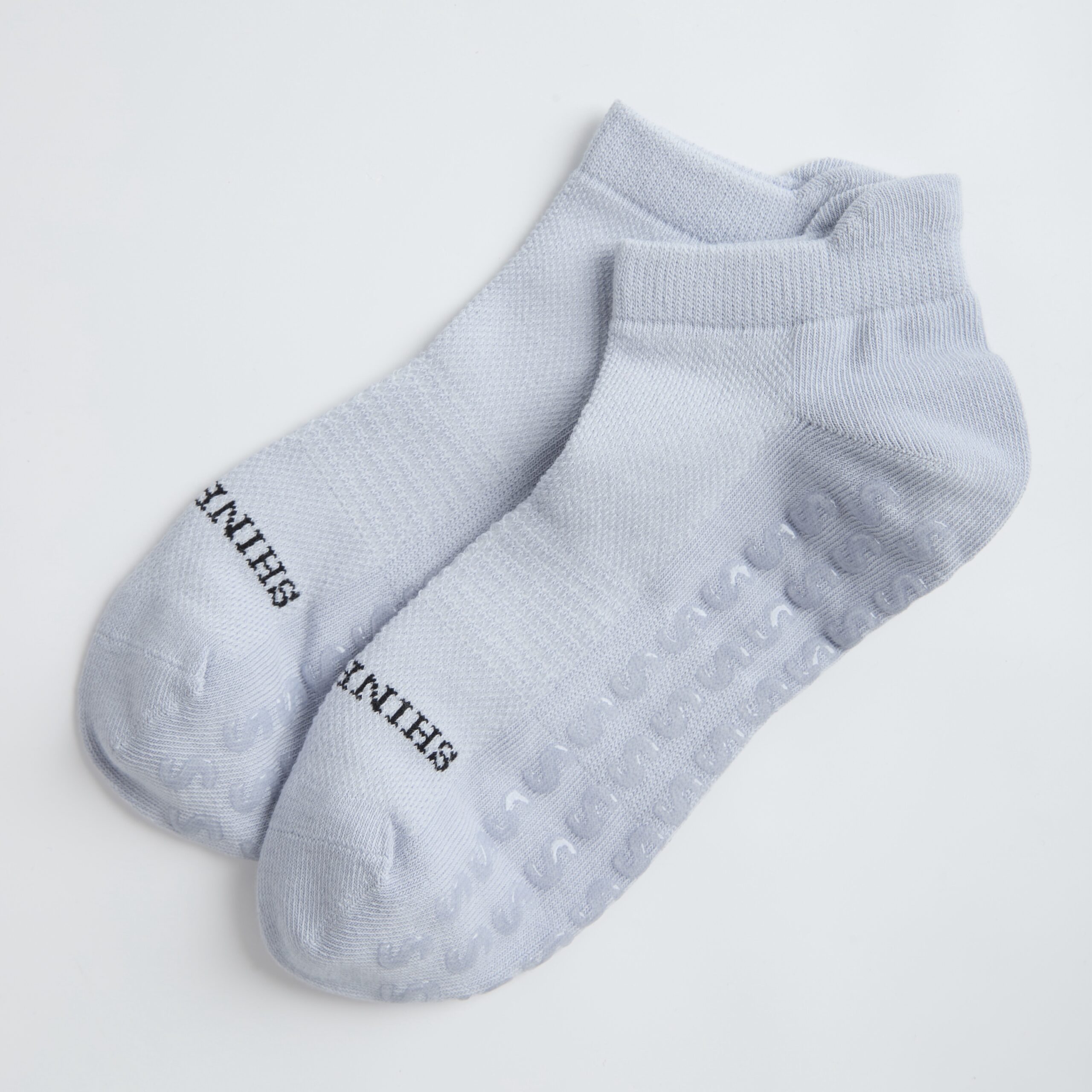
Bare feet grip well on a clean yoga mat, but reformers combine polished wood, metal rails and sliding carriages. On those surfaces, bare feet can slip, especially with sweat. Grip socks add a silicone layer that anchors the foot to the equipment. The difference is most noticeable in standing balance work and when pushing away from the footbar. For the science of why studios require them, read whether you need grip socks for reformer Pilates.
Hygiene and studio policy
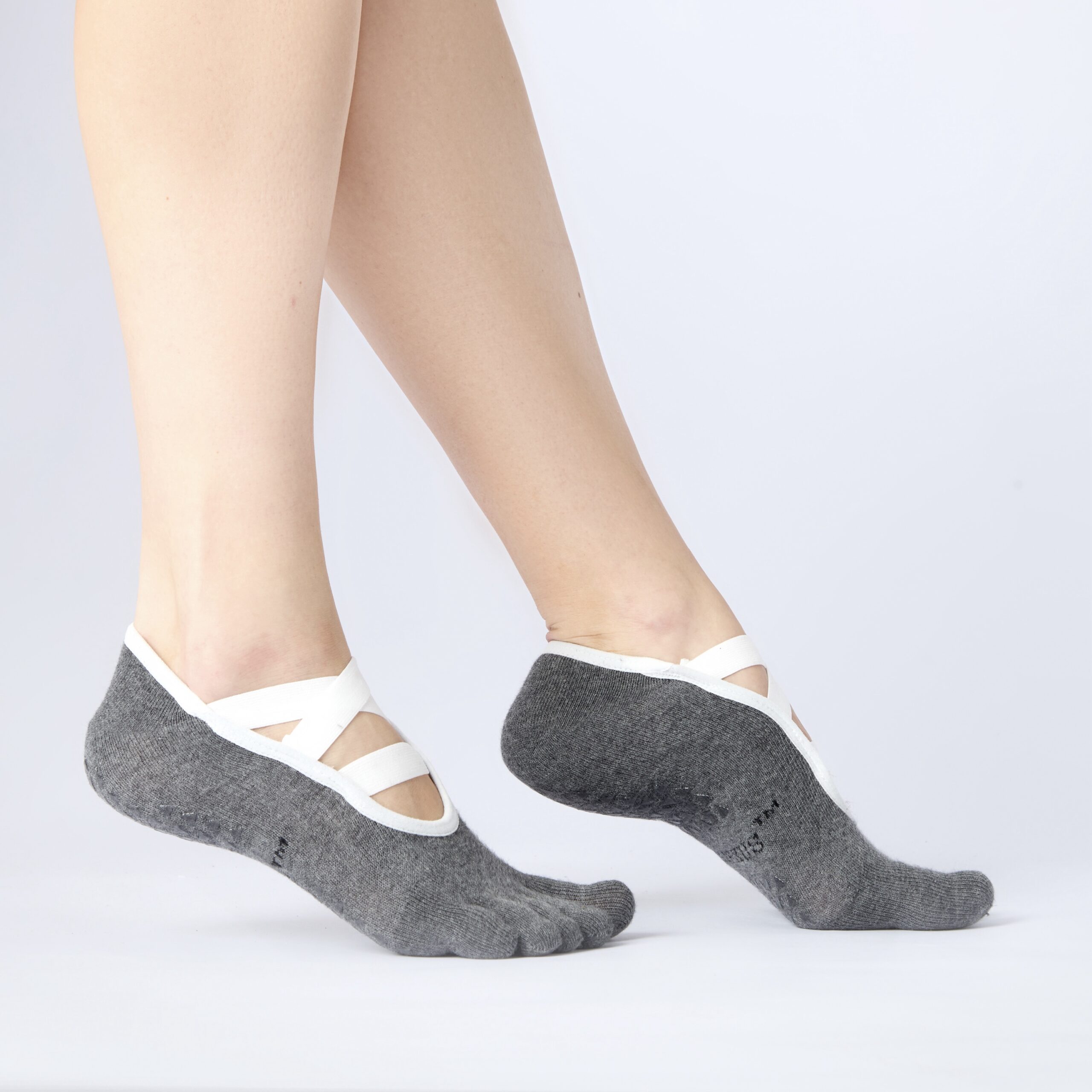
Reformer equipment is shared across many clients each day. Grip socks create a clean barrier between your feet and the equipment, which is why most studios require them and some prohibit bare feet entirely. Clean feet are still essential, but the sock adds a practical layer. This is also why our etiquette guide recommends bringing your own pair rather than borrowing.
Confidence and feedback
Bare feet offer direct feedback on a mat, and some advanced students prefer that in floor work. Grip socks offer stable contact that can build confidence in standing and balancing exercises, especially when you are new. The trade-off is a small layer between skin and surface. Many practitioners combine both: bare feet on the mat at home, grip socks on the reformer. Compare them with our look at grip socks vs regular socks.
Home practice
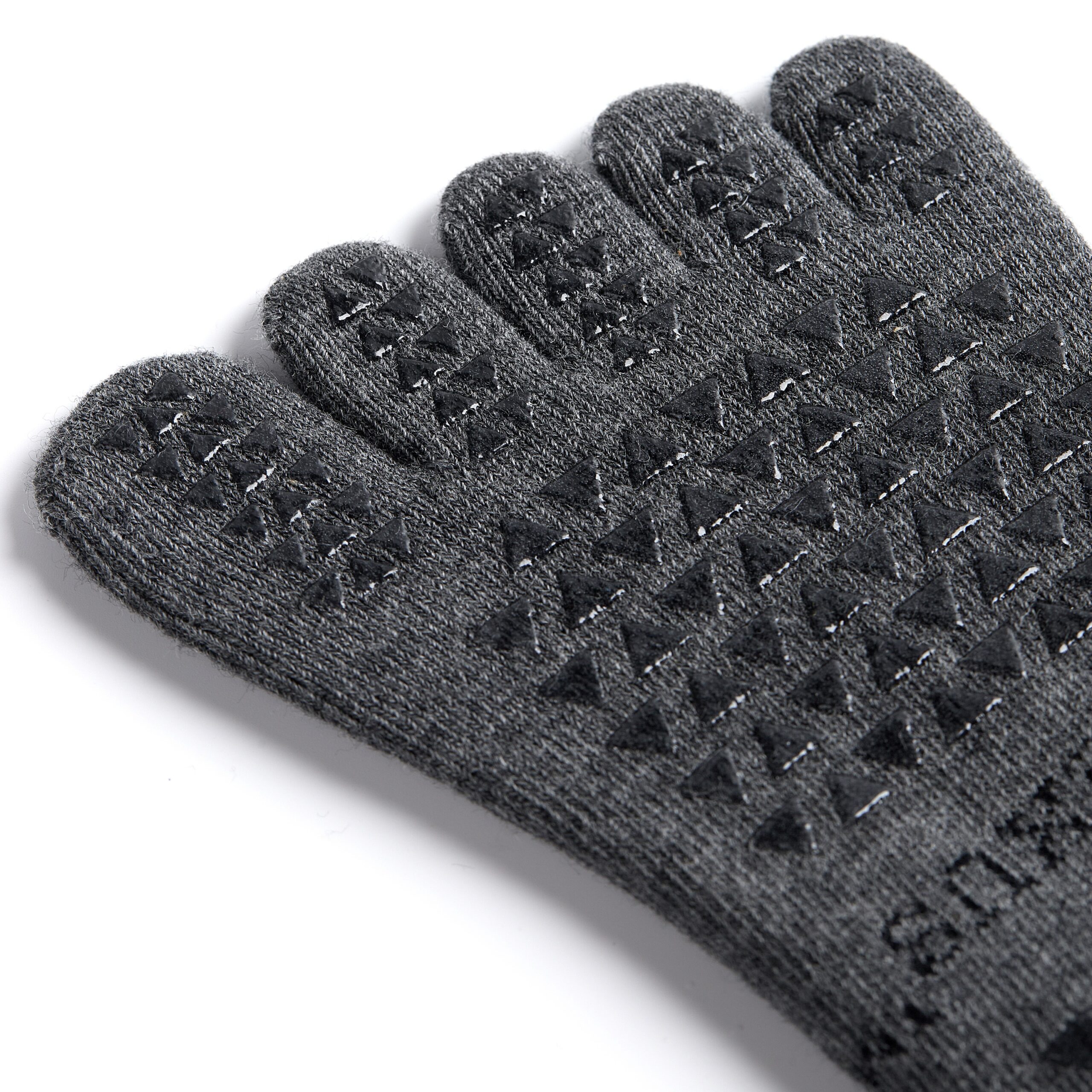
At home on your own mat, bare feet are perfectly acceptable. If you own a reformer or use wooden equipment, grip socks still help, and they protect the floor from sweat. Lagree-style methods and home reformers increasingly use grip socks for the same studio reasons. Choose the option that matches your equipment; our beginners’ guide covers what to expect.
Making the choice
For studio reformer classes, grip socks are the practical default. For home mat work, bare feet are fine. If your studio allows bare feet on mat work, you can use whichever feels better. Always follow the studio’s policy, and choose a well-fitting pair so the grip actually works. Use the size guide and shop the range.
Side by side
| Factor | Grip socks | Bare feet |
|---|---|---|
| Traction on reformer | High, silicone-assisted | Can slip on wood/metal |
| Traction on mat | Good | Excellent when clean |
| Hygiene | Clean barrier on shared equipment | Direct contact |
| Feedback | Slightly filtered | Most direct |
| Studio policy | Usually required | Often restricted on reformers |
Questions about studio policy are answered on the FAQs page. Browse SHINEXUS grip socks for a studio-ready pair.
Footwork, balance and the role of the sock
In reformer footwork, the foot is fixed on the footbar while the carriage moves. A grip sock keeps that anchor stable so you can focus on pressure distribution rather than slipping. In standing balance exercises, the sock lets you shift weight gradually without sudden slides. Bare feet can feel more connected on a firm mat, but on equipment the predictable contact of a grippy sole often builds confidence faster. This is not about comfort only; it is about safety and consistent feedback. Our beginners’ guide explains what to expect.
Home practice and trending barefoot debate
Online debate about barefoot training has grown, with many coaches emphasising foot strength. There is a middle ground: practise barefoot on a clean mat to build foot awareness, then use grip socks on reformers and shared equipment. Most experienced students combine both rather than choosing one exclusively. Studio policy still dictates equipment use, so check with your teacher. Browse the collections for a pair that bridges both worlds.
Hygiene and shared equipment
Studios clean equipment between classes, but a personal barrier remains the most reliable layer. Grip socks also protect the equipment from sweat, which means studios generally prefer them. Bare feet on shared reformers are discouraged for the same reason towels are expected: hygiene. If a studio allows bare feet on mat work, keep feet clean, and bring grip socks for any equipment-based segment. Our etiquette guide covers studio expectations in more detail.
At home, bare feet are fine on your own mat, but if you own a reformer, grip socks still protect the wooden rails from sweat and oils. Choose a pair you enjoy wearing so you actually use it. Browse the range and check the FAQs.
Listening to your instructor
Finally, let your teacher guide the choice. Instructors see hundreds of feet and know which surfaces are slippery. If your studio requires grip socks, comply; if it allows bare feet on mat work, you can choose. When in doubt, bring both and ask. A good instructor will explain why the rule exists. For studio expectations, read the etiquette guide and choose a reliable pair from the shop.
The bottom line
Grip socks and bare feet are not rivals; they suit different surfaces. Use bare feet on your own clean mat, and grip socks on reformers and shared equipment. Follow studio policy, choose a well-fitted pair, and enjoy stable, confident practice. The choice is less about preference and more about context. Browse the range for a pair you will wear every week.
A simple rule of thumb
Use grip socks whenever your foot meets shared or slippery equipment, and use bare feet only on your own clean mat. This single rule keeps you safe, hygienic and confident. Studios will tell you which surfaces require socks, and you can adapt at home. Choose a well-fitted pair and rotate it across classes. See the range.
Making the choice simple
When in doubt, bring grip socks to every class. They work on reformers, barres and most shared equipment, and they are accepted everywhere. Bare feet can stay for home mat practice. This flexible approach keeps you covered in any setting, and a reliable pair lasts months with basic care. Browse the range and use the size guide.
Frequently asked questions
Are grip socks safer than bare feet on a reformer?
They provide more reliable traction on wood and metal, which most studios consider safer for shared equipment. Bare feet can still be fine on a mat at home.
Can I go barefoot in Pilates?
On a clean mat, yes. On a reformer, most studios require grip socks for safety and hygiene.
Do grip socks reduce foot feedback?
Slightly, but the stable contact often improves confidence. Toe socks can restore more articulation than traditional styles.
What if my studio bans socks?
Follow the studio rule. If bare feet are required on mat work, clean feet are enough; bring grip socks for reformer days.
Final guidance
For studio reformer classes, grip socks are the safer, more hygienic default. Bare feet remain a valid choice for clean home mat practice. Choose by surface and studio policy, fit your pair with the size guide, and explore the collections for the right style.
