

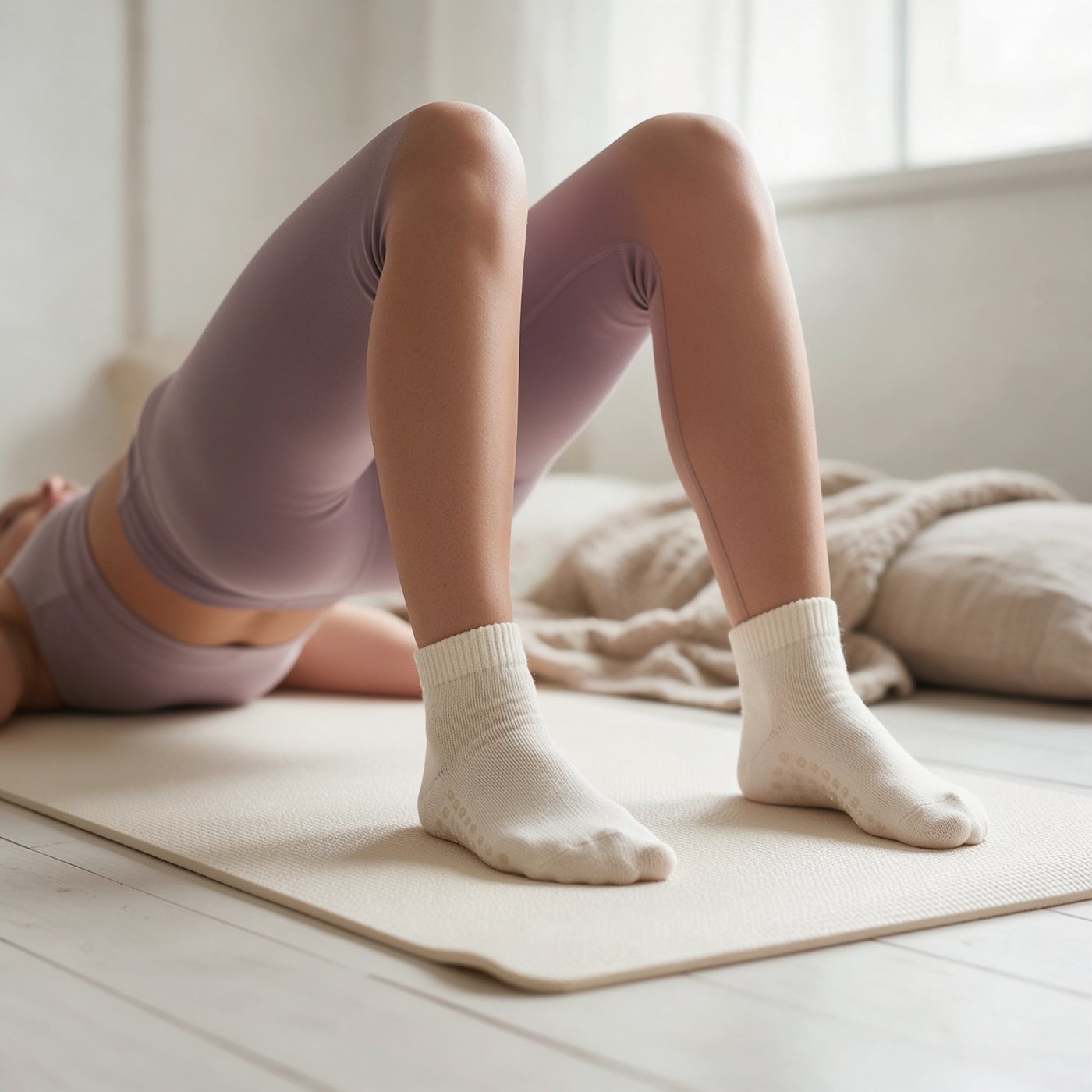
Pregnancy changes your centre of gravity, your balance and, often, the size of your feet. None of that means giving up the studio — it means paying closer attention to the small details, and your socks are one of them. This guide covers fit, comfort and the practical questions that come up in class.
Feet change before you notice
Late pregnancy often brings a degree of swelling in the feet and ankles, particularly after a long day. The arch can flatten slightly as ligaments soften, and shoes that fitted comfortably in the first trimester may feel tight by the third. Socks are usually the first thing to show it, because they sit closest to the skin.
If a sock leaves a deep mark at the cuff, that is information. It does not necessarily mean the sock is the wrong size for your foot; it may mean the sizing that suited you six months ago no longer matches the foot you have today.
Why grip matters more now
Balance shifts as your body’s centre of gravity moves forward. In a studio, that makes transitions slower and standing work more deliberate. Grip socks help in a modest, practical way: they reduce the small slides that force you to readjust your footing mid-movement.
They do not prevent falls, and no sock should be described as doing so. What they offer is a more consistent surface under the foot, which leaves you with more attention for the movement itself. If you are working on a wooden studio floor, that consistency is worth having.
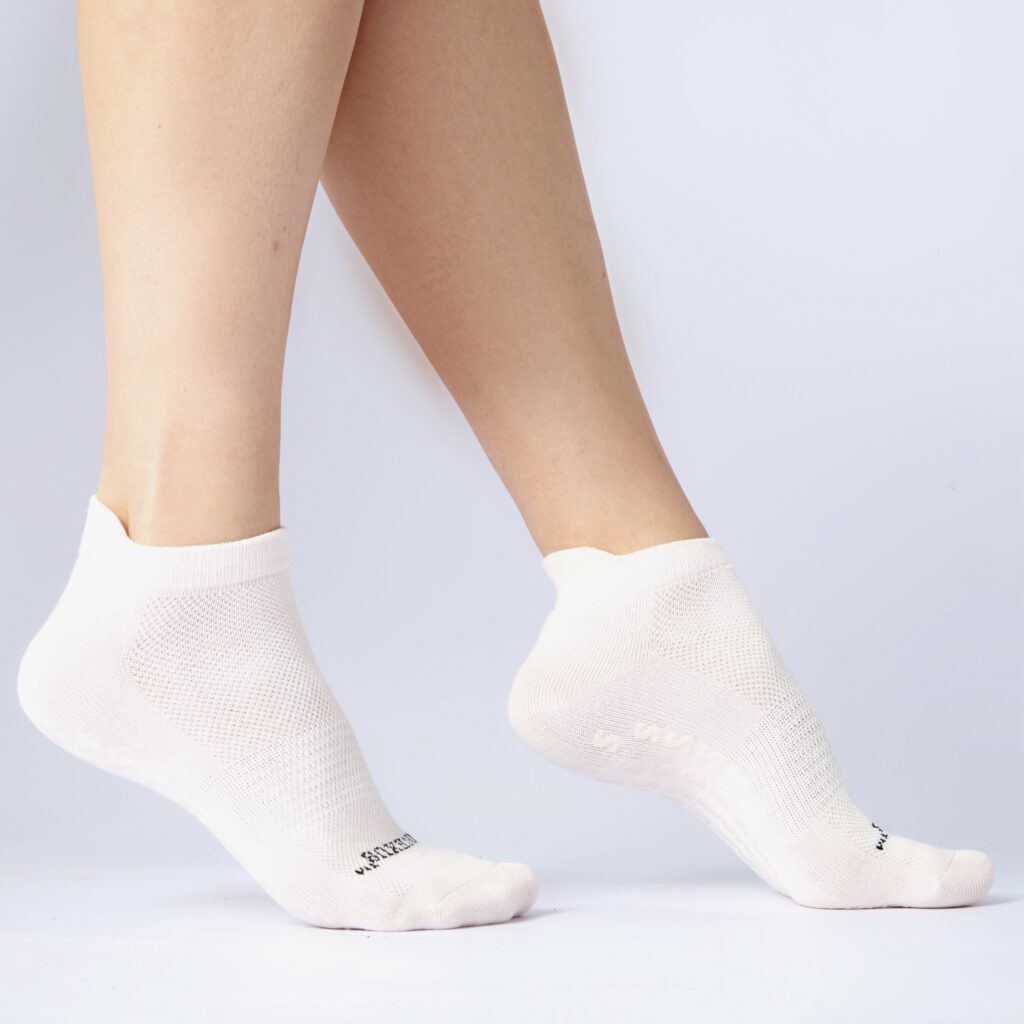
Our ankle grip socks are the style most clients choose for reformer work in pregnancy, largely because the low profile does not press on the ankle and the midfoot structure gives a gently held feeling without compression.
Choosing a size as feet swell
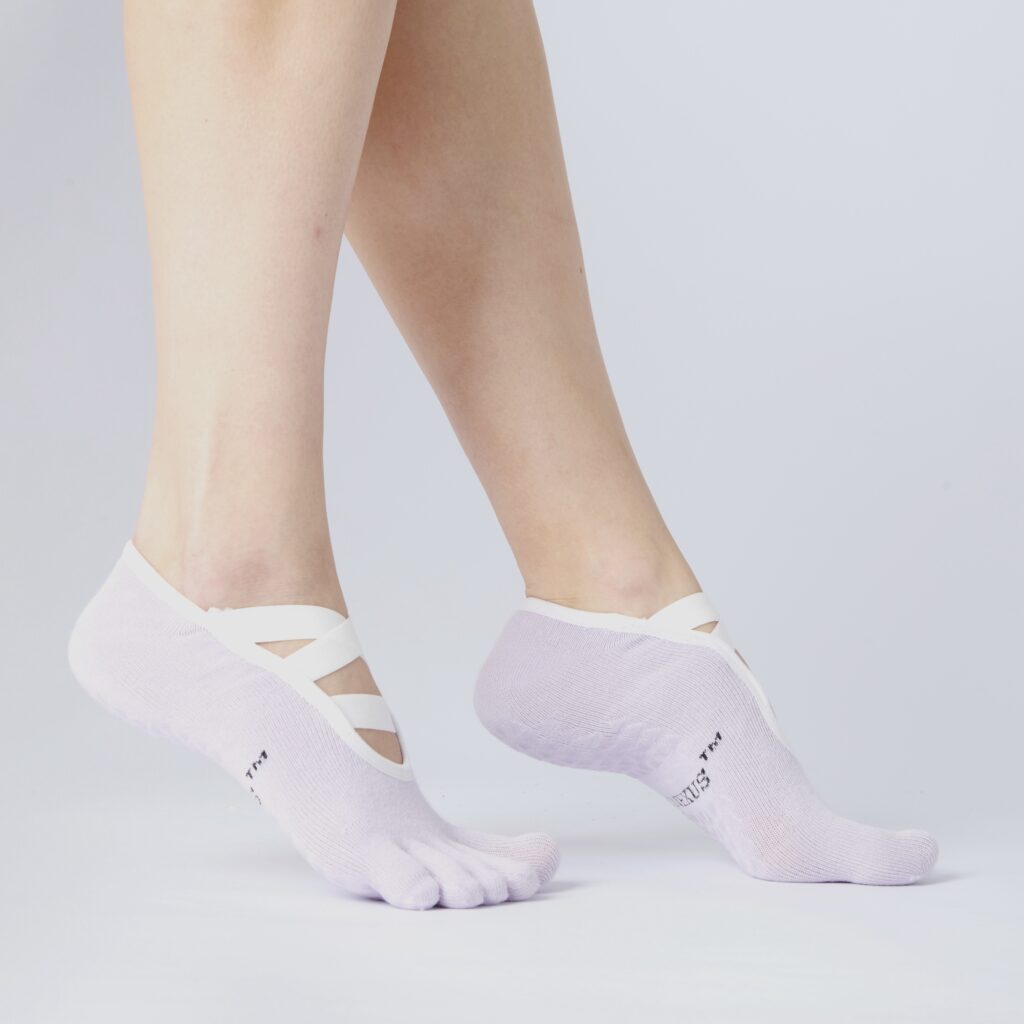
Our sizes are S/M for EU 35–38 and M/L for EU 39–42. If you are at the boundary, or if swelling has pushed you up half a size, choose the larger option. A slightly roomier sock is comfortable; a tight cuff is not, especially in the afternoon.
Two practical notes. First, try socks on later in the day, when swelling is at its most noticeable, rather than first thing in the morning. Second, keep a second pair half a size up for the final weeks if you are close to a boundary. The size guide has the full conversion table.
Getting them on comfortably
Bending to put socks on becomes awkward well before the third trimester. Sit down, bring the foot towards you rather than reaching down past the bump, and roll the sock on from the toe rather than pulling at the cuff. A sock with a little stretch at the opening is much easier to manage one-handed.
If you are in a class, ask for a moment before the warm-up rather than rushing. Instructors see this every week and will not be surprised.
Hygiene and comfort in class
Shared equipment and shared floors make a clean pair of socks a courtesy as well as a comfort. Bring a fresh pair for each class if you are practising more than twice a week, and give them a cold wash afterwards. Our FAQs cover the practical side of returns and care if you are buying several pairs at once.
Keep the rest of your kit simple: a water bottle, a hair tie, and a light layer you can remove. Studios vary in temperature, and pregnancy tends to make that more noticeable rather than less.
Comfort checklist
| Consideration | Practical approach |
|---|---|
| Cuff pressure | Size up if you see a mark after ten minutes |
| Swelling | Try socks on in the afternoon, not the morning |
| Putting them on | Roll from the toe, seated, rather than pulling the cuff |
| Class length | Shorter sessions with a spare pair in your bag |
| Floor temperature | A crew height for cold studios, ankle for warm ones |
Talking to your instructor
Tell your instructor you are pregnant before the class, even if you are early on. They can offer modifications and adjust equipment for comfort. If you have been advised to limit certain movements or to rest, follow that advice rather than a general guide — including this one.
The NHS guidance on exercise in pregnancy is a sensible starting point for the general principles, and your midwife or GP is the right person for anything specific to your situation.
Frequently asked questions
Can I wear normal grip socks during pregnancy?
Yes. The main thing to watch is cuff pressure. If the sock leaves a mark or feels tight, move up a size or choose a looser style.
My feet have swollen. Do I need a bigger sock?
Often, yes. If you are near the top of a size range, the larger size will feel considerably more comfortable in the afternoon.
Are grip socks safer than bare feet in class?
They offer a more consistent surface underfoot, which some people find reassuring. They are not a safety device, and balance work still needs the usual care.
Which style is best for reformer classes?
Ankle height is the most common choice, with a fitted heel. Crew socks suit colder studios but add pressure at the calf.
Should I buy several pairs?
Two or three is practical, especially if you are attending more than once a week and want a dry pair available.
When should I stop attending classes?
That is a medical question, not a product one. Follow the advice of your midwife, GP or physiotherapist.
Small adjustments, same practice
Pregnancy does not require a new wardrobe of studio kit. It asks for a closer look at fit: a size that accommodates swelling, a cuff that does not press, and a sock that is easy to put on when bending is awkward. Get those right and the rest of the class stays remarkably familiar.
