

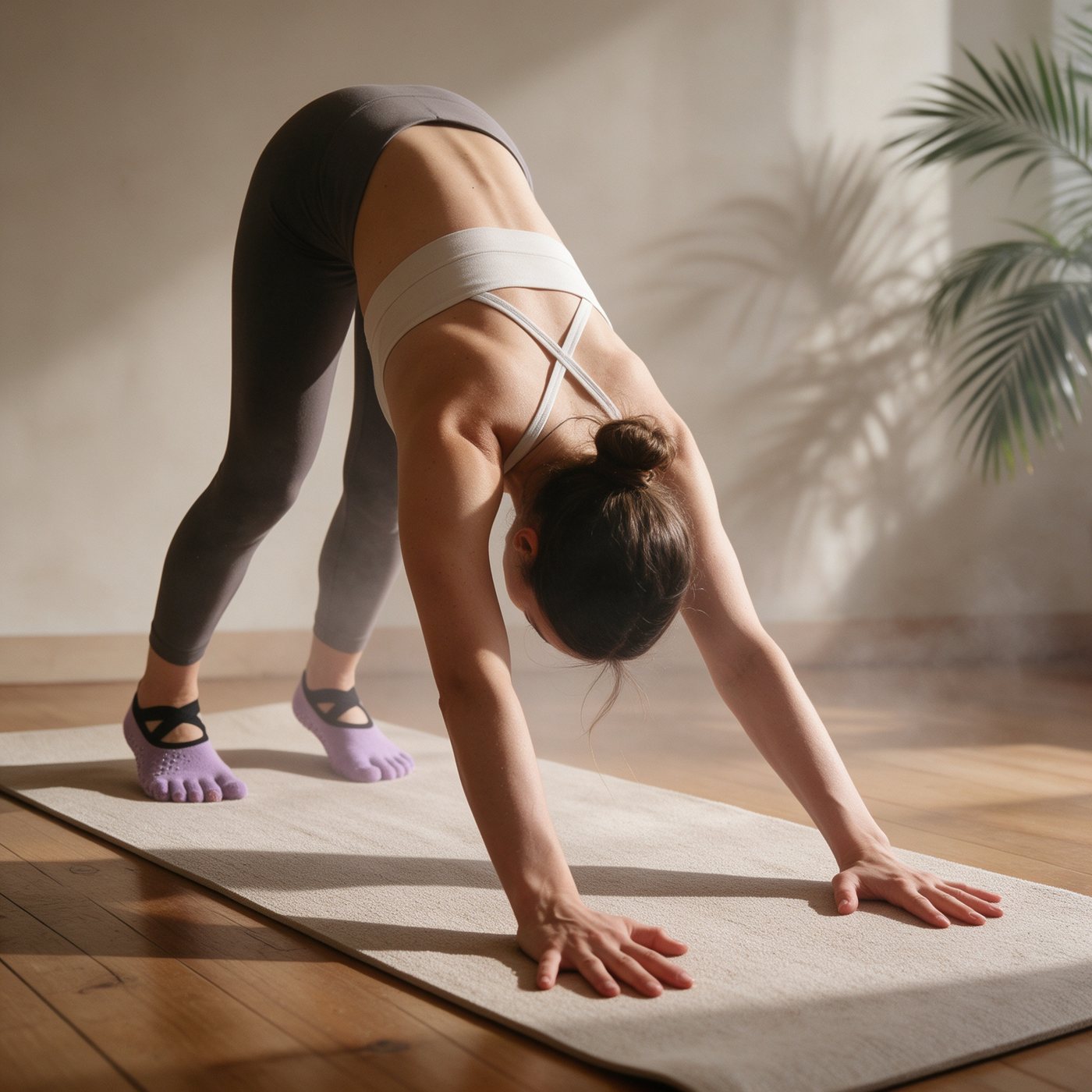
A heated room, a fast flow and a mat that gets damp within twenty minutes: hot yoga is a genuine stress test for any sock. Grip that feels secure in a cool studio can start to drift when sweat builds up. Here is what actually helps, and what is worth ignoring.
What heat changes
Heat affects grip in two ways. The obvious one is moisture: sweat collects between the sole and the mat, and water is a poor substitute for friction. The less obvious one is that feet swell slightly in a warm room, which changes how a sock fits over the course of an hour.
The result is a slow decline rather than an instant failure. The first ten minutes feel fine, the middle of the class feels slightly less planted, and by the standing series you are adjusting your feet more than you would like. Understanding that curve is more useful than searching for a mythical sweat-proof sock.
Fabric that copes with sweat
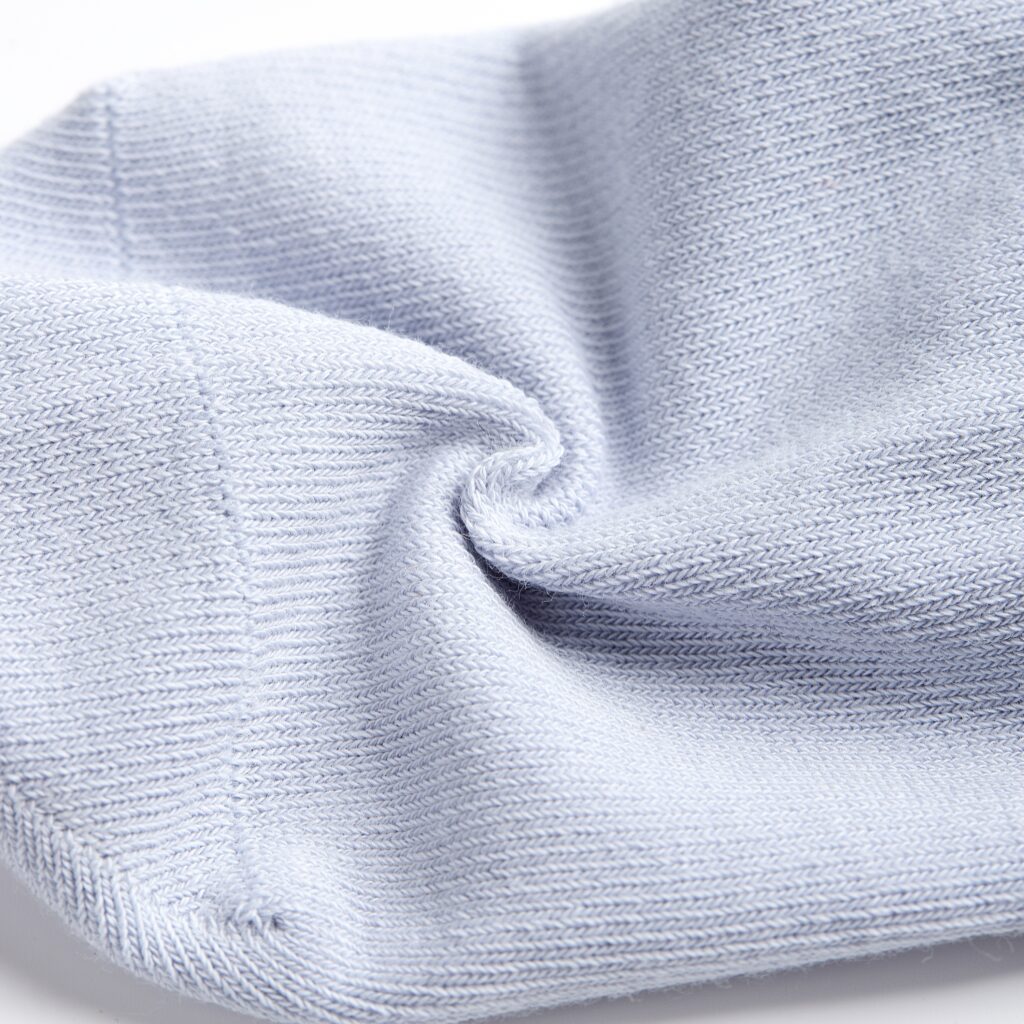
Cotton absorbs moisture well, which keeps the surface of the sole drier for longer than a purely synthetic knit. A cotton-rich blend with a small amount of stretch is usually the best compromise for warm practice: absorbent where it matters, close-fitting everywhere.
Very thick socks are the wrong answer. They hold more moisture, take longer to dry and reduce the feedback you get through the sole — which matters in balance poses. Thin, close-fitting socks with a dense grip pattern behave better in heat than plush ones.
Our yoga socks are built on a cotton-rich blend with a high-density transparent PVC sole. They are not waterproof, and they are not sold as such. They simply behave more predictably as moisture builds, which is the realistic goal.
Fit under pressure
In a hot room, a sock that was snug at the start can feel tight at the cuff by the end. That is normal. What you want to avoid is the opposite problem: a sock loose enough that the heel rotates when your foot gets damp.
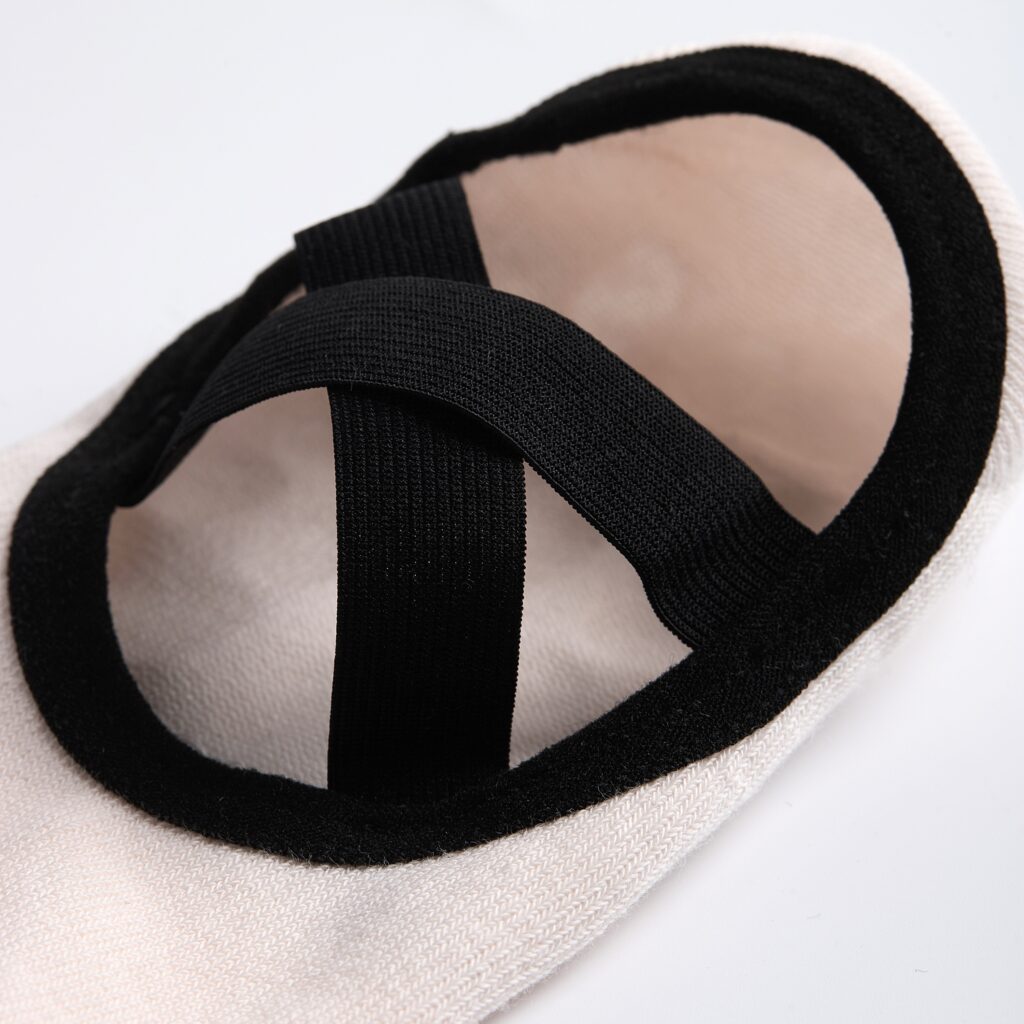
Check the heel before class, not during. Stand, lift one heel and press the ball of the foot down. If the heel of the sock lifts away from your heel, the fit is too loose for hot practice. A fitted heel with a raised tab is the detail that keeps everything in place when the fabric gets slick.
If you are between sizes, this is one of the few situations where the smaller size is worth considering — provided it does not press across the toes.
Grip on a wet mat
Mat material matters more in heat than most people realise. Closed-cell mats become slick when damp; open-textured mats drain better but can feel rougher underfoot. If your studio provides mats, it is worth noticing which ones you trust in a hot class and adjusting your expectations accordingly.
Placement helps too. In standing poses, press through the ball of the foot and the outer edge rather than the whole sole. In balances, spread the toes deliberately — the grip pattern works best when the foot is active rather than passive.
If you already practise yoga regularly, our yoga grip sock guide covers the wider question of whether socks suit your style of practice.
Managing between classes
A damp sock left in a bag until the next evening is the fastest way to shorten its life. Rinse after class if you can, or at least hang it to dry rather than folding it into a pouch. Two pairs in rotation is the simplest fix for anyone practising more than twice a week in a heated room.
Wash cold and air dry. Heat from a tumble dryer is the main cause of a grip sole losing its texture early. The care guide explains why, and the difference between a cold gentle wash and a hot one is more significant than most people expect.
What to look for in a hot yoga sock
| Feature | Why it matters in heat |
|---|---|
| Cotton-rich blend | Absorbs moisture instead of letting it sit on the sole |
| Dense, even grip pattern | Keeps contact consistent as the mat gets damp |
| Fitted heel with tab | Stops the foot rotating inside a slick sock |
| Thin profile | Dries faster, preserves feedback through the sole |
| Two pairs in rotation | Means you never start a class in a damp sock |
When to change socks mid-class
Most people never need to. If you are in a double class, a back-to-back workshop or a retreat day with three sessions, changing into a dry pair between classes is worth the two minutes. Grip is only part of it — a dry sock is simply more comfortable for the second hour.
Keep the spare pair in a small cotton bag rather than loose in your mat bag, where it will pick up dust and mat crumbs. Small habits like this are what keep a pair working for a full season.
Frequently asked questions
Are grip socks necessary for hot yoga?
Not universally — many hot yoga studios practise barefoot. Where socks are required or preferred, a thin cotton-rich pair with a dense sole is the most practical choice.
Do grip socks stop my feet sliding in a hot class?
They help significantly, but sweat reduces friction on any surface. Expect a small decline towards the end of a hot class rather than perfect grip throughout.
Should I wear toe socks for hot yoga?
If you like toe separation, yes. Five-toe styles can feel cooler between the toes, though they take slightly longer to put on when your feet are damp.
How do I stop my socks getting sweaty between classes?
Air them rather than folding them away, and carry a spare pair in a cotton bag. Avoid sealing damp socks in plastic.
Can I wash grip socks with my yoga clothes?
Yes, on a cold gentle cycle. Avoid fabric softener, which coats the sole and reduces grip.
Will hot washing damage the grip?
Repeated hot washing can. Heat is the main risk to the PVC pattern, so keep the temperature low and air dry where possible.
A realistic approach to heat
Hot yoga does not demand a special sock so much as the right combination: breathable fabric, a close fit and a dense sole, worn dry and washed cold. Accept that grip will soften slightly as the room warms, and plan for a spare pair when you have more than one class in a day. That is a more useful expectation than any promise of permanence.
