

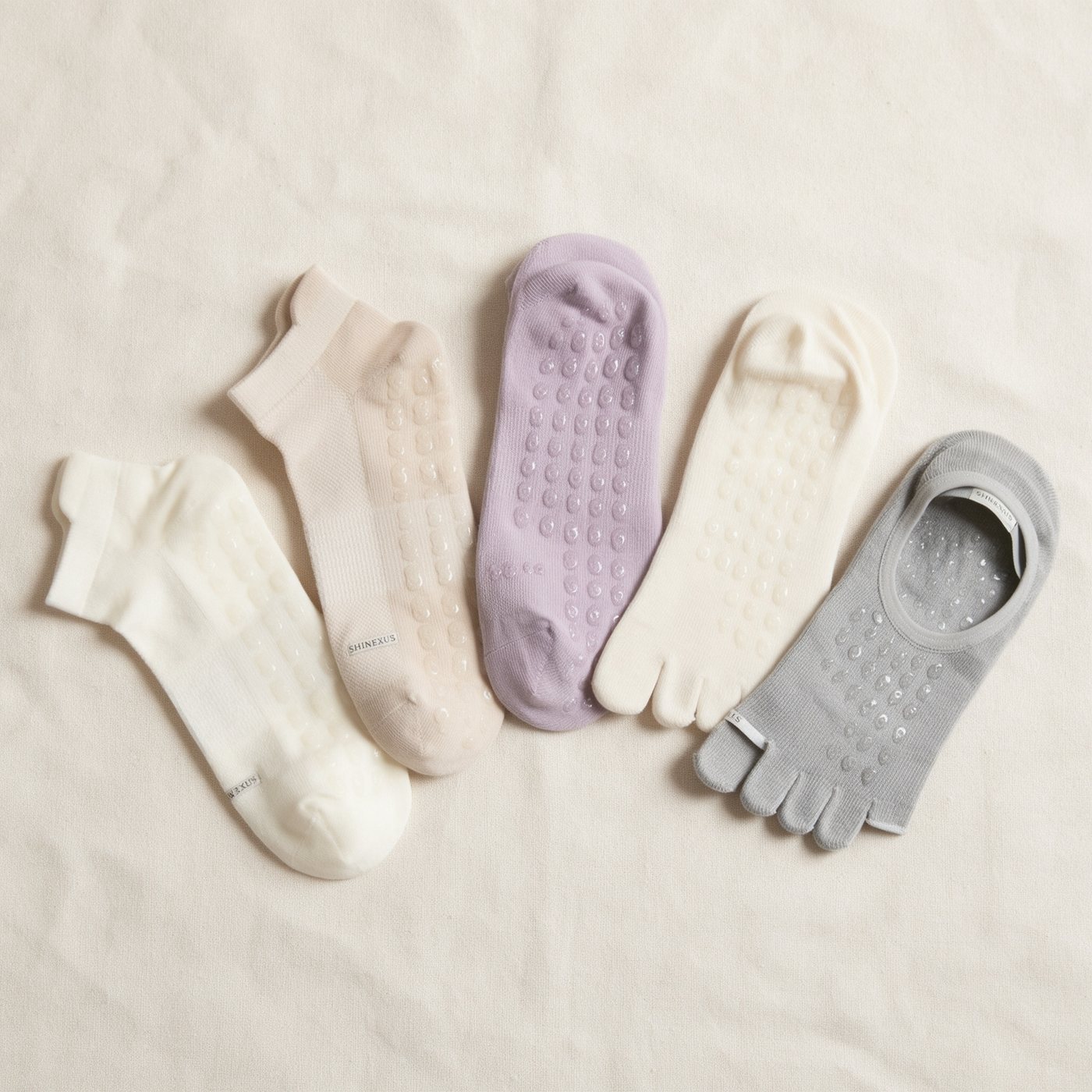
It is one of the least glamorous questions in studio life, and one of the most practical: how many pairs of grip socks does a normal week actually need? The answer depends less on how often you practise than on how often you want to wash, and how long you want each pair to last.
Why one pair is rarely enough
Grip socks are worn directly against the skin, on a shared studio floor, and often for an hour at a time. One pair will get you through a class, but it will not get you through a week unless you wash after every session. For most people that is not realistic.
There is also a less obvious reason. Grip performance depends on the sole being clean. Dust, mat residue and sweat all sit in the pattern, and a pair worn three times without a wash will feel less secure even before it looks tired. Rotation is not a luxury; it is how the product is designed to be used.
Think in washes, not classes
Most people can wash socks with their normal cold laundry rather than running a separate load. If you already do a cold wash twice a week, you have two wash cycles available. That gives you a simple formula: the number of classes between washes determines how many pairs you need.
Wash after one wear if you sweat heavily or practise in a hot room. Two wears is reasonable for gentle mat classes if you air the socks between sessions. Three is the practical limit, and only for socks that are hung to dry immediately.
Cold water and a gentle cycle protect the elastane and the sole. Our care guide sets out the details, including why the grip sole should be kept away from high heat.
The two-pair baseline
Two pairs covers the most common pattern: one class on the way into the week, one towards the end, with a wash in between. It also gives you a spare for the day a class runs long and you have somewhere to be afterwards.
Two pairs is the sensible starting point if you are new to grip socks and not yet sure how often you will practise. Choose two different styles rather than two identical pairs — an ankle pair for reformer work and a crew or yoga pair for mat sessions gives you more flexibility than a duplicate.
Three or four for a busy week
Three classes a week with a single weekend wash cycle means three to four pairs. Four is the comfortable number: it allows one pair in the wash, one drying, one in your bag and one spare. That sounds like a lot until you compare it with the alternative — doing a tiny load of laundry every other day.
If you teach, four is a minimum. Instructors spend more time on the floor than anyone in the room, and a damp sock by the third class is a genuine comfort issue rather than a vanity one.
Rotation and longevity
Rotating pairs does more than keep you in clean socks. It gives each pair time for the knit to recover between wears, which slows the gradual loss of shape that eventually affects fit. A pair worn every day will loosen at the heel sooner than the same pair worn twice a week.
There is no published wear-life figure we can quote honestly, because it depends on how often you wear them, how you wash them and what surface you walk on. What we can say is that the signs of replacement are consistent: a sole that has lost its texture, a heel that no longer stays in place, and a cuff that has stopped springing back. Our guide on how long grip socks last goes through those signs.
How many pairs by routine
| Classes per week | Washes per week | Sensible number of pairs |
|---|---|---|
| 1–2 | 1 | 2 |
| 3 | 1 | 3–4 |
| 4–5 | 2 | 4–5 |
| Teaching daily | 2 | 5–6 |
The table assumes a cold wash shared with other laundry. If you wash socks separately, add a pair rather than running the machine more often.
Building the drawer gradually
There is no need to buy five pairs at once. Most people build up over a season: start with two, add a third when the wash cycle starts to feel like a constraint, and add a fourth when the first pair begins to soften.
Colour is the easiest way to keep track of rotation. A pair in each colour makes it obvious which socks have been worn this week, and it avoids the small frustration of matching two socks from different pairs after a wash. If you are deciding between styles, the washing routine guide explains how different fabrics behave over time.

Frequently asked questions
Can I wear grip socks twice before washing?
For a gentle mat class, yes, if you air them between wears. For reformer work or a warm studio, wash after each use.
Do I need separate socks for each type of class?
No. A well-fitted ankle pair works across reformer, mat and barre. A second style is useful for variety and for colder studios, not essential.
How many pairs do instructors usually keep?
Four to six is typical for people teaching most days, so there is always a dry pair available between classes.
Does rotating pairs make them last longer?
It helps. Time to recover between wears slows the loss of shape, and a sock that fits properly puts less strain on the knit.
Is it worth buying a spare pair for my bag?
If you travel straight from work or teach, yes. A dry pair takes up very little space and solves the most common mid-week problem.
How should I store them between classes?
Loose, dry and out of direct sunlight. A mesh laundry bag keeps pairs together and stops them tangling in the wash.
The number that actually works
Two pairs is a reasonable start, three or four is the realistic answer for a steady studio habit, and five or six covers daily teaching. The right number is the one that means you never reach for a damp pair before a class — everything else is detail.
