

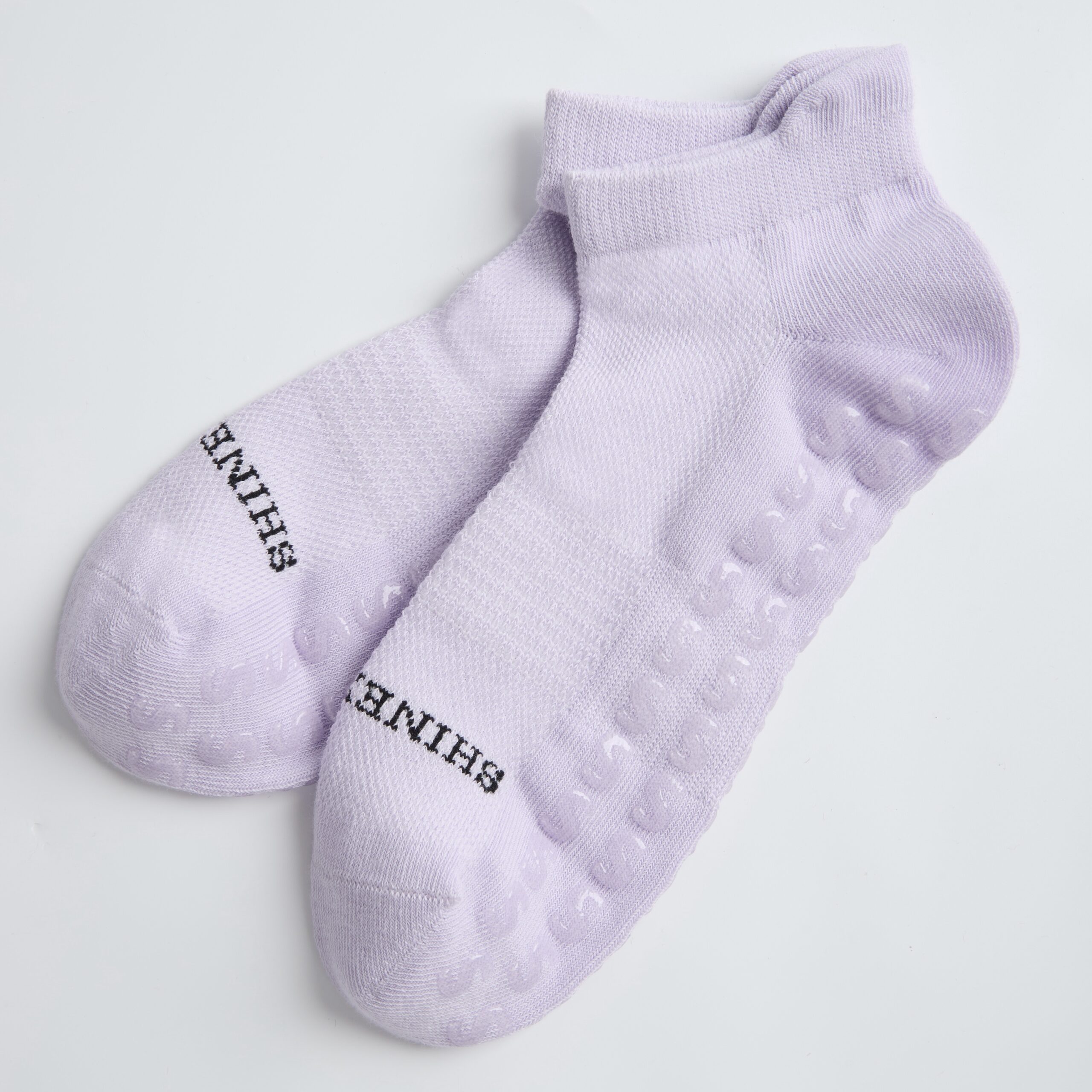
Pilates grip socks should feel close and secure, but not compressive enough to cause numbness, pain or persistent marks. The heel pocket should stay centred, the sole pattern should sit beneath the heel and forefoot, and the toe area should allow the digits to lengthen without excess fabric. Correct fit matters because grip attached to a rotating sock cannot provide predictable contact. This guide explains how to measure, try on and troubleshoot a pair using observable signs rather than vague advice to size down for more grip.
Measure both feet correctly
Measure on a flat surface with body weight distributed naturally. Place the heel against a straight edge and mark the end of the longest toe. Repeat for both feet and use the larger measurement. Take the measurement later in the day if your feet tend to become fuller. Shoe size is a useful starting point, but brand-specific centimetre ranges are more reliable because sizing systems and knit stretch vary.
Compare the result with the SHINEXUS size chart. If you are exactly between two sizes, consider foot width, swelling and the product description rather than automatically choosing the smaller pair. The FAQs provide additional ordering guidance.
Check the heel and sole alignment
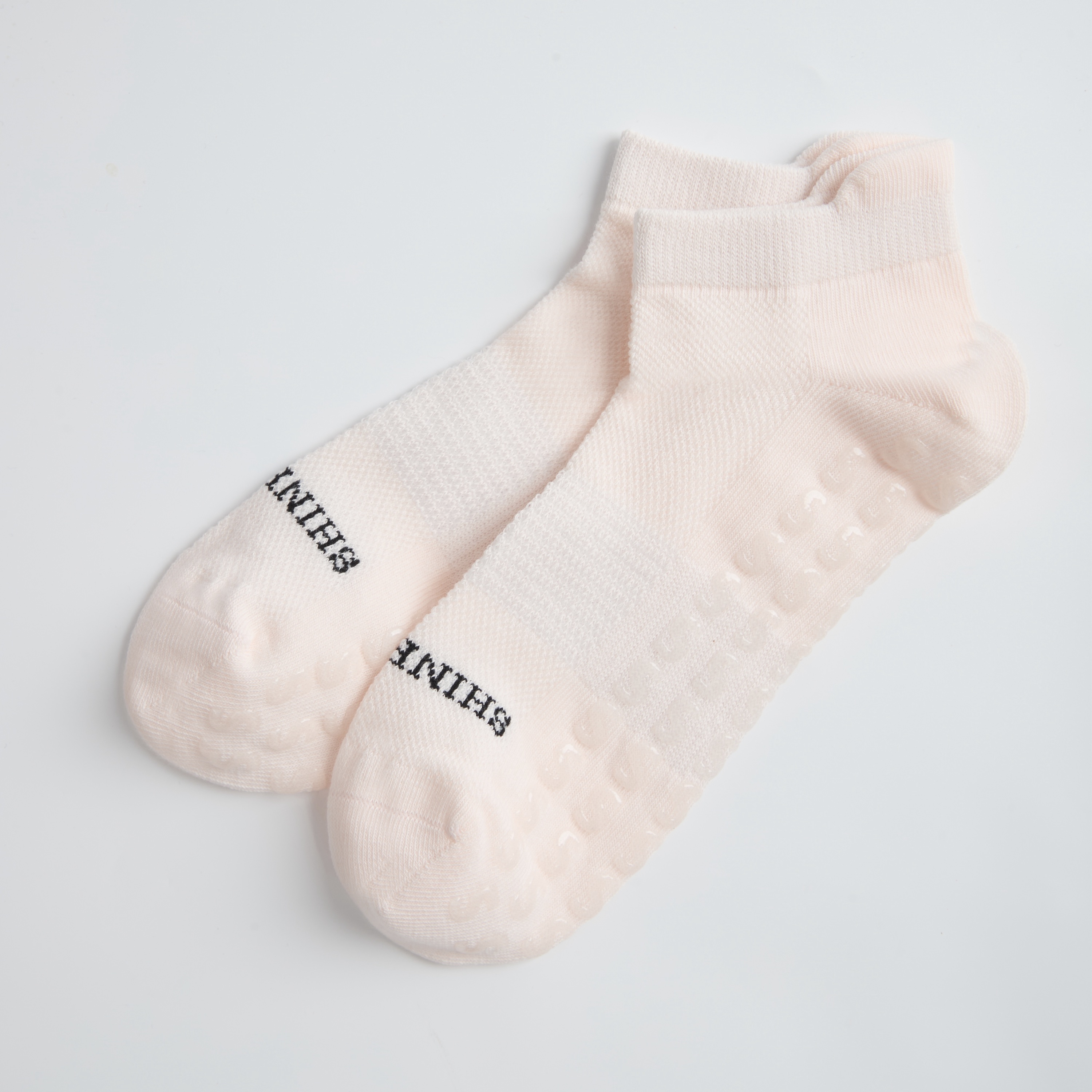
The heel seam or shaped pocket should sit around the heel rather than beneath it. Stand, raise the heels and take several controlled steps. The grip pattern should remain under the load-bearing surface. A sock that rotates soon after dressing is usually too large, too stretched or poorly shaped for that foot. A heel that pulls downward may indicate insufficient length.
Compare several silhouettes in the grip sock collections. Crew and ankle heights change the feeling at the cuff, but neither should compensate for incorrect foot length. Fit begins at the sole.
Allow natural toe movement
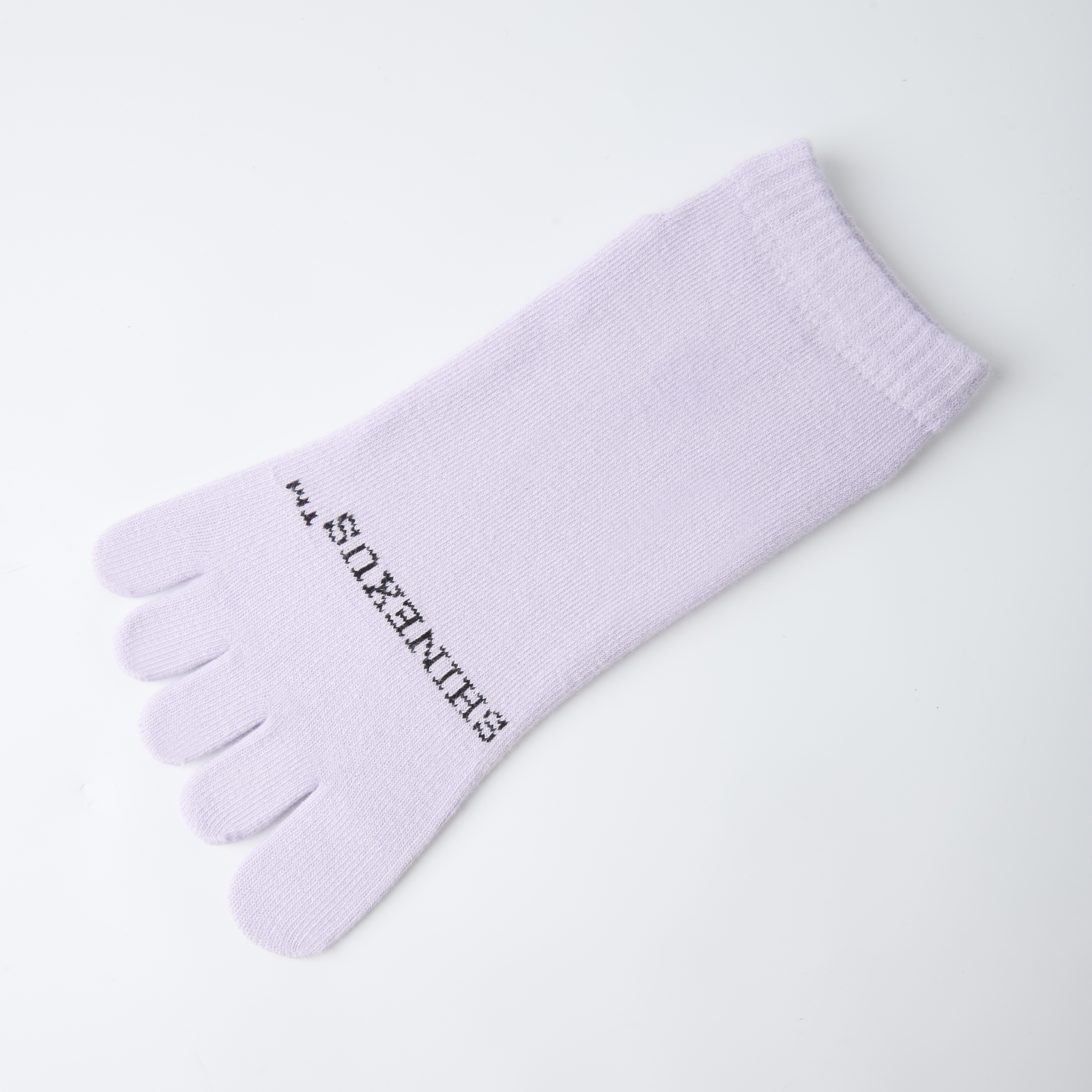
The toes should not be forced to curl or overlap. In a traditional sock, gently spread and lengthen them to confirm that the toe box has room without a loose fold. In a toe sock, seat each digit fully without fabric cutting between the toes. A small visual wrinkle is not automatically a problem; movement, pressure and sensation provide more useful evidence.
Try pointing and flexing the foot, then perform a supported squat. Stop if there is tingling, numbness or pain. People with circulation concerns, neuropathy, significant swelling or an active foot condition should obtain individual medical guidance rather than relying on a general online fit guide.
Assess the arch and cuff
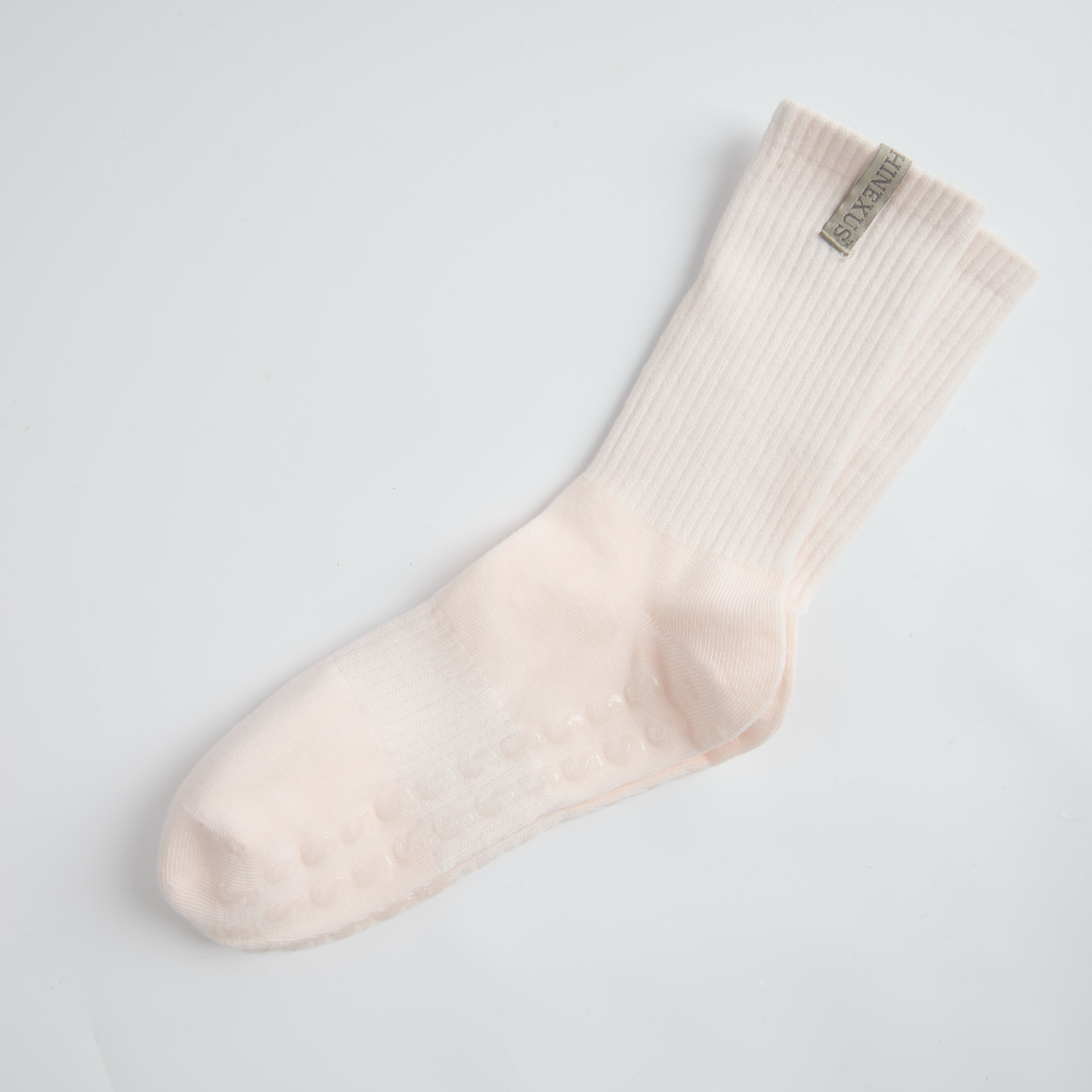
The midfoot should feel held but not squeezed. Excess fabric under the arch can bunch during straps or standing work. The cuff should remain up through movement without leaving a deep line that persists. Crew styles distribute contact over a higher area, while ankle styles create a lower profile. Personal sensitivity and studio temperature influence which feels best.
Compare an Ankle Grip Sock in Oat Milk with a Crew Grip Sock in Oat Milk to isolate the silhouette difference. Both still require correct foot sizing.
Test fit without damaging return eligibility
Read the returns policy before removing tags or wearing socks in class. If permitted, try them on a clean indoor surface for a brief fit check. Move slowly and avoid aggressive friction tests. Inspect toe length, heel position, sole alignment and cuff pressure. Keep packaging until you have completed the check. Hygiene rules commonly restrict returns for worn socks.
Review the delivery information and applicable terms before ordering. If you need the pair for a particular class, allow time to resolve a size question instead of testing an unsuitable pair on the day.
Reassess after wear and washing
A correct new fit can change as elastic ages. Follow the care label, avoid high heat and do not use fabric softener unless explicitly allowed. After several cycles, check whether the heel remains centred and whether the grip still lies flat. Repeated rotation, sagging or toe compression indicates that the pair no longer fits as intended even if the sole pattern looks present.
The care guide explains how laundering affects elastic and grip. When replacement is needed, use the old pair as evidence: record its size, the point of discomfort and how it changed, then refine the next choice in the SHINEXUS shop.
Quick comparison
| Area | Correct-fit sign | Poor-fit sign |
|---|---|---|
| Heel | Pocket stays centred | Seam slips under heel |
| Forefoot | Grip remains beneath foot | Pattern rotates sideways |
| Toes | Can lengthen naturally | Curling, pinching or large folds |
| Arch | Smooth, close fabric | Bunching or strong compression |
| Cuff | Secure without pain | Slipping or persistent deep marks |
Frequently asked questions
Should grip socks be tight?
They should be close-fitting, not painfully tight. Numbness, tingling, toe curling or persistent marks are warning signs.
Should I size down in Pilates socks?
Not automatically. Use the product measurement chart. A smaller sock can misalign the heel and restrict the toes.
Why do my grip socks twist?
They may be too large, stretched, incorrectly shaped for your foot or not seated properly. Replace pairs that rotate despite correct dressing.
A practical way to apply this guidance
Use the advice as a short decision process rather than changing everything at once. First confirm the studio rule and the product care label. Next check the sock or class choice in a calm setting, using slow movements and an ordinary session rather than an artificial slip test. Record what you can actually observe: heel position, toe comfort, cuff pressure, sole alignment, moisture, ease of transition and how the item behaves after correct washing. These details are more useful than a general impression that something feels premium or secure.
Reassess after several classes because a first wear cannot show laundering response or longer-session comfort. Change one variable at a time—for example size, silhouette or wash routine—so the result is understandable. Stop if you experience pain, numbness, dizziness or another concerning symptom, and seek appropriate professional advice where health is involved. Equipment supports practice; it does not diagnose a problem, replace instruction or remove the need for controlled technique. This measured approach helps a beginner make a defensible choice and gives an experienced client a consistent way to review an existing routine.
Final guidance
A reliable Pilates sock fit is observable: centred heel, aligned sole, natural toes, smooth arch and comfortable cuff. Measure both feet, respect product-specific sizing and reassess as the pair ages. Secure does not mean restrictive, and sizing down is never a substitute for a shape that genuinely suits your foot.
How this guide was prepared
This article was written for UK studio clients using practical product-care principles, common reformer class procedures and observable fit criteria. It distinguishes apparel guidance from medical advice, avoids promising that equipment can replace technique, and directs readers to product-specific sizing, care and studio policies. Information should be checked against the current class provider’s rules and the care label supplied with the product.
SHINEXUS designs grip socks for Pilates, yoga and barre. Product links are included where they help readers compare a specific silhouette, size resource or care instruction. The article was reviewed for clarity, internal consistency and usefulness to a reader making a real class or purchase decision.
