

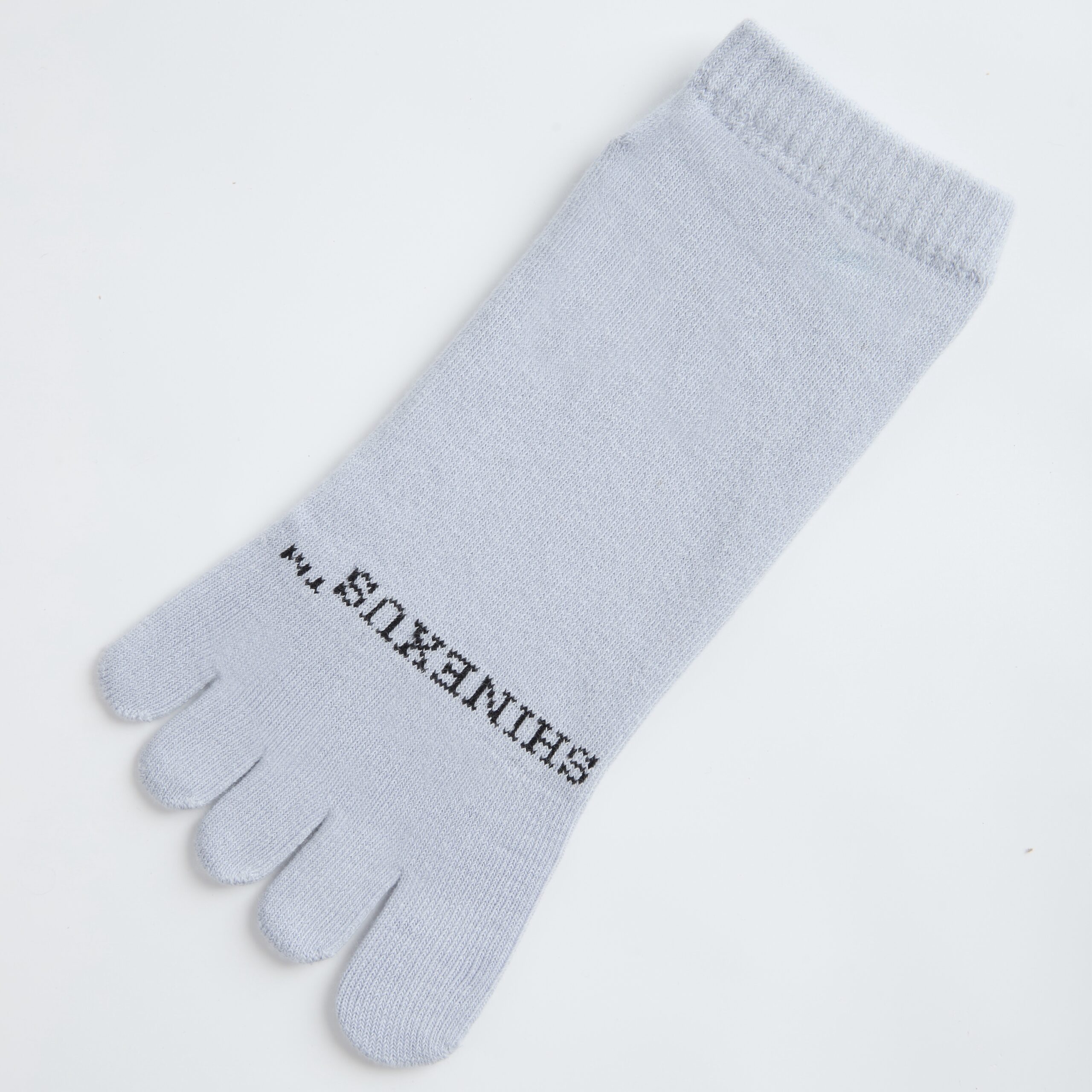
Toe grip socks separate each toe, while traditional grip socks place the toes together in one knitted compartment. Both can be appropriate for Pilates, yoga and barre, and neither format guarantees better movement for every person. The meaningful questions are whether the sock fits correctly, whether the studio permits the style, whether the wearer can move without irritation and whether the sole remains aligned. This detailed comparison explains the trade-offs without treating personal preference as a universal performance claim.
How the two constructions feel
Traditional socks feel familiar because most people wear that shape every day. They are quick to put on and allow the toes to move together within one toe box. Toe socks create fabric channels around each digit. Some clients enjoy the defined separation and feel more aware of individual toe placement; others find the sensation distracting until they adapt. First impressions are useful, but a full class provides a better test than a few steps at home.
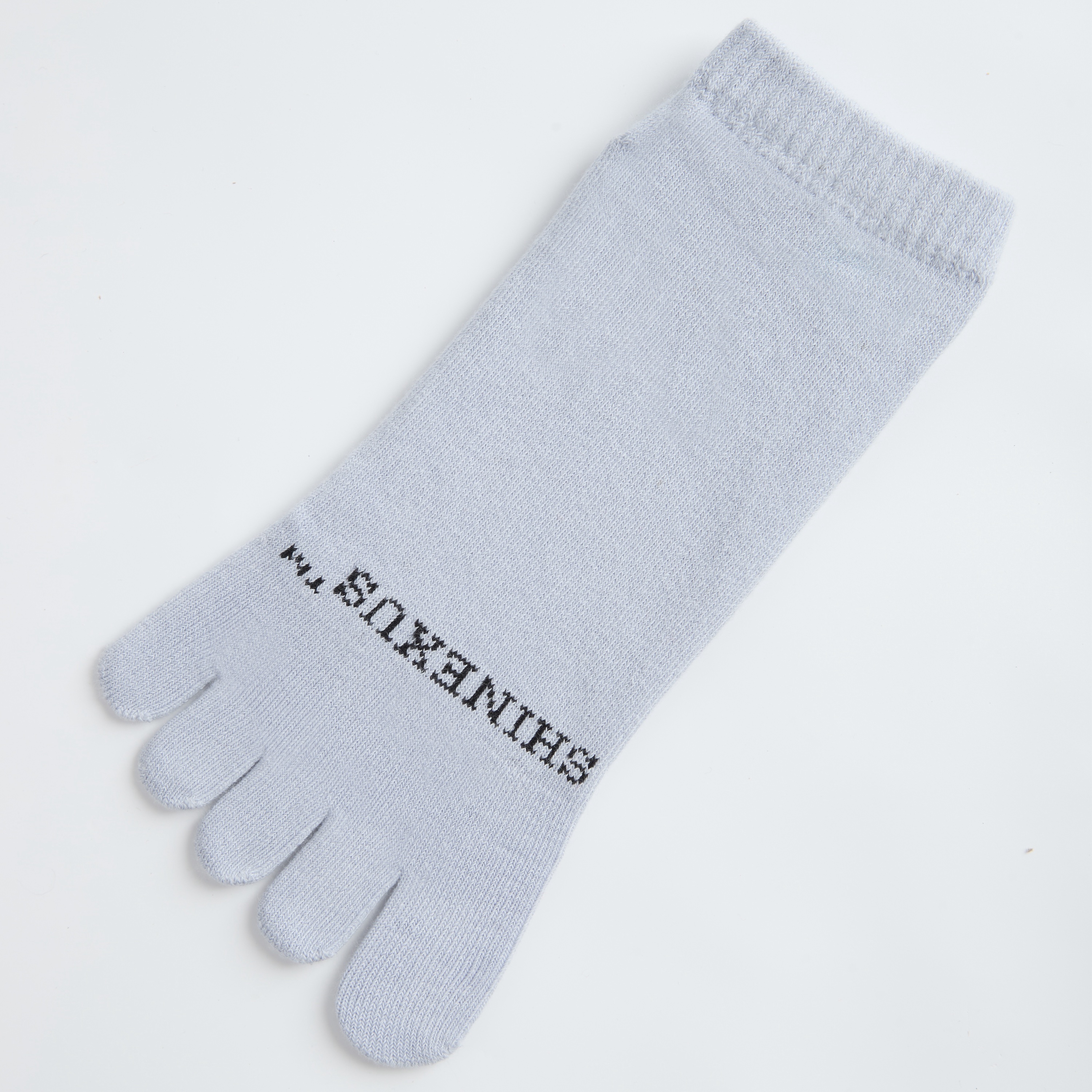
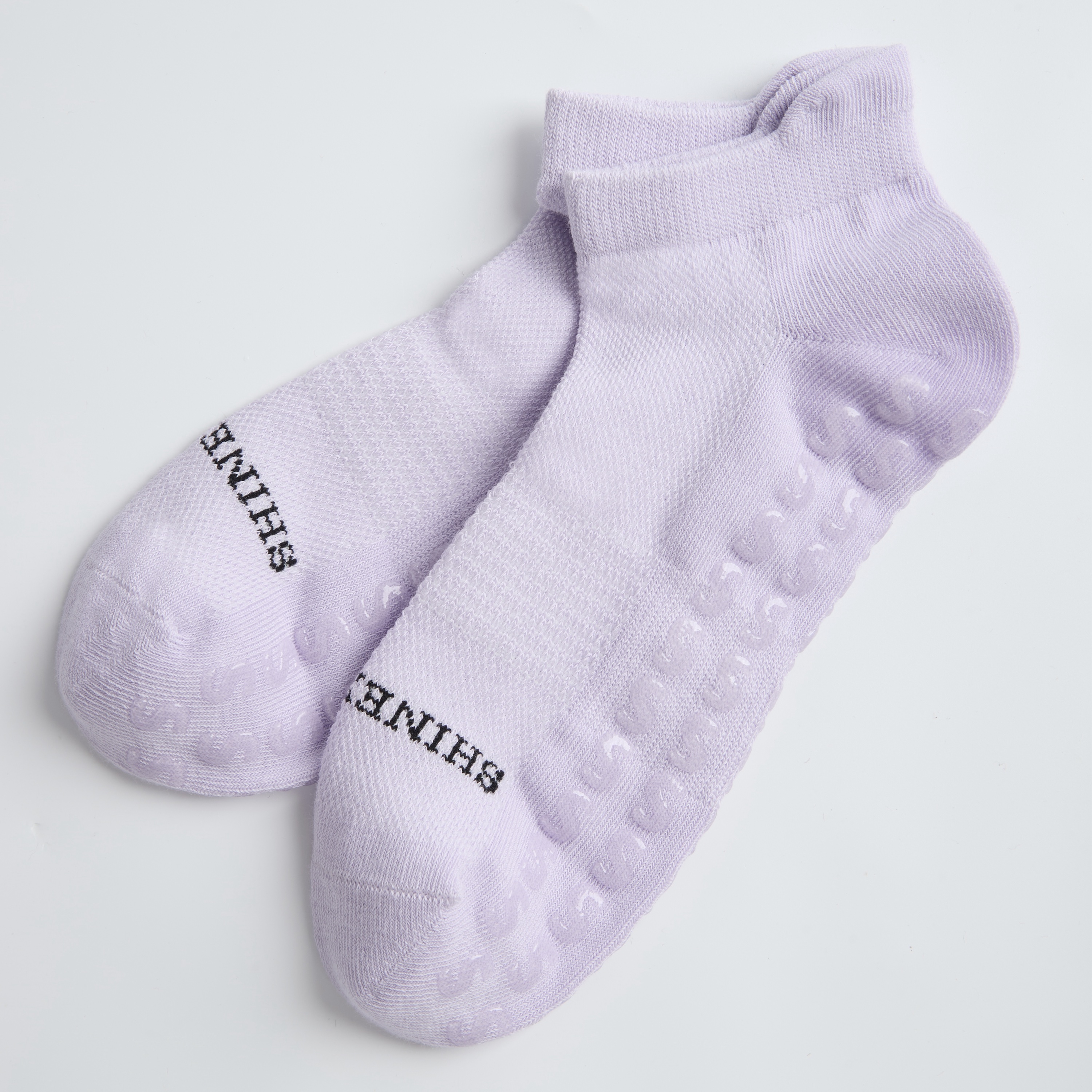
Compare both designs within the SHINEXUS grip sock collections. The Ankle Toe Grip Sock in Blue Ash illustrates the separated construction, while the Ankle Grip Sock in Blue Ash provides a direct traditional comparison.
Toe articulation and sensory feedback
Separating the toes can make their individual positions easier to notice, which some people value during footwork. That awareness is not the same as increasing strength or correcting alignment by itself. Skill develops through instruction and practice. A traditional toe box can also permit natural spreading if it is broad enough and correctly sized. Problems arise when either design is too short, too narrow or twisted.
During a supported exercise, notice whether the toes can lengthen rather than claw. If you have pain, numbness, a recent injury or a diagnosed foot condition, seek advice from an appropriate healthcare professional before changing equipment or exercise habits. Socks are apparel, not treatment.
Fit is more exacting in toe socks
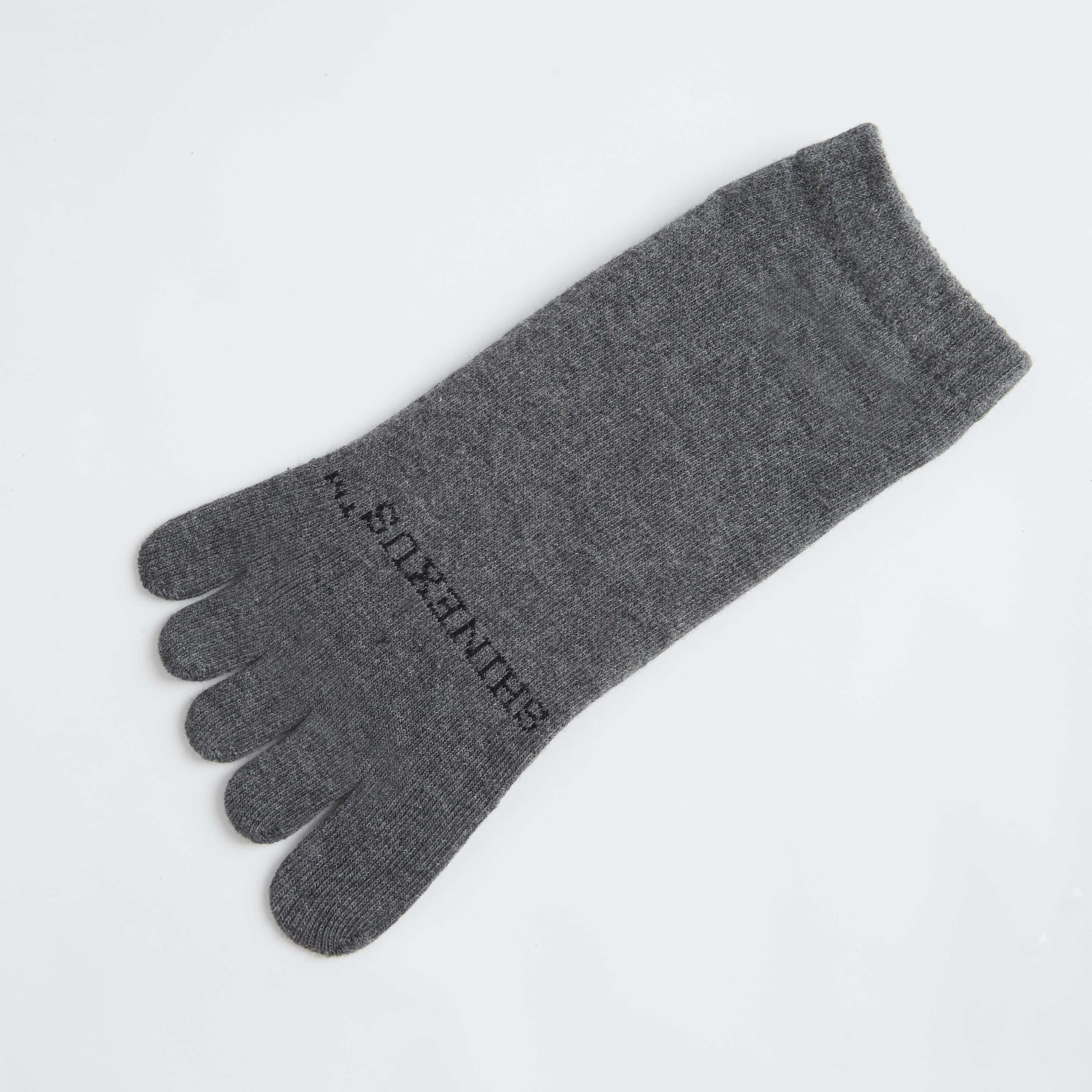
Each toe channel needs an appropriate length and width. If the channels are too long, fabric can fold at the tips; if too short, they can pull between the toes. A conventional sock distributes extra room across one compartment and may therefore be more forgiving. In both designs, the heel must stay centred and the grip must remain under the foot rather than rotating toward the side.
Use the size guide and check both feet because they may differ slightly. Put toe socks on slowly, seating each digit before adjusting the heel and cuff. Do not pull aggressively from the ankle, which can stretch the knit and create uneven tension.
Warmth, breathability and hygiene
Toe socks place fabric between the digits, which can feel useful when feet perspire. They also create more surface area to wash and dry. Traditional socks are faster to put on and may feel warmer because the toes share one space. Fibre blend, knit density and studio temperature influence comfort as much as the silhouette. Any pair worn in class should be washed promptly and dried completely.
Follow the product label and the SHINEXUS care guide. Turn toe channels back to their correct shape after washing and check that every space is fully dry before storage. Avoid fabric softener and high heat unless the label specifically permits them.
Grip coverage and equipment contact
A toe sock may extend grip beneath individual toes, while a traditional design may use one continuous forefoot field. What matters is how the pattern contacts the surface during real movement. Inspect heel, metatarsal and toe zones rather than counting dots. The grip should flex with the foot and remain attached after correct laundering. Neither style should be used to test uncontrolled sliding.
Read about construction in the SHINEXUS difference and ask your instructor how the studio surface changes contact. Clean equipment, a dry sole and controlled loading remain necessary with every sock.
A sensible way to decide
Choose traditional socks if you value familiarity, quick dressing and a unified toe box. Consider toe socks if you enjoy individual separation and are willing to spend more time positioning and laundering them. If uncertain, purchase one pair of each rather than making a large commitment. Wear them in comparable classes and record comfort, stability and any distraction.
The full shop makes side-by-side comparison straightforward, and UK delivery information helps you plan before a booked session. Studio policies take priority over online preferences.
Quick comparison
| Factor | Toe grip socks | Traditional grip socks |
|---|---|---|
| Toe space | Individual fabric channels | Shared toe box |
| Familiarity | May require adaptation | Usually immediately familiar |
| Dressing | More deliberate positioning | Generally quicker |
| Care | Check between-toe drying | Simpler reshaping |
| Best for | People who enjoy toe separation | People who prefer a classic feel |
Frequently asked questions
Are toe socks better for Pilates?
They are better for some preferences, not universally. Fit, comfort, studio rules and grip alignment matter more than the silhouette alone.
Do toe socks help bunions?
Grip socks are not medical treatment. Anyone with bunion pain or another foot condition should seek individual clinical advice.
Can beginners wear toe grip socks?
Yes, if the studio permits them and they fit comfortably. A traditional style may feel more familiar for a first class.
A practical way to apply this guidance
Use the advice as a short decision process rather than changing everything at once. First confirm the studio rule and the product care label. Next check the sock or class choice in a calm setting, using slow movements and an ordinary session rather than an artificial slip test. Record what you can actually observe: heel position, toe comfort, cuff pressure, sole alignment, moisture, ease of transition and how the item behaves after correct washing. These details are more useful than a general impression that something feels premium or secure.
Reassess after several classes because a first wear cannot show laundering response or longer-session comfort. Change one variable at a time—for example size, silhouette or wash routine—so the result is understandable. Stop if you experience pain, numbness, dizziness or another concerning symptom, and seek appropriate professional advice where health is involved. Equipment supports practice; it does not diagnose a problem, replace instruction or remove the need for controlled technique. This measured approach helps a beginner make a defensible choice and gives an experienced client a consistent way to review an existing routine.
Final guidance
Toe and traditional grip socks solve the same basic studio problem with different sensations. Try the format that matches your preferences, measure carefully and assess it through a normal class. The best pair is the one that remains aligned, comfortable and unobtrusive while you follow qualified instruction.
How this guide was prepared
This article was written for UK studio clients using practical product-care principles, common reformer class procedures and observable fit criteria. It distinguishes apparel guidance from medical advice, avoids promising that equipment can replace technique, and directs readers to product-specific sizing, care and studio policies. Information should be checked against the current class provider’s rules and the care label supplied with the product.
SHINEXUS designs grip socks for Pilates, yoga and barre. Product links are included where they help readers compare a specific silhouette, size resource or care instruction. The article was reviewed for clarity, internal consistency and usefulness to a reader making a real class or purchase decision.
