

You feel it halfway through a lunge: the sock has rotated a few degrees and the grip pattern is no longer where your foot is. It is rarely a fault in the sole. In almost every case, a twisting sock is telling you something about fit, fabric or the movement itself.
The four causes
A sock rotates because the fabric has more freedom to move around the foot than the foot has to stay still. That freedom comes from four places: size, heel placement, moisture and the shape of the movement you are doing.
Working through them in that order solves most cases in a few minutes. It is also worth separating two different complaints. A sock that twists around the foot is a fit issue. A sock that slides on the floor is a grip issue. They feel similar and have different answers.
Cause one: the sock is too big
If there is fabric to spare at the heel, the foot can rotate inside it. The sock does not need to be dramatically too large; half a size is enough. Our sizes are S/M for EU 35–38 and M/L for EU 39–42, and the boundary is where most twisting begins.
The test is simple. Stand up, lift one heel and press the ball of the foot down as you would on a footbar. If the heel pocket lifts away from your heel, the sock is loose and will twist once you start moving.
If you are at the top of a size range, try the smaller size rather than assuming you need to go up. Sizing up is the right advice for comfort at a boundary, but it is the wrong advice for a sock that already rotates.
Cause two: the heel is not seated
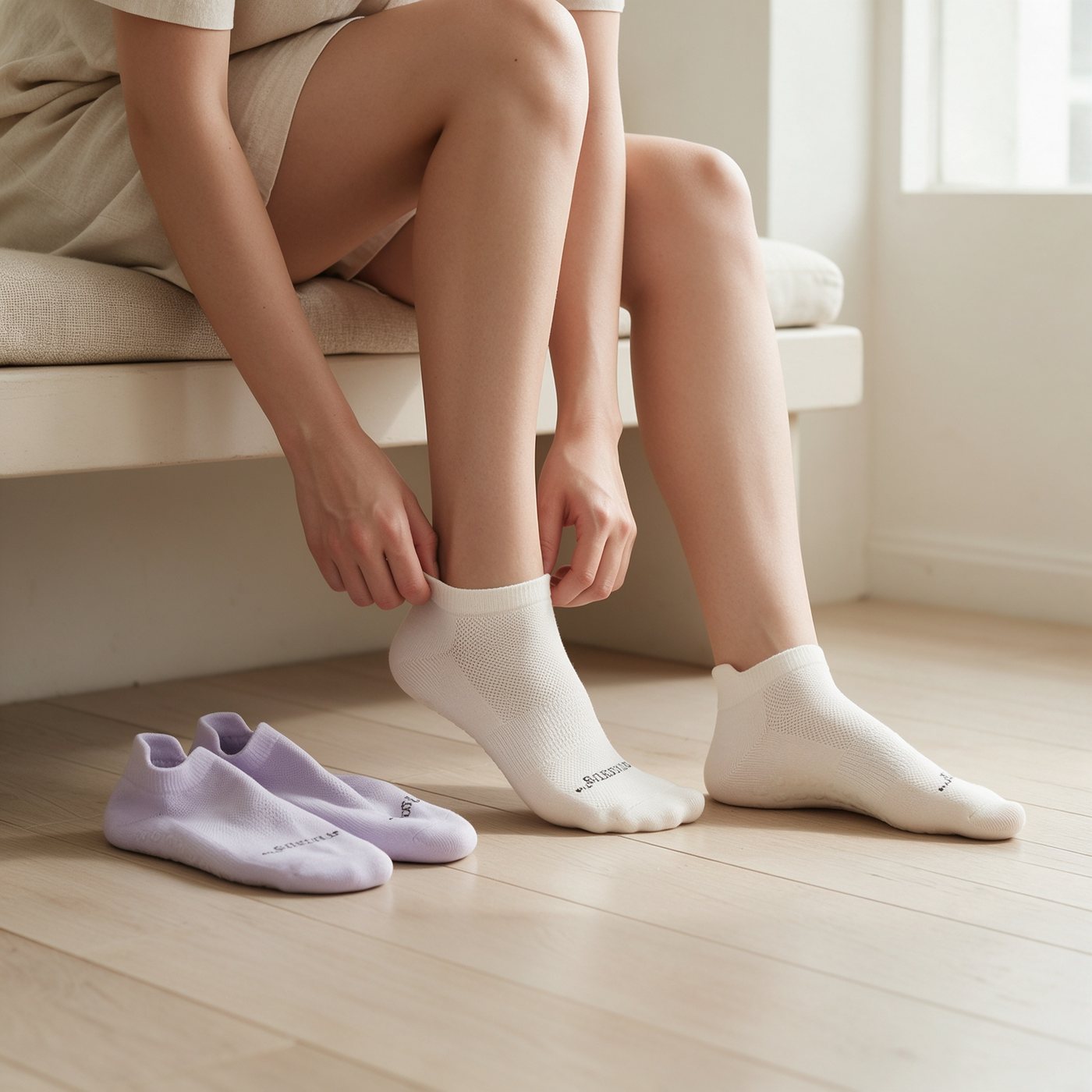
Even a correctly sized sock will twist if the heel pocket sits slightly forward or slightly high. That happens most often when a sock is pulled on from the cuff and the heel never settles into place.
The fix is mechanical: pull the sock on, then pinch the heel pocket and slide it back until it sits directly under your heel bone. Use the raised heel tab if your socks have one; it exists to make this easy. Then smooth the fabric from the heel towards the toes rather than pulling at the cuff.
This single habit prevents more twisting than any change of size. It is also the first thing to check when someone complains that a new pair “feels different” from an older one.
Cause three: damp fabric
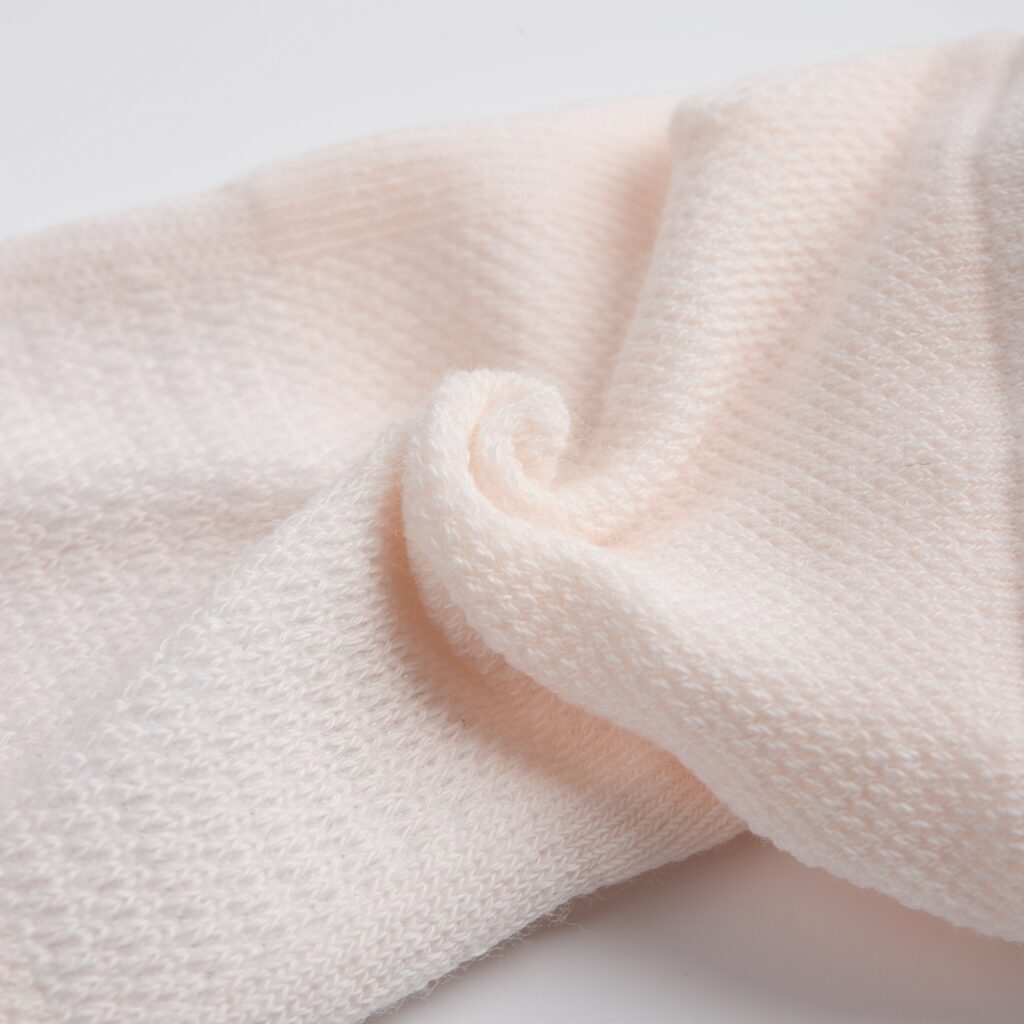
A dry cotton-rich sock holds its shape against the foot. A damp one becomes more pliable, and pliability is what allows rotation. In a warm room, this happens gradually over a class; in a hot class, it can happen within twenty minutes.
The practical answers are breathable fabric, a spare pair for double sessions, and washing rather than re-wearing. Fabric softener makes this worse: it coats the fibres and reduces both friction inside the sock and grip on the sole.
If you sweat heavily, a slightly thinner sock often behaves better than a padded one, simply because there is less fabric to hold moisture.
Cause four: the movement, not the sock
Some movements rotate the foot inside any sock. Side-lying leg work, certain standing hip openers and anything where the foot pivots on the ball while the heel lifts will do it. Even a perfect fit can drift over forty minutes of that.
Two adjustments help. Press through the whole foot rather than just the ball in standing work, which keeps the sole engaged. And check your stance: feet that turn out slightly in a lunge place rotational load on the sock that a square stance does not.
Your instructor can usually tell within a minute whether the rotation is coming from the foot or the sock. It is worth asking rather than buying another pair.
Fix by symptom
| Symptom | Most likely cause | Fix |
|---|---|---|
| Sock rotates around the foot | Size or heel placement | Seat the heel, or try the smaller size |
| Sock slides forward under the ball | Too much length | Smaller size or a different style |
| Twists only late in class | Moisture | Breathable fabric, spare pair, no softener |
| Cuff slides down | Cuff too loose or worn | Replace the pair; check cuff recovery |
| Grip feels vague but sock stays put | Worn sole | Replace the pair |
A five-minute check at home
Try the pair on a hard floor, not carpet. Roll from heel to toe, then stand on one leg for thirty seconds. Sit into a small squat and stand again. If the sock has moved, you have found the problem before class rather than during it.
One more check: look at the sole. If the dots under the heel and ball are visibly smoother than those under the arch, the pair is worn in the places that matter and no amount of refitting will restore it. Our guide on wear covers the signs, and the size guide is the fastest route to a better fit.

Frequently asked questions
Why do my grip socks rotate during class?
Usually because they are slightly too large or the heel is not seated properly. Damp fabric and pivoting movements make it worse.
Should I size down if my socks twist?
If you are at the top of a size range and there is slack at the heel, yes. Try seating the heel first, though — that solves most cases.
Do grip socks slide down the calf?
Crew styles can, particularly once the cuff has lost recovery. Ankle styles avoid the issue entirely.
Can washing cause socks to twist?
Hot washing and tumble drying reduce recovery, which loosens the fit. Cold washing and air drying help the sock keep its shape.
Is it a grip problem if the sock stays put but I still slide?
That points to a worn sole or a smooth floor rather than fit. Check the pattern under the heel and ball.
Should I wear them over leggings?
No. Grip socks are worn against the skin; leggings over the sock can drag the cuff and pull the heel out of place.
Fix the fit before you replace the sock
Twisting is nearly always a message about fit. Seat the heel, size to your foot rather than your comfort at the boundary, keep the fabric dry and check your stance. Three of those four cost nothing, and they solve the problem more often than a new pair will.
