

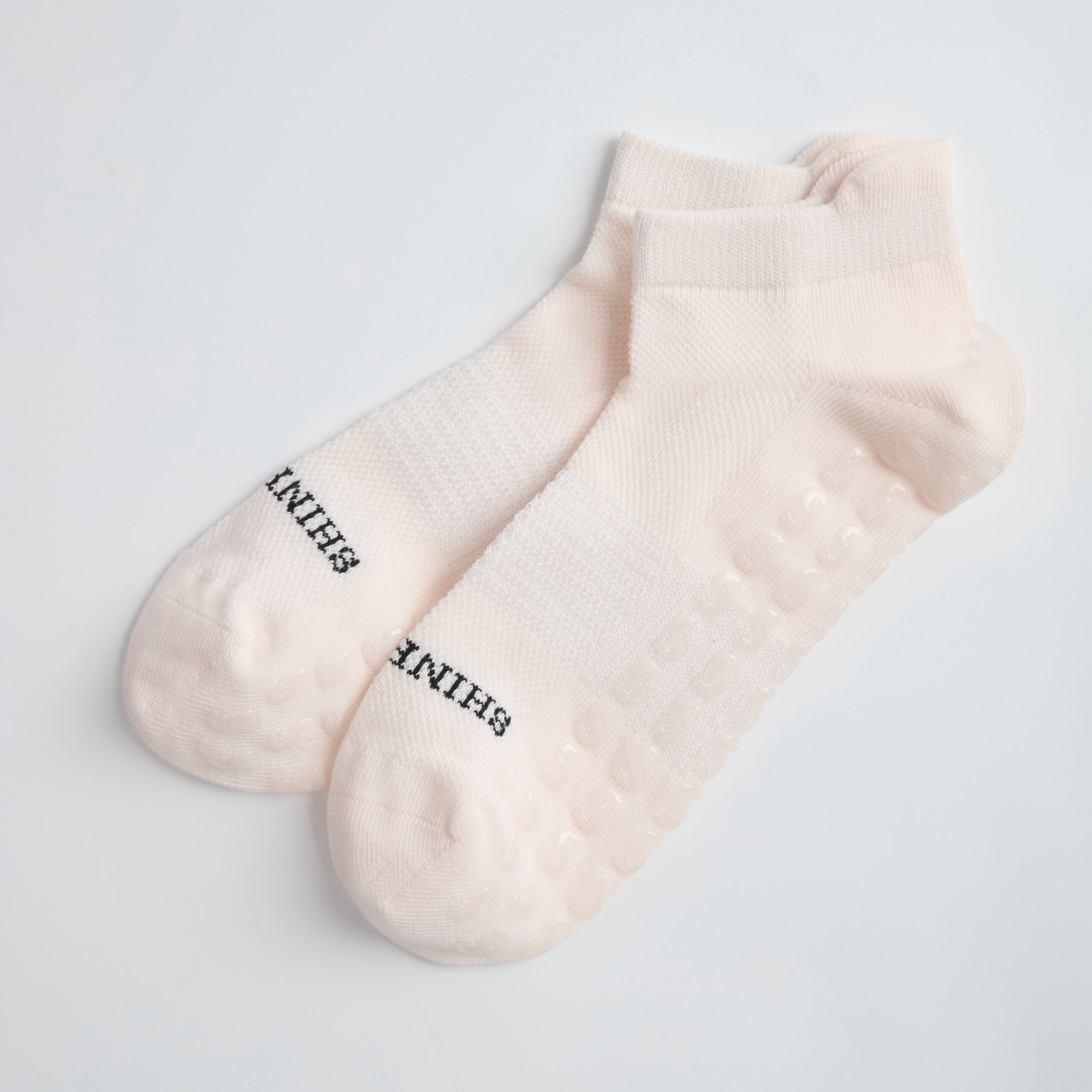
Your first Pilates class should feel exciting, not stressful. One of the most common questions newcomers ask is what to wear on their feet. Studio rules usually ban bare feet and regular socks on the reformer, and the short answer is simple: a pair of well-fitting Pilates grip socks removes the guesswork. This beginner’s guide explains why grip socks matter, what to wear, how to size them and what to expect so you can walk into your first class with confidence.
Why studios ask for grip socks
Reformer Pilates uses sliding carriagework, springs, straps and wooden or metal frames. Bare feet can slip on polished wood, and ordinary cotton socks offer almost no traction at all. Grip socks have a silicone or rubber pattern on the sole that anchors your foot to the reformer footbar, the mat and the carriage. That connection matters because Pilates asks for precise, slow movements where a small slip can distract you from your breathing and alignment.
Studios also rely on grip socks for hygiene. Shared equipment comes into contact with dozens of feet each week, so wearing a dedicated pair is more practical than relying on regular cleaning alone. If you are still unsure, our guide on whether you actually need grip socks for reformer Pilates walks through the practical case in more detail.
What to wear to your first class
Keep clothing close to the body but unrestrictive. Fitted leggings, shorts or three-quarter lengths work well, along with a fitted vest or t-shirt that will not catch on straps. Layers are useful because studio temperature varies. On your feet, choose grip socks over trainers, which are too bulky for the carriage. Avoid jewellery that could catch and tie long hair back.
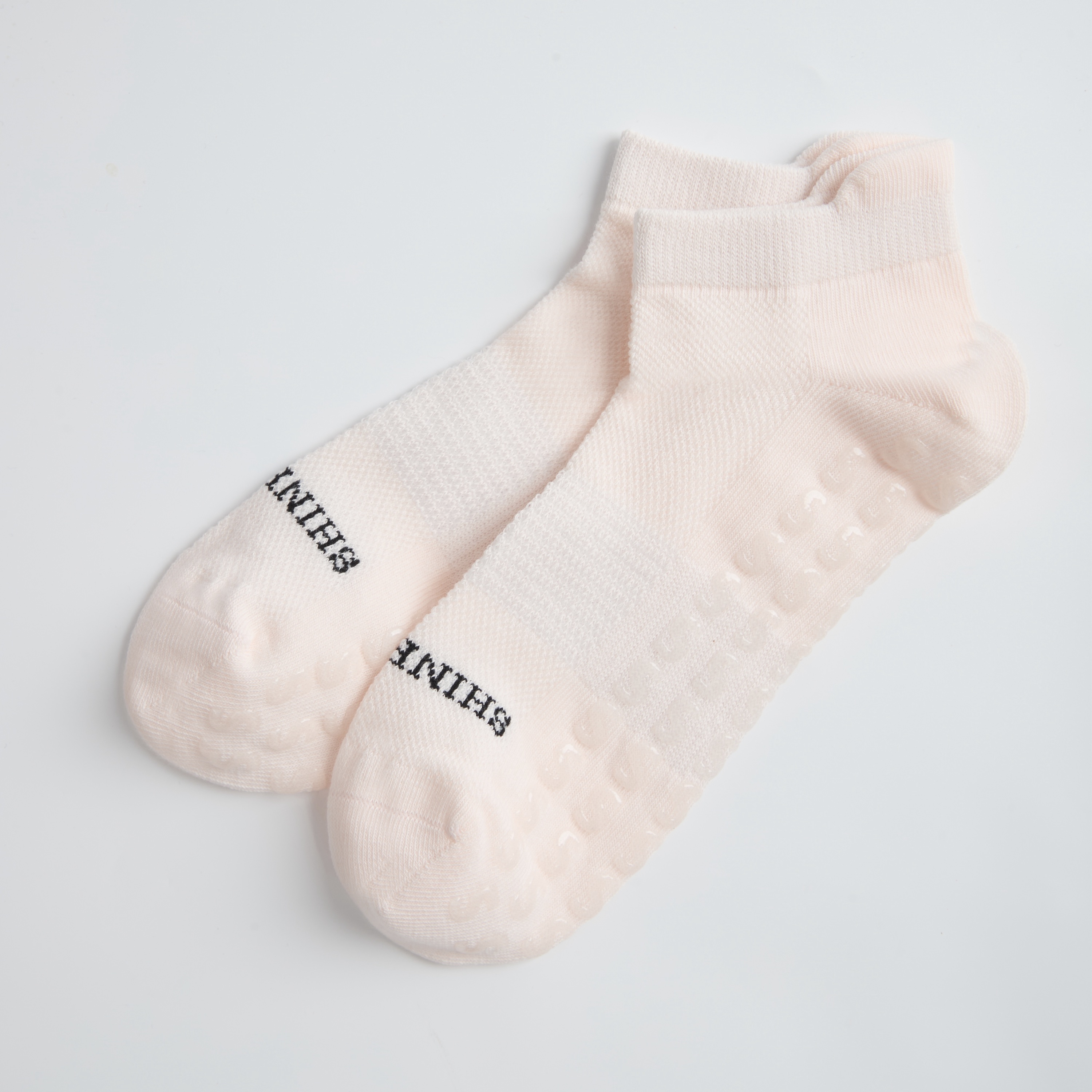
The most comfortable first pair is usually an ankle grip sock rather than a full crew or toe style. It covers the heel and ball of the foot without feeling heavy, and it pairs naturally with the rest of your kit. You can browse the full SHINEXUS grip sock collection to compare heights and colours before you commit.
Choosing your first pair
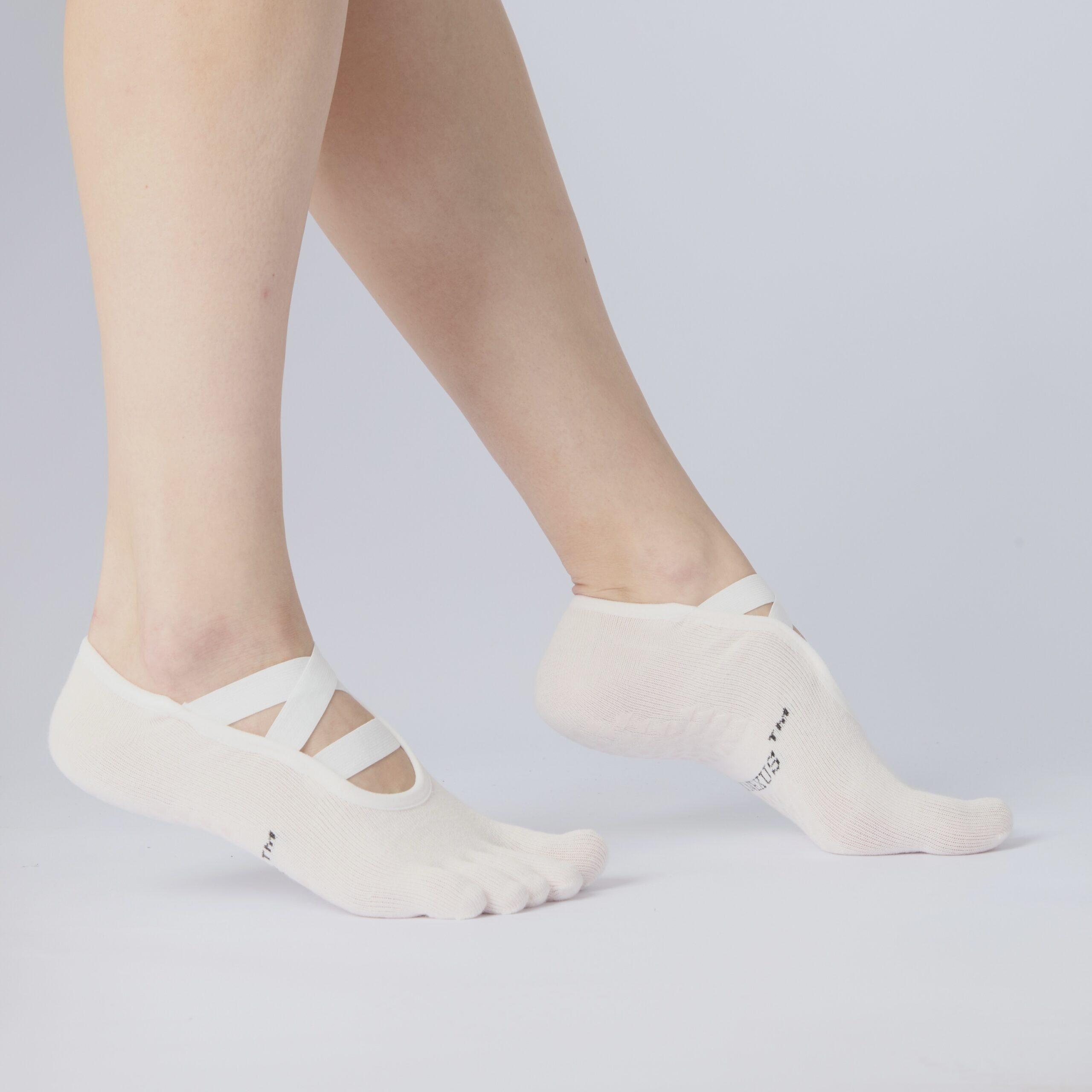
Three decisions narrow quickly: height, toe design and colour. Ankle socks give the lowest profile and suit most beginners. Crew socks add a little warmth and coverage. Toe socks separate each digit for extra foot awareness, but many people prefer to wait until they are comfortable with the basics. Colour is a personal choice; neutrals like Oat Milk and Graphite Grey match studio wear, while Blue Ash and Frosted Lilac add a subtle pop.
If you are deciding between styles, our comparison of ankle vs crew grip socks for Pilates breaks down coverage and feel. You can also read about whether toe grip socks are better for yoga and Pilates when you are ready to explore.
How sizing works
SHINEXUS grip socks are unisex and sized by EU range: S/M fits approximately EU 35-38 and M/L fits EU 39-42. Measure your foot length rather than guessing from trainer size, because sock stretch varies between brands. A well-fitting sock sits flush at the heel, leaves room for the toes to spread and does not rotate mid-class. Use the SHINEXUS size guide for exact centimetre measurements, and our fit guide explains how grip socks should feel at the heel, arch and toes.
Studio hygiene and etiquette
Arrive with clean feet, bring your own grip socks and avoid sharing them. Place your belongings neatly, wipe down the reformer after class if your studio asks, and arrive early enough to set up without rushing. Most studios provide mats and equipment, so you mainly need grip socks, a water bottle and a small towel. The complete what-to-bring checklist and our reformer etiquette guide for UK studios cover the social side in detail.
What to expect on the reformer
A first class usually begins with a short breath and posture check, then moves through footwork, arm work and core cues on the carriage. The instructor will coach spring settings and timing, so focus on control over speed. Your grip socks will keep your feet planted through footwork, standing work and balance transitions, which lets you listen to your body instead of worrying about slipping.
Quick reference: first-class essentials
| Item | Recommended choice | Why it matters |
|---|---|---|
| Feet | Ankle grip socks (S/M or M/L) | Traction on reformer and mat; studio hygiene |
| Legs | Fitted leggings or shorts | No loose fabric catching on straps |
| Top | Fitted vest or t-shirt | Visible alignment without distraction |
| Extras | Water bottle, small towel, hair tie | Hydration and comfort through class |
| Sizing | Measure foot length, use the size guide | Prevents rotating socks and pinching toes |
After your first couple of classes, you will know whether you prefer ankle or crew, and whether toe separation appeals. SHINEXUS offers UK delivery and 14-day returns, so you can shop Pilates grip socks for beginners with confidence. Learn more on our FAQs page or explore the Journal for ongoing guidance.
Common beginner mistakes to avoid
Many new students overthink their first purchase. The first mistake is wearing ordinary trainers or slippers to a reformer class, neither of which works on moving equipment. The second is buying a sock that is too tight in the belief that a tighter fit equals more grip. In reality, an over-tight sock restricts circulation and can misalign the heel, reducing contact with the reformer. The third is skipping the sizing step and guessing from your everyday shoe size. A few minutes with a tape measure prevents most returns.
Another common mistake is arriving with feet that are not ready. Freshly washed, dry feet hold the sock better than sweaty ones rushed straight from a hot commute. Finally, do not wear a brand-new pair to your most important class first; break them in gently at home so you know how they feel before you are mid-footwork. If you are still building your kit, our studio essentials checklist covers the rest.
Trending: Lagree and home reformer setups
Pinterest and studio calendars show rising interest in Lagree fitness, a high-intensity method that shares the reformer platform and the same grip-sock requirement. Whether you attend Lagree, classic Pilates or a hybrid class, the sock choice is the same: a non-slip, well-fitting pair. Home reformers and small studio setups are also trending, and they make a dedicated pair of grip socks even more useful because you control the floor surface. For these trends, a durable ankle or crew sock in a dark neutral hides marks and survives daily use. Explore the full collection to find a pair that suits your setup.
Frequently asked questions
Do I need grip socks for my first Pilates class?
Most reformer studios require them. Regular socks and bare feet are slippery on wood and metal, and studios enforce grip-sock policies for hygiene and safety.
Should beginners choose ankle or crew grip socks?
Ankle socks are usually the easiest first choice: lightweight, low-profile and comfortable. Crew socks add coverage once you know your preference.
What size grip sock do I need?
Measure foot length and match it to the size guide. S/M suits roughly EU 35-38 and M/L suits EU 39-42. Do not size down for extra grip.
Can I wear toe socks as a beginner?
Yes, if you prefer extra foot awareness. They work well from day one, though some people like to start with a traditional style.
Final guidance
Arriving prepared removes friction from your first Pilates experience. Choose a well-fitting ankle grip sock, wear fitted clothing, bring water and a towel, and follow studio etiquette. The right pair gives you stable footing so you can focus on breathing, alignment and enjoying the practice. Shop the SHINEXUS range, read the size guide, and visit For Studios if you are also exploring class options.
