

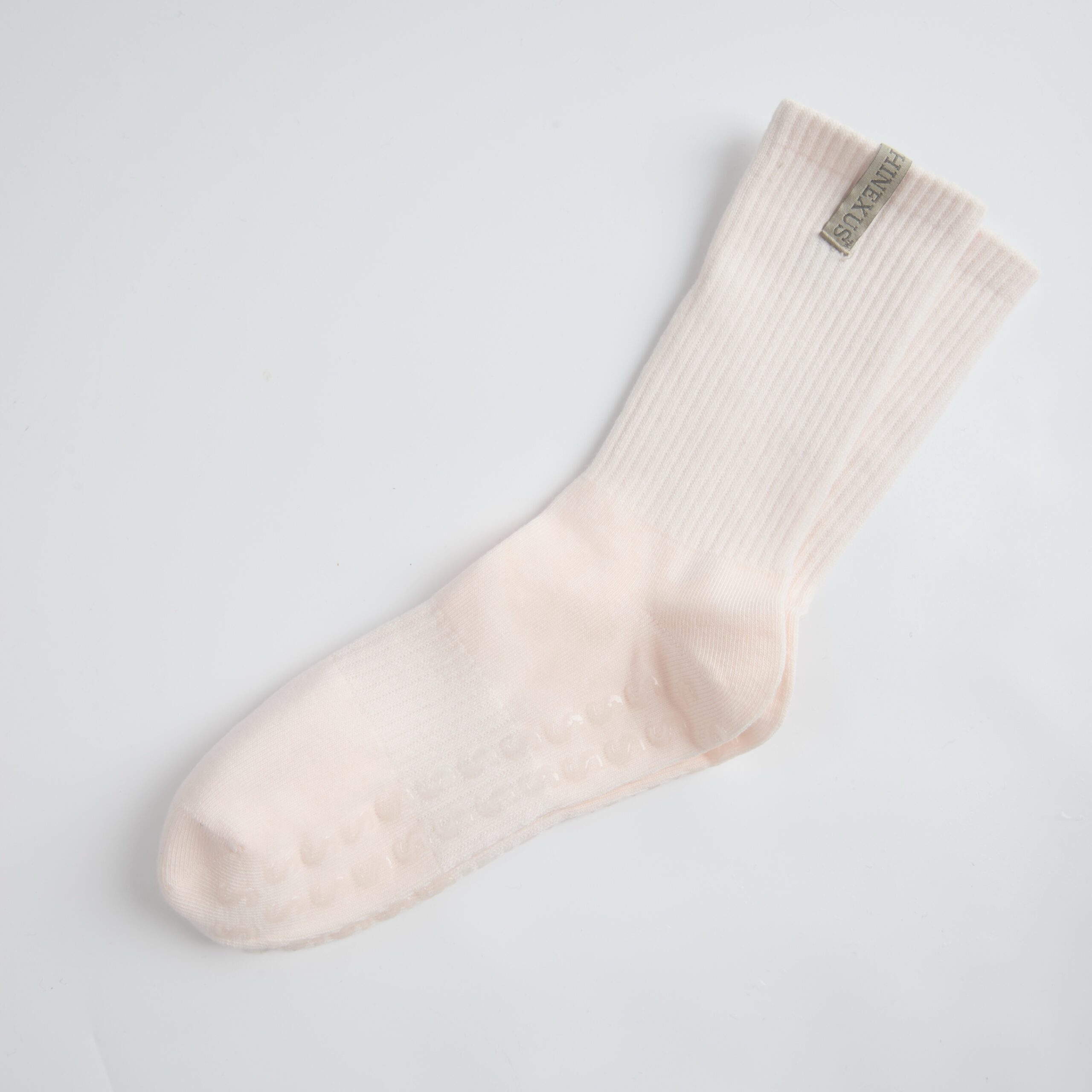
Barre blends ballet-inspired pulses, isometric holds and small, repetitive movements on the floor and at the barre. Unlike a flowing yoga class, barre keeps the foot in one position for long sets, which makes grip and stability non-negotiable. The right barre grip sock anchors the foot through hundreds of pulses without bunching. This UK guide explains what to wear, which height suits barre, and how to choose a pair that stays put.
Why barre needs grip socks
Barre involves deep knee bends at the barre, small lifts of the foot, and floor work on a mat. A regular cotton sock slides on smooth studio floors and offers little grip on the wooden barre foot area. Grip socks place silicone dots under the heel and ball of the foot, so you can hold a relevé or a plié without the foot creeping. Because barre repeats the same small movement many times, even a tiny slip breaks concentration. A stable foot lets you focus on the burn rather than your balance.
If you already practise Pilates, your grip socks transfer directly to barre. Read more in our beginners’ guide and the collection overview.
Heights for barre
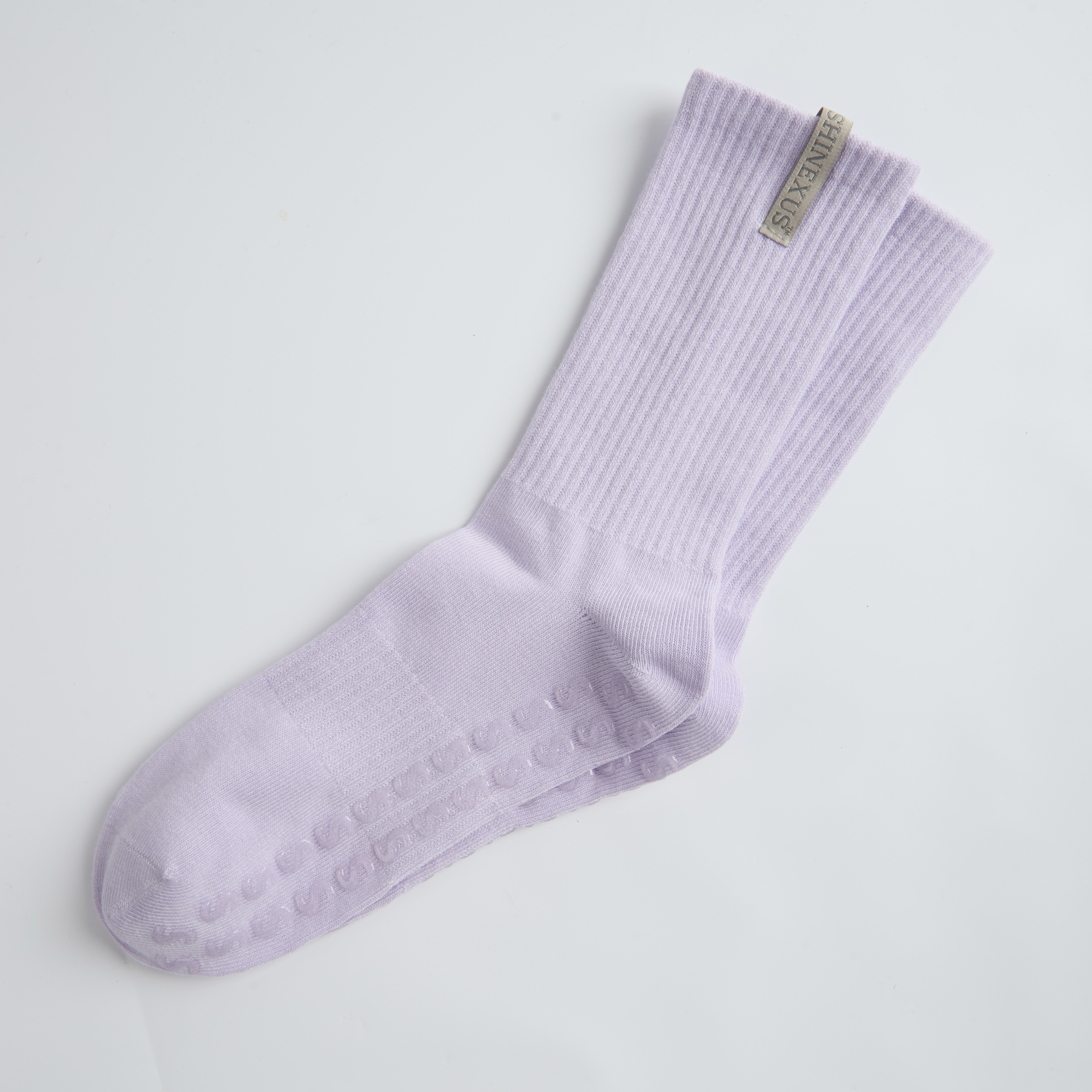
Barre students often favour crew socks because they look defined under tights or leggings and offer a little warmth in cool studios. Ankle socks work equally well functionally and stay hidden. The choice is mostly aesthetic. If you like the classic barre look, choose a crew in a soft neutral. If you run warm, an ankle sock is lighter. Our comparison of ankle vs crew grip socks breaks down the feel.
Toe or traditional
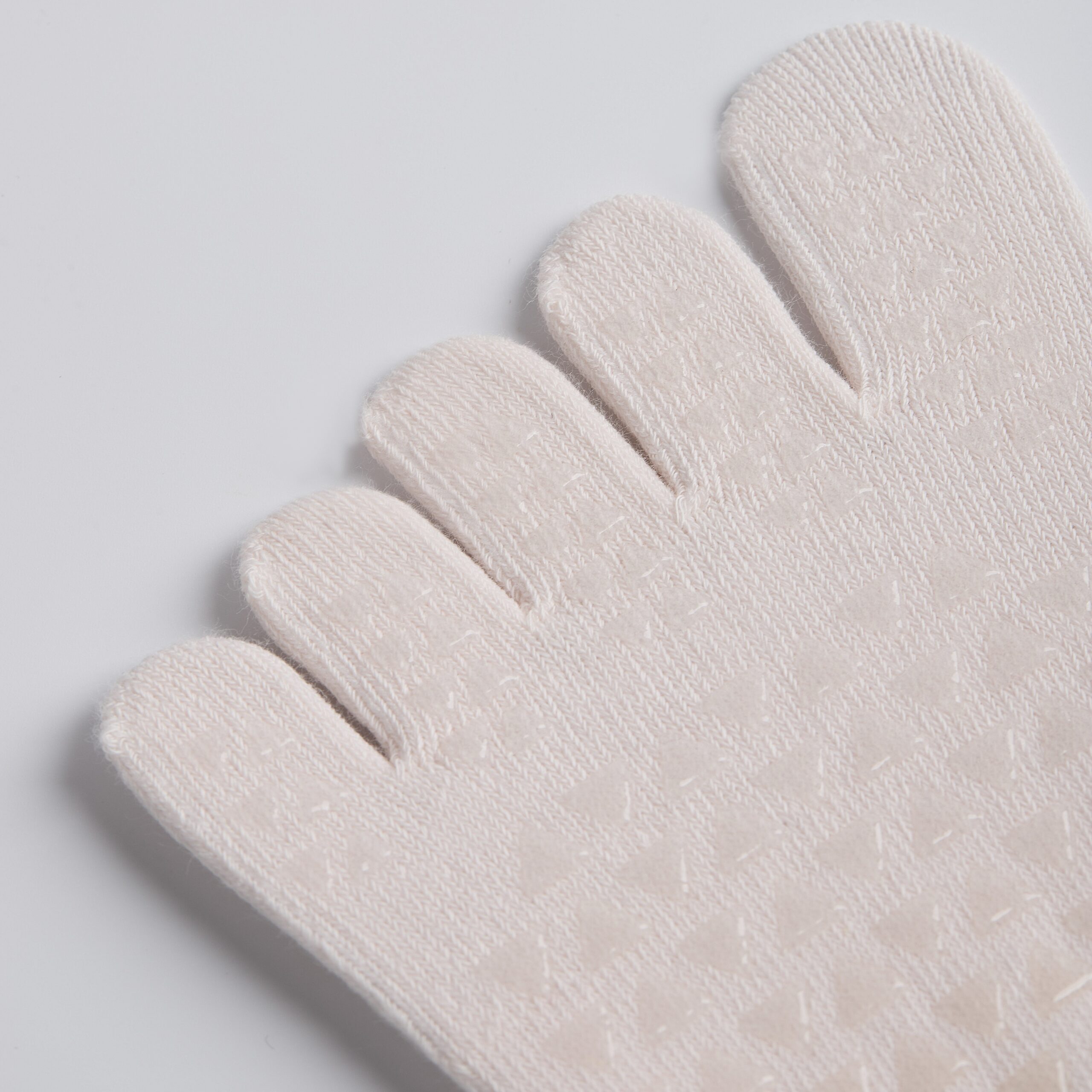
Toe socks are popular in barre because they show the foot line and support small articulations. They also add feedback during point and flex. Traditional ankle or crew socks remain the simpler choice if you prefer less contact. Either works; pick by comfort. Learn more about toe grip socks.
What to wear overall
Barre calls for fitted clothing: leggings or shorts, a fitted top, and layers for the warm-down. Bare feet or regular socks are not recommended on shared floors. Grip socks complete the outfit. Bring a water bottle and a small towel. The studio essentials checklist covers the rest.
Hygiene and studio policy
Barre studios share mats and equipment, so grip socks are expected for hygiene. Bring a clean pair, avoid sharing, and wash them after each class. Clean feet are still essential. The etiquette guide explains the social side.
At a glance
| Factor | Recommendation |
|---|---|
| Grip | Even silicone under heel and ball |
| Height | Crew for the look, ankle for warmth control |
| Toe design | Toe for foot line; traditional for simplicity |
| Colour | Neutral or soft tone under tights |
| Care | Wash cold, air dry after each class |
Shop the SHINEXUS range, use the size guide, and check the FAQs.
Frequently asked questions
Can I wear Pilates grip socks to barre?
Yes. The same non-slip sole works for barre, reformer and most studio floors.
Are toe socks good for barre?
They are popular because they show the foot line and support articulation, but traditional socks also work.
What height sock is best for barre?
Crew for the classic look, ankle for lightness. Functionally both are equal.
Do I need special barre socks?
No. Any well-fitting non-slip grip sock works; you do not need a separate “barre only” product.
Building stamina through the foot
Barre is deceptive. A set of thirty small pulses looks gentle until you are mid-way through, shaking and wondering how your foot stayed in position. That is where grip earns its keep. When the foot slides, the whole chain of alignment breaks: the knee drifts, the hip tilts and the burn moves from the targeted muscle group into a compensation pattern. A stable, well-fitted grip sock removes one variable from the equation so you can breathe, keep the core engaged and trust the foot position. Over time this lets you deepen the range of each movement rather than guarding against slippage. It also reduces the little micro-adjustments that quietly drain energy during a long class.
Think of the grip as feedback, not just protection. When your foot is connected to the floor or barre foot rest, you receive information about where your weight sits. Are you through the big toe? Slightly onto the outside edge? That feedback shapes your alignment. Bare feet provide it too, but on a shared studio surface the hygiene and slip risk make a sock the practical compromise. The right pair feels invisible, which is exactly what you want.
If you are combining barre with reformer Pilates, the same pair does both. You do not need a separate barre product; you need a grip sock that fits correctly and stays put. Start with a single pair and rotate once you know what works.
What a first barre class feels like on the feet
First-timers often worry about being the oldest, least flexible or least coordinated person in the room. Most studios are welcoming, and the foot question is the easiest to solve. Expect warm-up pulses at the barre, floor work and a series of small, repetitive movements. Your feet will carry your weight through lunges, demi-pliés and relevés. Grip socks let you focus on the rhythm and the breath rather than the floor. Arrive early, introduce yourself to the teacher and tell them it is your first class. They will cue modifications.
After class, take your socks off and let them breathe. Wash them that evening so they are ready for the next session. Over the weeks, you will build familiarity with the moves and confidence in your equipment. The beginners’ guide and what to bring list cover the rest of your kit.
Getting the most from every class
Once your grip socks are sorted, the rest of barre practice becomes about consistency. Arrive a few minutes early, place your mat and settle. Use the first few minutes to breathe and warm up the feet. During class, listen for the teacher’s cues about foot position; good teachers adjust weight distribution and remind you not to lock the knees. Grip socks make those cues easier to act on because the foot is not sliding. After class, take a moment to stretch the calves and hamstrings. Barre builds endurance in small ranges, so the release afterwards matters. Keep your pair fresh with the care guide, and rotate colours if you attend multiple times a week. Over a term, small improvements in alignment and stamina add up.
Popular barre questions, answered
A few questions come up again and again. Do barre and Pilates use the same socks? Yes; the same non-slip pair works for both. Do I need to be flexible? No. Flexibility develops; control and consistency matter more. How often should I attend? Two to three times a week shows the best results. Can I do barre after an injury? Check with your teacher and healthcare professional first. The right grip socks remove the foot variable so you can focus on these questions rather than the floor.
After class and recovery
Recovery is part of the practice. Hydrate, eat something balanced within the hour, and stretch where you feel tight. Soreness in the thighs and glutes is normal in the first weeks; it fades as you adapt. Keep your grip socks clean and ready for the next session. A consistent routine over eight weeks transforms how the body feels. If you are combining with Pilates, read our reformer guide. The goal is steady, sustainable progress, not a single perfect class.
Final guidance
Barre rewards a stable, well-fitting grip sock. Choose a height you like, a toe design that suits you, and wash it after class. Start with a neutral pair from the SHINEXUS shop and check the size guide for the right fit.
