

Grip is the visible part of a sock. Construction is the part that decides whether it still fits properly in March. If you have ever bought a pair that went loose at the heel after a few washes, the cause was usually in the knit rather than in the sole.
The four parts that matter
A grip sock is made of four functional parts: the knit, the cuff, the seam construction and the grip sole. Each does something different, and a weakness in any one of them shows up as a fit problem rather than as an obvious defect.
Most socks sold cheaply are fine on the first wear and disappointing by the tenth. That is not usually because the sole failed. It is because the knit lost its recovery, the cuff stopped holding, or the heel drifted out of place.
Why the blend is cotton-led
Our socks are made from 75 per cent cotton, 20 per cent polyester and 5 per cent premium stretch elastane. That is a cotton-led blend with a synthetic component for shape retention and a small amount of elastane for stretch and recovery.
Cotton matters for two reasons. It absorbs moisture, which keeps the sole in closer contact during a warm class. And it feels comfortable against skin for an hour at a time, which a purely synthetic knit often does not.
The polyester is not filler. It adds dimensional stability so the sock holds its shape through washing, and it helps the knit dry at a reasonable rate. A 100 per cent cotton sock would feel lovely and stretch out of shape within weeks.

Elastane and recovery
Five per cent elastane is a meaningful amount for a sock. It is what allows the cuff to sit flat without pinching, and what allows the sock to return to its shape after being stretched over the heel.
Recovery is the technical term for that return. A knit with good recovery feels close on the tenth wear. A knit with poor recovery feels loose at the ankle and baggy at the heel, even though nothing has visibly broken.
Washing practice protects recovery. Hot water and tumble drying both accelerate the loss, which is why the care guide asks for cold washing and air drying rather than offering it as a preference.
Seams, cuffs and heel tabs
The toe seam is where most socks fail first. A flat seam sits smoothly across the toes; a bulky one creates a ridge that becomes noticeable during long holds. Ours is finished flat for that reason.
The cuff is the second area. It needs enough elasticity to stay up through a class without leaving a mark. If you can see a deep indentation after twenty minutes, the cuff is working harder than it should — usually a sizing issue rather than a construction fault.
The heel is the third. A fitted heel with a raised tab gives you something to pull the sock into place with, and it keeps the heel pocket where it belongs. It is a small feature that makes a noticeable difference on a footbar.
The grip sole as a layer
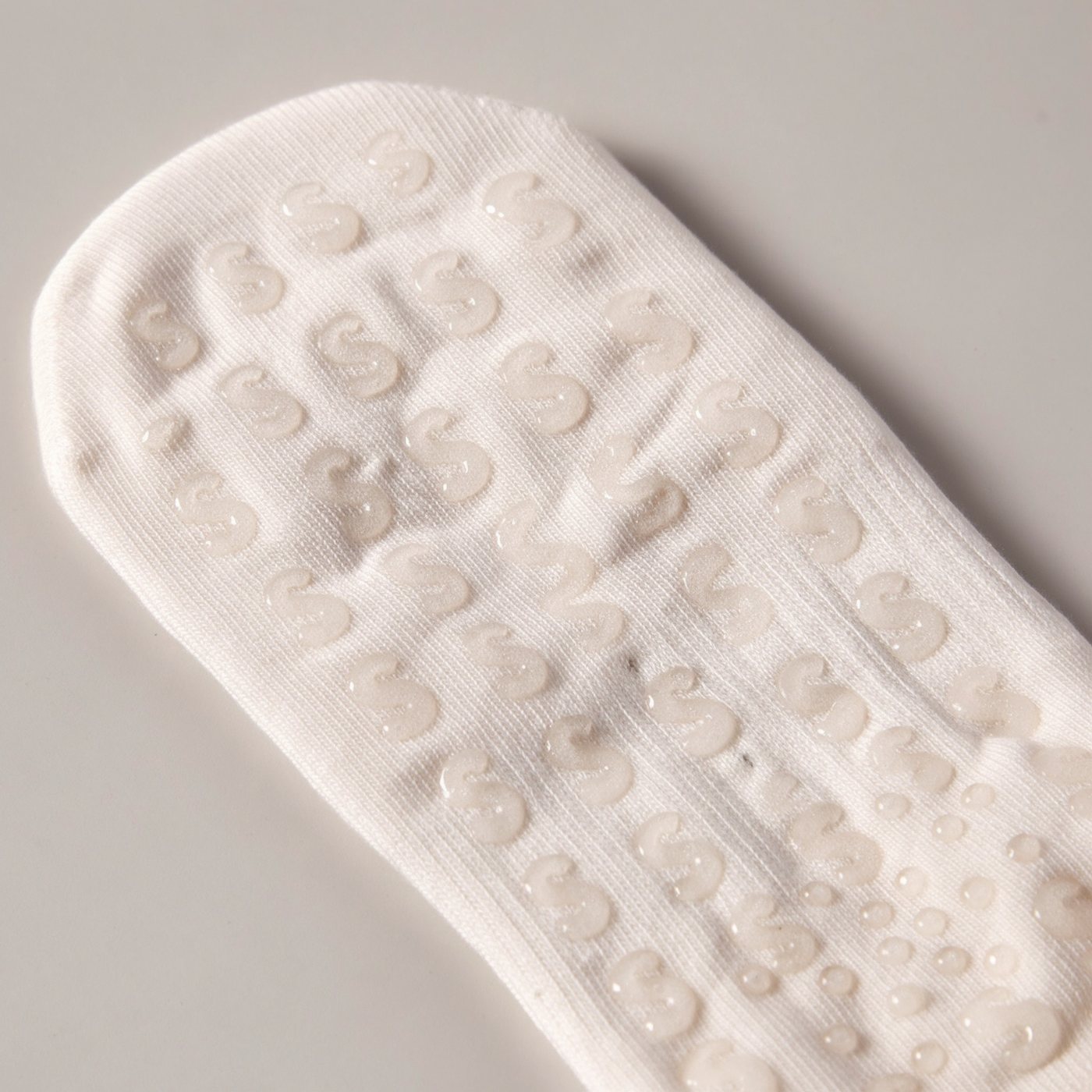
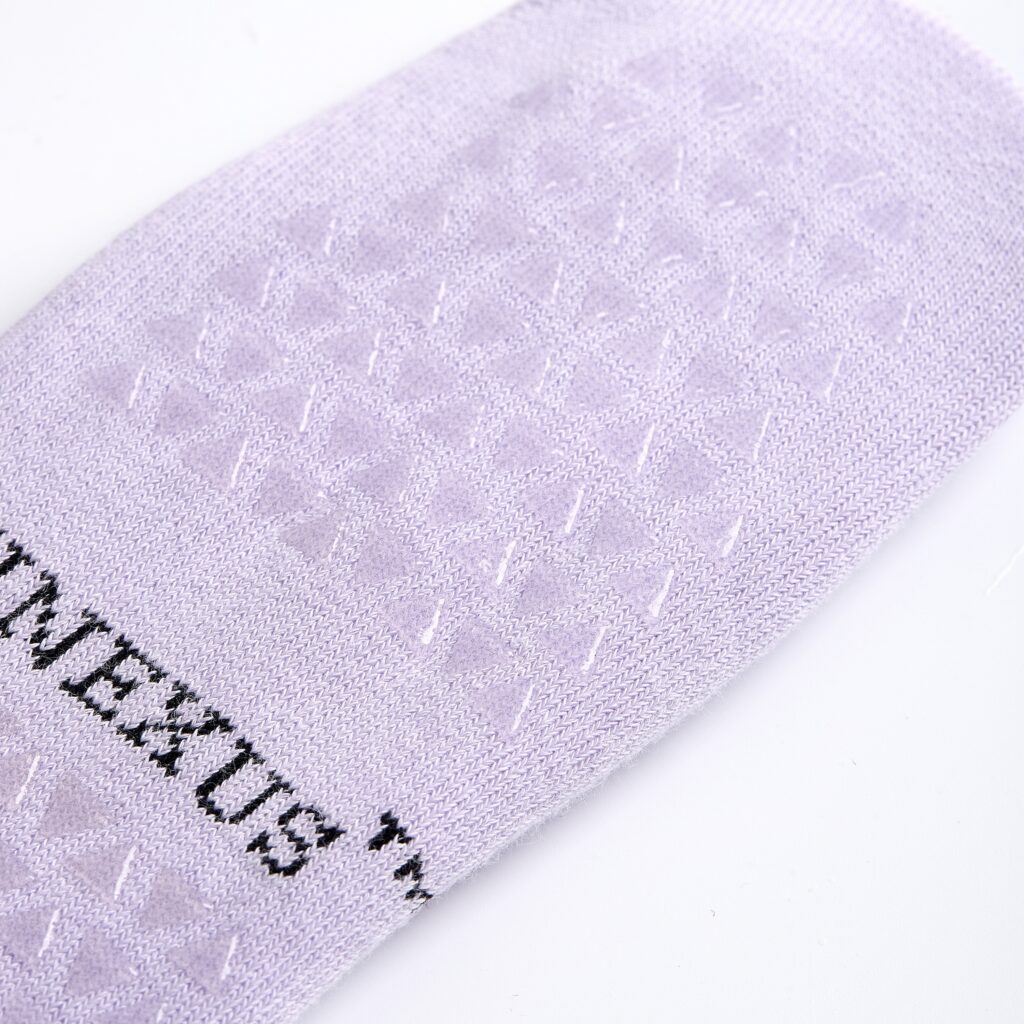
The sole is a high-density transparent PVC pattern applied in the signature S-shaped layout. It is dense rather than raised: the dots sit close to the fabric rather than standing proud of it.
That matters for two reasons. A dense, low pattern gives more consistent contact than a few large raised shapes, and it is less likely to catch on a mat or a footplate. It also means the sole does not change the fit of the sock, which a thick applied tread would.
Care is simple: keep it away from high heat, avoid fabric softener, and do not walk outdoors in it. The pattern is durable but not indestructible.
What to check
| Feature | What good looks like | Why it matters |
|---|---|---|
| Blend | Cotton-led with a small elastane content | Moisture handling plus shape retention |
| Recovery | Returns to shape after stretching over the heel | Fit stays close across a season |
| Toe seam | Flat, smooth, no ridge | Comfort in long holds |
| Cuff | Sits flat, no deep mark | Stays up without pinching |
| Heel | Fitted pocket with a raised tab | Keeps the sock in place on a footbar |
| Sole | Dense, even, low-profile pattern | Consistent contact, no catching |
Why construction affects price
Two socks can look identical on a shelf and cost very different amounts to make. Better yarn, a flat toe seam, a shaped heel and a dense applied sole all add cost, and none of them are visible in a photograph.
That is the honest case for a premium sock. Not that it will last forever — no sock does — but that it will hold its fit and its grip for a full season of regular classes rather than for six weeks. Our guide on premium grip socks makes the same argument in more detail, and the size guide helps you get the fit right from the first pair.
Frequently asked questions
What are SHINEXUS grip socks made from?
75 per cent cotton, 20 per cent polyester and 5 per cent premium stretch elastane, with a high-density transparent PVC grip sole.
Why not 100 per cent cotton?
Pure cotton feels good but loses shape quickly. Polyester adds stability and elastane provides recovery, so the fit lasts longer.
Is the grip sole glued on?
The sole is an applied high-density PVC pattern. We do not publish detailed manufacturing specifications, so we would rather not describe a process we cannot verify.
Does the blend affect washing?
Yes. Cold washing and air drying protect the elastane and the sole. Hot water and tumble drying shorten the life of both.
Will the sock shrink?
Cotton-led knits can shrink slightly if washed hot. Follow the care label and the change is negligible.
How do I know if a sock has lost its recovery?
It no longer springs back after stretching, and the heel starts to rotate during class. That is the point to replace it.
Look at the parts you cannot see
Grip is what sells a sock; construction is what keeps it working. A cotton-led blend, a flat toe seam, a fitted heel and a dense low sole are unglamorous details, and they are the reason a pair still fits properly at the end of a season.
