

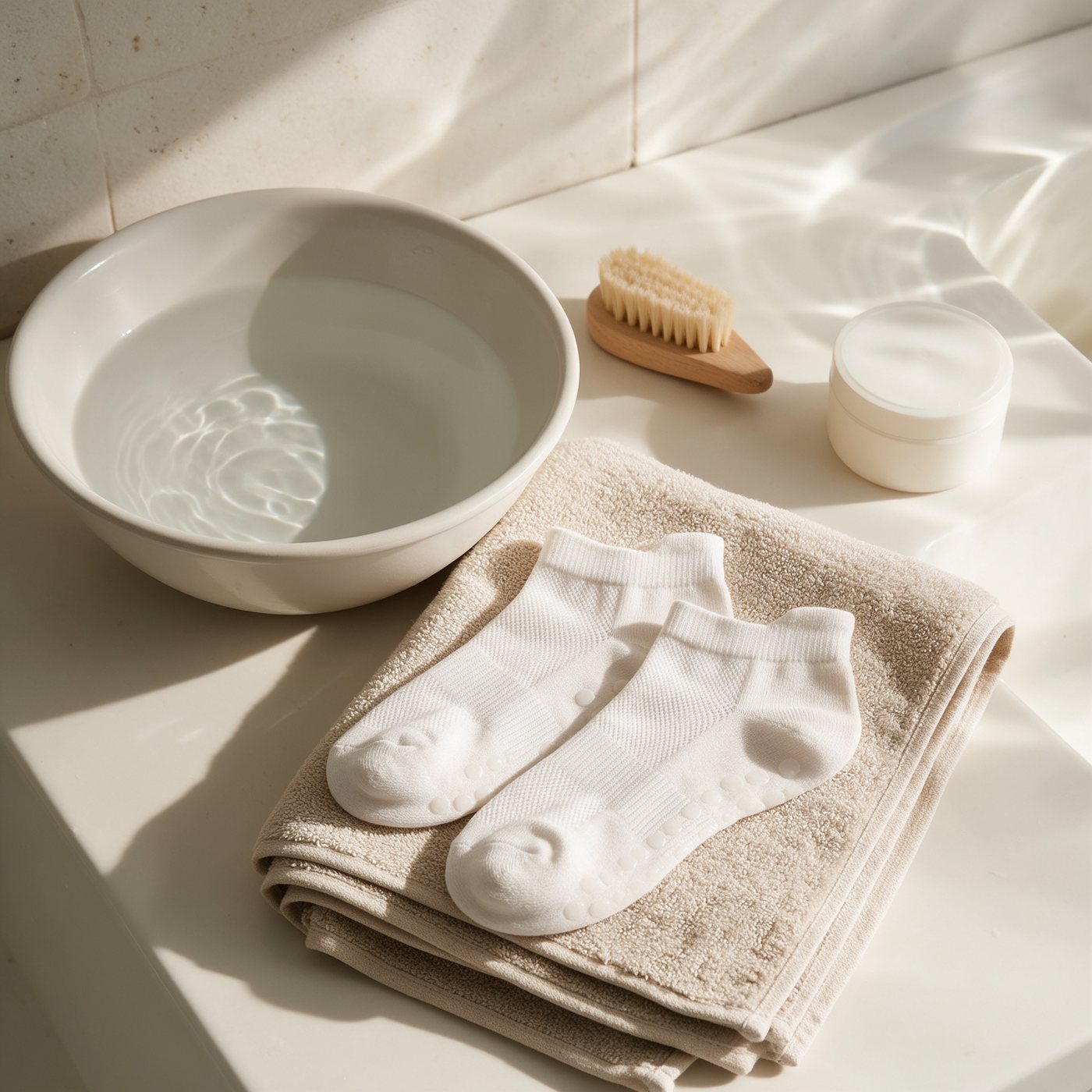
Feet carry every class you attend, usually in a thin sock, often on a hard floor. They are also the part of the body most likely to be dealt with last, if at all. A short routine — five minutes on a Sunday, thirty seconds on the other days — keeps them comfortable enough that you stop noticing them.
Why studio feet need attention
A Pilates class is a long, quiet load on the feet. Hundreds of small presses, lots of time standing on one leg and a good deal of pressure through the ball of the foot. Add a warm room and a pair of socks, and the skin spends an hour in a moist, enclosed environment.
That combination is not harmful, but it does reward a little care. Dry skin cracks more easily, neglected nails catch on sock fabric, and a damp sock left in a bag is an invitation for odour. None of this is dramatic. All of it is easy to prevent.
The daily basics
Wash and dry properly. The drying matters more than the washing: moisture between the toes is the single most common source of discomfort for people who spend hours in socks. A towel, then a minute barefoot before the socks go back on, does most of the work.
Keep nails trimmed straight across rather than curved into the corners. Straight nails are less likely to catch on sock fabric and less likely to become ingrown. A file is usually enough; deep cutting is not necessary.
Change socks after class rather than wearing them home. It is the simplest hygiene habit in studio life, and it protects the pair as much as the foot.
One more daily detail: check the inside of the sock when you take it off. Lint, grit and mat fibres collect at the heel and under the ball of the foot, and they abrade the skin slowly over a week of classes. Turning the sock inside out before it goes in the wash removes most of it, and it costs nothing.
A twenty-minute weekly routine
Once a week, give the feet a little more. A warm soak for ten minutes softens the skin. A gentle scrub with a soft brush or a pumice used lightly removes surface flakes. Dry carefully, especially between the toes. Then a simple moisturiser, worked into the heels and the sides of the feet rather than between the toes.
That is the whole routine. It does not need special products, and it does not need to be elaborate to work. Consistency matters more than the specific items, which is why a Sunday evening habit tends to outlast an ambitious monthly one.
What not to do
Three things are worth avoiding. Aggressive filing, which removes more skin than it needs to and leaves the foot more sensitive. Long, hot soaks, which dry the skin out over time rather than softening it. And picking at hard skin, which tends to leave a raw patch that makes the next class uncomfortable.
It is also worth being sceptical about gadgets. Most foot care problems that are not medical are solved by moisture, trimming and a comfortable sock. A device that promises to reshape the foot is rarely the answer.
Socks, shoes and hygiene
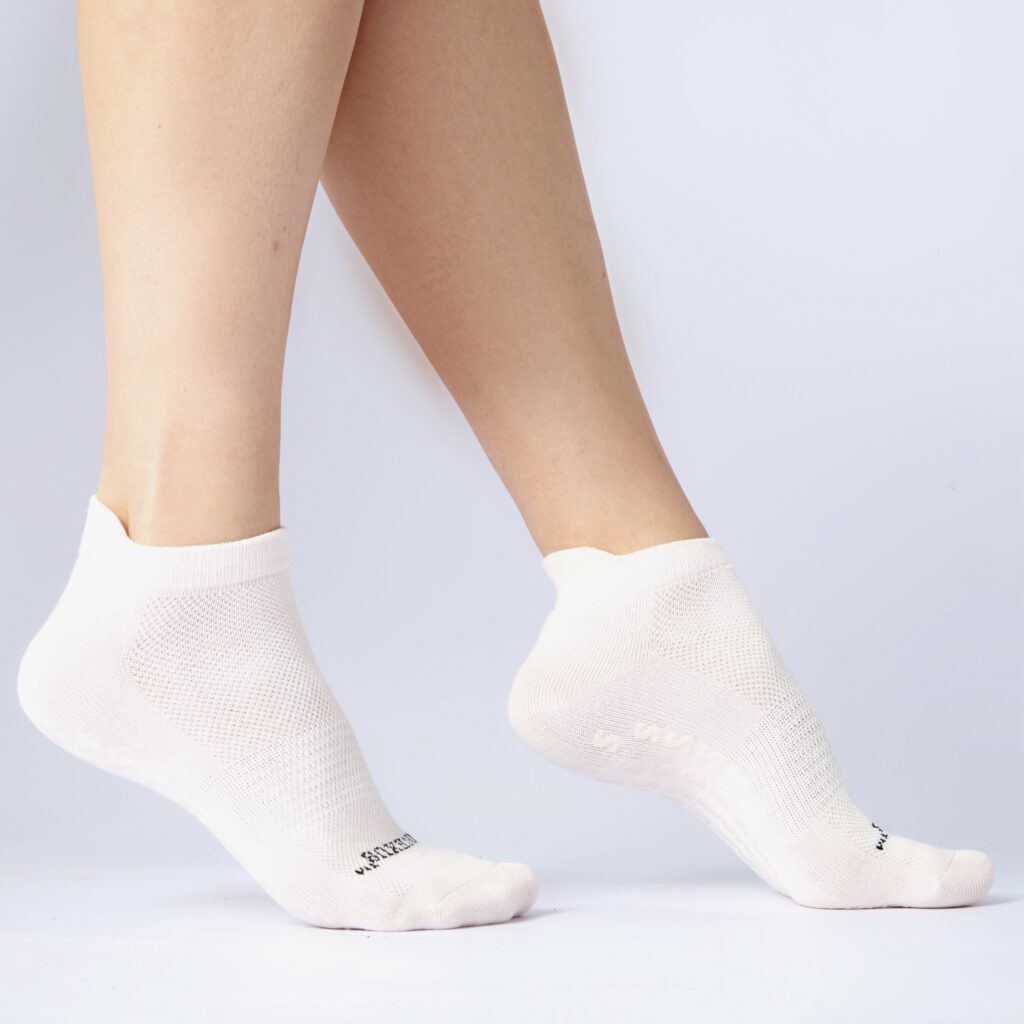
A clean sock is the most effective foot care product there is. Rotate pairs, wash cold, and dry thoroughly before storing. Fabric softener is worth skipping: it leaves a residue that reduces grip and can irritate sensitive skin.
Shoes matter too. Feet that spend the day in tight shoes arrive at class already compressed, which shows up as a tight forefoot in standing work. Where you can, give the feet some room during the day — a wider shoe, or simply taking shoes off at home.
Our care guide covers sock washing in detail, and the piece on studio hygiene explains why clean socks are a courtesy to everyone in the room.
The routine at a glance
| When | What | Time |
|---|---|---|
| After every class | Change socks, air feet, dry between toes | 1 min |
| Daily | Wash and dry thoroughly, trim nails straight | 2 min |
| Weekly | Warm soak, light scrub, moisturise heels | 20 min |
| Monthly | Check socks for worn soles and loose cuffs | 5 min |
When to see a professional
Persistent pain, a nail that changes colour, skin that cracks and bleeds, or anything that looks infected deserves a podiatrist rather than another home remedy. People with diabetes should be especially careful with foot care and should follow their clinician’s advice rather than a general routine.
For general guidance on staying active, the NHS exercise pages are a reasonable starting point. For anything specific to your feet, a professional assessment is worth more than any article.

Frequently asked questions
How often should I moisturise my feet?
Once or twice a week is enough for most people. Daily application is fine if your skin is dry, but avoid the spaces between the toes.
Should I wear socks in bed?
If your feet get cold, yes — but choose a soft sock without a grip sole, which can feel uncomfortable against bedding.
Does wearing grip socks all class cause problems?
Not if the socks are clean and dry. Change them after class and dry your feet properly.
Is a pumice stone safe?
Used gently and occasionally, yes. Aggressive filing removes too much skin and leaves the foot tender.
Why do my feet smell after class?
Moisture in an enclosed sock. Change socks after class, dry feet fully and rotate pairs rather than rewearing.
Can I paint my nails and still wear grip socks?
Yes, once the polish is fully dry. Toe socks need a little more care, since fabric sits between the toes.
Five minutes that pay for themselves
The routine is unglamorous and short: dry properly, trim straight, soak once a week, and wear clean socks. Do that and the feet stop being the part of the class you think about, which is exactly the point.
