

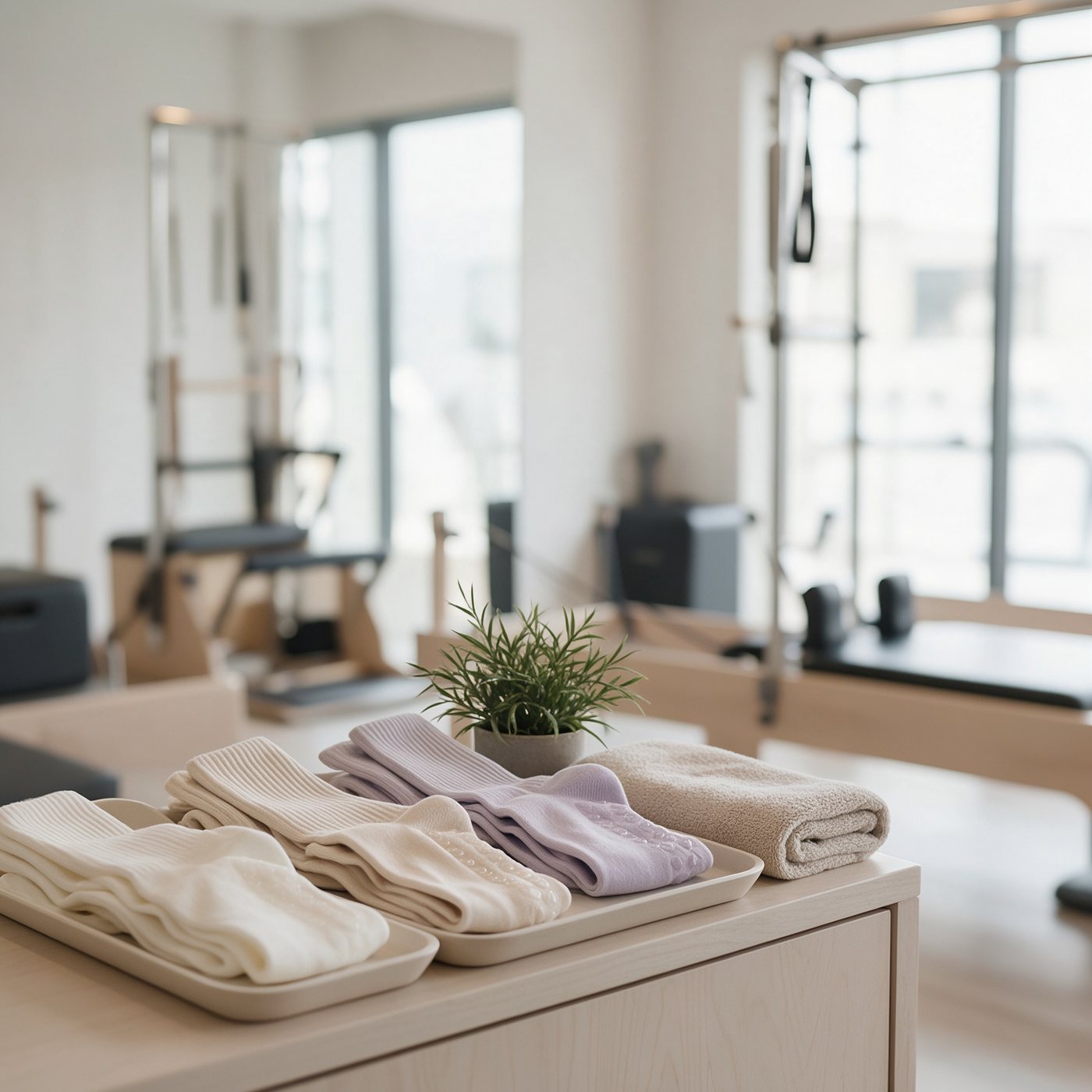
Most studios decide whether to stock grip socks on the strength of a supplier’s presentation and a rough guess about demand. A two-week trial tells you far more, costs very little, and gives you real evidence to take to a buying decision.
Why a trial beats a supplier deck
Demand for grip socks in a studio is shaped by things a supplier cannot see: how many clients forget their socks, how often the studio enforces a sock policy, the average class size, and whether the front desk is staffed at the times people arrive.
A trial surfaces all of that in two weeks. It also answers a question that matters commercially: whether clients will buy at the desk, or whether they will go home and order online instead.
Our studio page explains how trial stock and wholesale enquiries are usually handled.
Designing the trial
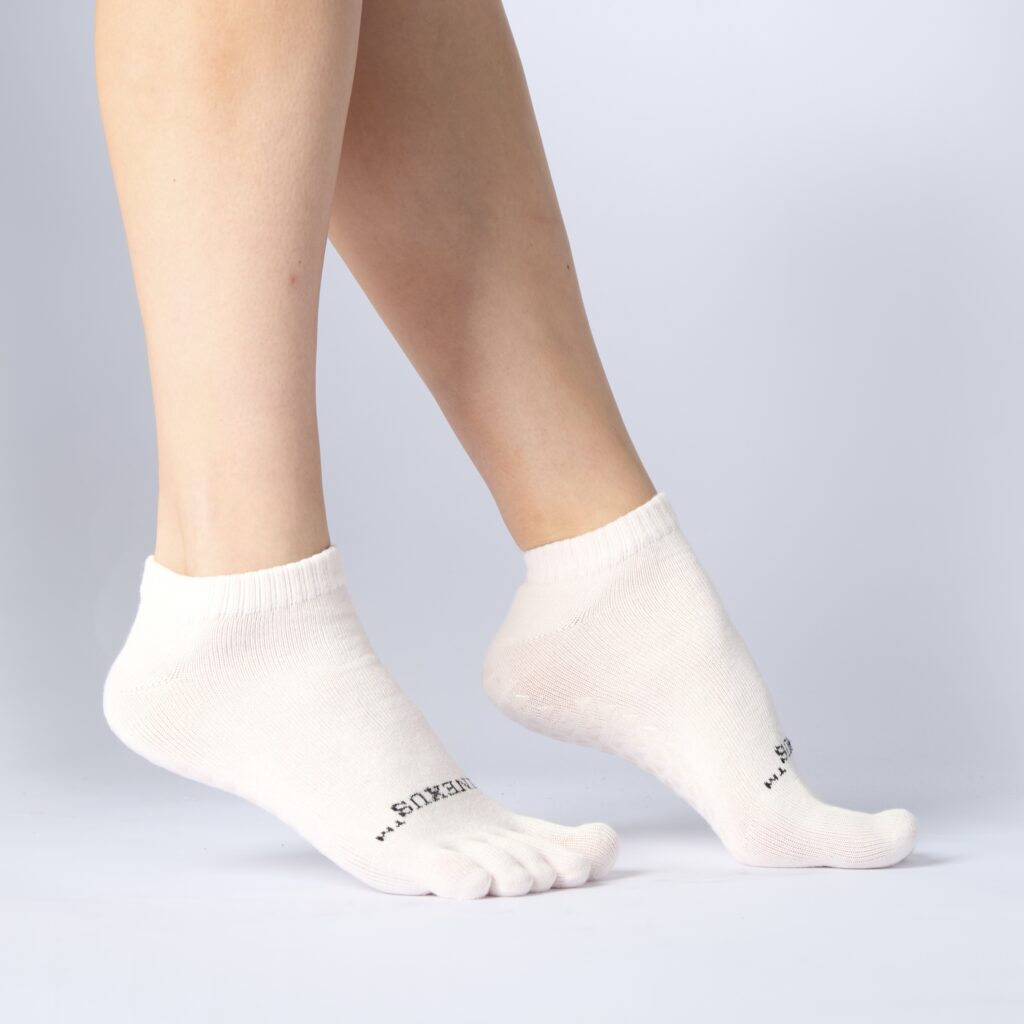
Keep it small. Two styles, two sizes and two or three colours is enough to test demand without turning the reception desk into a shop. An ankle style covers most class types; a second style — yoga or crew — tests whether your clients have a preference.
Run it for two to four weeks, including at least one full week of normal attendance. Announce it once, clearly, and then let it sit. Repeated promotion turns a trial into a campaign and distorts the result.
Decide in advance how you will handle hygiene: either sell sealed pairs only, or offer a small number of loan pairs that are washed between uses. Mixing the two without a policy is where most trials create awkwardness.

What to measure
Four numbers tell the story. How many clients asked about socks during the trial. How many bought. Which size and colour sold first. And how many came back for a second pair within the trial window.
That last number is the most useful and the most often ignored. A first purchase can be an impulse at the desk; a second purchase is a client who has worn the product in class and chosen to buy again. If repeat purchases happen inside two weeks, the range will sell steadily.
Qualitative feedback matters too, but keep it short. Two questions at the desk — did it fit, and would you buy another — are worth more than a long survey nobody completes.
The client script
The desk should be able to explain the range in about fifteen seconds: two styles, two sizes, three colours, and the fact that they are the same socks the studio asks clients to wear. Anything longer sounds like selling.
Timing matters more than wording. The moment a client takes their shoes off is when socks are relevant. A small display in that spot does the work of a script, and a single line at check-in — “we have socks if you have forgotten yours” — covers the rest.
Staff should be able to answer the sizing question without hesitation, since it is the most common reason a sale stalls. The size guide is worth printing and keeping at the desk.
Common problems
Three come up repeatedly. Clients buy the wrong size because nobody explained the boundary rule, which produces a return and a slightly awkward conversation. The display sits too low or too far from the changing area, so nobody sees it. And the studio discounts early to “get things moving”, which teaches clients to wait for the next discount.
All three are fixable. Print the sizes, move the tray, hold the price. If a style is not selling, the usual cause is placement or a missing size rather than the product itself.
Trial metrics
| Metric | What it tells you | Healthy signal |
|---|---|---|
| Enquiries per week | Whether clients notice the range | Steady, not spiking then falling |
| Units sold | Conversion at the desk | Consistent across the trial |
| Size split | Which sizes to stock deeper | One size clearly ahead |
| Repeat purchases | Whether the product delivers | Any repeats inside two weeks |
| Returns | Fit communication quality | Low and falling over the trial |
Making the go or no-go decision
Stock it if you see steady enquiries, a clear size pattern and at least a few repeat purchases. Keep the range narrow and reorder on evidence, as set out in our guide on stocking grip socks.
Do not stock it if enquiries were high but sales were low — that usually means the display or the script needs work, not the product. Run the trial again with a better setup before deciding.
And if the studio already sells a different brand, a trial is still useful: it gives you a comparison rather than a replacement. The piece on studio retail covers how to run two ranges without confusing clients.
Frequently asked questions
How long should a grip sock trial run?
Two to four weeks, including at least one normal attendance week without extra promotion.
How much stock does a trial need?
Small: two styles, two sizes, two or three colours. Enough to sell from, not enough to become an inventory problem.
Should we offer loan pairs?
Only if you have a clear washing policy. Otherwise sell sealed pairs and keep the trial simple.
What is the best signal to expand?
Repeat purchases inside the trial window. That is evidence the product works in your classes, not just at the desk.
What if clients ask for a style we do not stock?
Note it. Demand you cannot meet is the most useful data from a trial, and it shapes the next order.
Can we trial alongside an existing brand?
Yes, and it is often the better approach. Compare sell-through rather than replacing a range clients already know.
Evidence before inventory
A trial is cheap, short and decisive. Two styles, four weeks, four numbers and an honest look at the desk. Studios that test before they buy tend to end up with a range that keeps selling, rather than a shelf that slowly empties.
